Understanding Rogers PCB Laminates: The Core Material for the High-Frequency, High-Speed Era
In the rapid evolution of the electronics manufacturing industry, the importance of circuit board materials has shifted from merely “support and connectivity” to being a “decisive factor in performance.” As system frequencies increase, signal speeds accelerate, and losses become more critical, traditional epoxy resin substrates are clearly insufficient. This is where Rogers PCB laminates, characterized by their high-frequency and low-loss properties, have become a crucial material choice for the global high-end electronics industry. As a material system specifically designed for radio frequency (RF), microwave, millimeter-wave, and high-speed digital applications, it not only maintains stable dielectric properties at ultra-high frequencies but also preserves electrical consistency and mechanical reliability under demanding conditions.
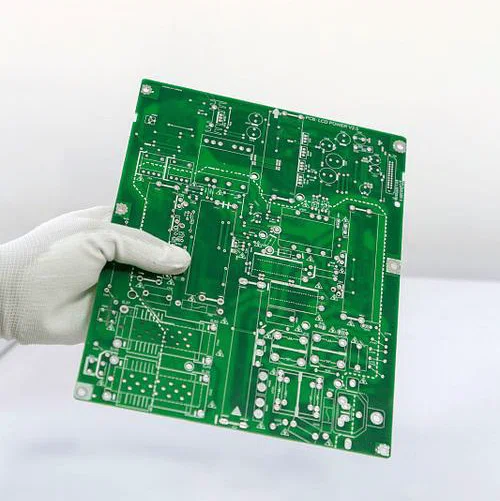
The biggest difference between Rogers substrates and ordinary FR-4 is their significant advantages in dielectric constant (Dk), dielectric loss (Df), thermal stability, and signal integrity. These high-performance materials typically utilize ceramic-filled polytetrafluoroethylene (PTFE), crystal-filled resin systems, or hydrocarbon-based composite materials. Their dielectric constant distribution is extremely uniform, resulting in minimal signal propagation speed errors during routing, making them suitable for applications requiring high precision, such as millimeter-wave radar, 5G millimeter-wave antennas, satellite communications, microwave power amplifiers, and high-speed server backplanes. In these industries, any minor signal distortion can be amplified into a system-level problem; therefore, reliable material selection is the first step in building overall performance.
On the other hand, the value of Rogers PCB laminates is not limited to their high-frequency characteristics. They also possess advantages such as low water absorption, excellent thermal expansion matching capabilities, and superior processing stability, ensuring stable material properties even in extreme climatic conditions, prolonged outdoor exposure, or continuous heating environments. Consequently, they are not only widely used in high-frequency circuits in the communications industry but also occupy an irreplaceable position in complex environments such as aerospace, medical imaging equipment, automotive radar, and industrial automation sensing systems.
As the market gradually moves towards the technological direction of “higher frequency, higher speed, and lower loss,” Rogers series materials are no longer just a “high-end option,” but a “fundamental requirement” for future electronic systems. When developing new products, companies are increasingly focusing on the engineering characteristics of the substrate material and its profound impact on system performance, reliability, and stability. It can be said that Rogers substrates are not just a material, but a key technology supporting the modern high-performance electronics industry.
In-depth Analysis of the Material Characteristics and Core Advantages of Rogers PCB Laminates
To truly understand the value of Rogers PCB laminates, it is essential to delve into their material structure and electrical characteristics, as these fundamental properties determine why they maintain a long-term leading position in the high-frequency and high-speed field. Compared to traditional FR-4, Rogers substrates demonstrate different levels of technological concepts in terms of dielectric performance, loss control, thermal stability, processing consistency, and long-term reliability. These differences are not simply parameter advantages, but rather systemic differences in engineering capabilities.
The most significant advantage of Rogers materials comes from their extremely stable dielectric constant (Dk). In radio frequency and high-speed signal environments, the signal propagation speed is directly related to the dielectric constant. If the dielectric constant varies significantly at different locations, it will cause inconsistent path delays, leading to signal distortion and output deviations. Rogers’ material system uses ceramic fillers, PTFE composites, and hydrocarbon resins to ensure that the dielectric constant is uniformly distributed across the entire board with minimal fluctuations. The effect of this uniformity is significant: signals propagate across the entire wiring with virtually no uncontrollable delays, significantly improving the phase stability and impedance control capabilities of the circuit.
Dielectric loss (Df) is one of the core indicators that distinguish high-frequency substrates from ordinary substrates. In a high-frequency environment, even small differences in loss values will be amplified exponentially in long-distance signal transmission, ultimately leading to signal attenuation, increased system power consumption, and even a decrease in overall performance. Rogers materials are known for their extremely low loss, allowing them to maintain signal integrity in millimeter-wave and satellite communication applications. Especially in automotive radar applications such as 24GHz and 77GHz, low-loss substrates are almost the only solution that can ensure long-range detection capabilities and anti-interference performance, making Rogers materials a primary choice for automotive-grade radar.
The thermal characteristics of Rogers substrates are also crucial. For high-power RF systems, the substrate needs to withstand demanding conditions such as long-term thermal cycling, localized high temperatures, and rapid heat dissipation. The coefficient of thermal expansion (CTE) of Rogers substrates is designed to be closer to that of copper, preventing delamination or cracking of the vias during heating, cooling, and reflow soldering processes. Its heat dissipation performance is also significantly stronger than ordinary substrates, effectively reducing the risk of thermal distortion in systems such as power amplifiers, high-power modules, and antenna arrays. For equipment that needs to operate outdoors, in industrial environments, or under long-term full load, this thermal performance directly translates to system lifespan.
In terms of material water absorption, Rogers, due to its use of PTFE or other moisture-resistant material systems, has a much lower water absorption rate than FR-4. Water vapor absorption directly affects the dielectric constant, thereby reducing signal stability. For high-humidity environments such as outdoor communication sites, ship radars, and aerospace equipment, a low water absorption substrate means longer stable operation time. The material itself must not only be moisture-resistant but also maintain parameter stability during drastic changes in environmental humidity, which is difficult for FR-4 to achieve.
Rogers’ processing performance is also noteworthy. Although some models require special processing methods due to the characteristics of PTFE, overall, Rogers boards have higher consistency in processes such as drilling, lamination, etching, and surface treatment. Especially in high-density RF circuits, the impedance line width is extremely narrow, requiring very strict processing tolerances; the controllability of Rogers materials allows engineers to achieve the target impedance within smaller line width errors, reducing debugging difficulty and improving the first-pass success rate of the design.
Overall, the advantage of Rogers materials lies in “allowing signals to be transmitted faithfully.” Its material characteristics ensure that high-speed and high-frequency signals are not damaged, delayed, or distorted throughout the entire system. It is not just a material, but an ability to push high-performance electronic systems to a higher level. From phased array radars to 5G antennas, from satellite links to RF front-end modules, from high-speed backplanes to high-precision sensing systems, almost all industries with extremely high performance requirements rely on this level of material to ensure product stability, reliability, and efficiency.
Key Differences Between Rogers PCB Laminate and FR-4: An In-depth Comparison from Materials to Engineering
In the electronics manufacturing industry, FR-4 is the most widely used circuit board material, while Rogers PCB laminate is mostly used in high-frequency, high-speed, and precision systems. Many newcomers to the industry often think that the two only differ in “performance and price,” but the actual differences are far more significant. They differ fundamentally in everything from chemical composition and dielectric structure to thermal characteristics, processing methods, and long-term stability. These differences ultimately reflect in circuit design methods, process strategies, and even system architecture. To truly understand why high-frequency circuits must use Rogers materials, it is necessary to deeply analyze the essential differences between the two from an engineering perspective.
The basic resin systems of the two are completely different. FR-4 uses epoxy resin with glass fiber, while Rogers materials use systems such as PTFE, ceramic fillers, or hydrocarbon resins. This difference results in the two having different levels of electrical performance at high frequencies. The dielectric constant of FR-4 changes significantly with frequency, meaning that designers can hardly maintain precise impedance in high-frequency routing. The signal propagation speed is inconsistent at different locations, easily leading to delay shifts, phase shifts, and crosstalk problems. Rogers’ homogeneous material structure keeps the dielectric constant stable over a wide frequency range, making it the only reliable solution for ensuring signal integrity in RF design.
The difference in loss factor (Df) greatly affects signal quality. The loss of FR-4 is acceptable in low-frequency systems, but as the frequency increases, the loss amplifies rapidly, causing a large amount of signal energy to be consumed during transmission. Applications such as wireless communication, radar systems, 5G high-frequency bands, and millimeter-wave antennas are extremely sensitive to loss; once the signal attenuates within the material, system performance will rapidly decline. For example, in 24GHz or even 77GHz automotive millimeter-wave radar applications, if FR-4 is still used, the actual detection range of the radar will drop sharply, and may even fail to meet basic application requirements. The ultra-low loss characteristics of Rogers PCB laminates, however, maintain signal strength, allowing these high-performance devices to operate stably.
The difference in thermal characteristics further impacts reliability. FR-4 has a high coefficient of thermal expansion, especially in the Z-axis direction, which easily leads to copper hole fatigue and cracking during high-temperature reflow soldering, reducing structural reliability. Rogers materials have a CTE closer to copper, making them more suitable for scenarios with continuous heat generation in high-power RF systems. For example, in power amplifier modules and RF front-end modules, prolonged high-temperature operation can easily cause dielectric aging and delamination in FR-4, while Rogers’ thermal stability avoids these structural risks, resulting in a much longer lifespan in high-temperature and thermal cycling environments compared to ordinary substrates.
In terms of humidity and environmental stability, the two material systems also perform completely differently. FR-4 has a relatively high water absorption rate, and moisture absorption directly affects the dielectric constant, causing drift in high-frequency circuits. For outdoor communication sites, ship radars, or industrial environment sensors, this uncertainty can lead to uncontrollable system deviations. Rogers’ low water absorption characteristics allow it to maintain electrical consistency even in humid, high-humidity, or even high-salinity environments, which is crucial for long-running communication systems.
There are also practical differences in processing. FR-4 is relatively easy to process and suitable for mass production of conventional circuit boards. However, in high-frequency circuits, the line width and spacing are often extremely small, requiring strict processing tolerances. The glass fiber structure of FR-4 easily causes uneven etching, rough hole walls, and impedance deviations. While Rogers materials have more complex processing methods, their post-processing consistency is significantly better than FR-4, allowing designers to achieve more precise impedance control and higher-density wiring structures. For products requiring stable waveguide structures, phased array antenna arrays, or high-speed backplane wiring, the processing consistency of the material directly affects the usability of the finished product.
The cost difference is often considered the biggest difference between the two, but from a system cost perspective, this perception is incomplete. Although the unit price of Rogers substrates is higher than FR-4, many high-frequency systems using FR-4 require more complex compensation designs, higher power consumption, more frequent testing and debugging, and may even result in the product failing to meet performance requirements. Conversely, in some applications, using Rogers can reduce system development time, improve product yield, and reduce rework and after-sales risks. From a lifecycle perspective, Rogers provides “overall performance benefits,” not just a simple difference in material costs.
In summary, the difference between Rogers and FR-4 is not simply “good versus better,” but a fundamental difference in applicable scenarios. Rogers is the foundation for high-frequency and high-speed systems, while FR-4 is suitable for general low-frequency applications. Understanding this helps engineers make more precise material selections and helps procurement and project managers more clearly understand the relationship between technical requirements and product performance.
Typical Application Areas and Industry Value of Rogers PCB Laminates
Rogers substrates occupy an irreplaceable position in the global high-end electronics industry because their comprehensive performance in a range of high-frequency, high-speed, high-power, and extreme environments is unmatched by other ordinary materials. To understand the industry value of Rogers PCB laminates, one must start from their application scenarios; these scenarios are often in fields with extremely high requirements for signal integrity, material stability, and long-term reliability, and are also important industries that drive the continuous progress of modern communication, intelligent transportation, aerospace, and defense equipment.
The most core applications come from the radio frequency (RF) communication field. Modern wireless communication systems, from base station antennas to the RF front-ends of terminal devices, rely on materials with extremely low loss and extremely high stability to control the signal path. Rogers’ low dielectric loss and excellent impedance consistency make it the standard material for key components such as 5G communication modules, millimeter-wave antenna arrays, RF power amplifiers, low-noise amplifiers (LNA), filters, and couplers. Especially in the millimeter-wave band, any small loss will be exponentially amplified, and Rogers substrates, by maintaining the ability to transmit signals with almost no attenuation, enable high-frequency links to achieve efficient interconnection in a very small space, laying the foundation for antenna miniaturization, power improvement, and more stable coverage performance.
Rogers materials play an absolutely central role in automotive radar systems. Vehicle 24GHz and 77GHz millimeter-wave radars need to maintain signal sensitivity in high-speed movement and complex climatic environments, while ordinary FR-4 is almost unable to work stably at such high frequencies. Rogers substrates’ low moisture absorption rate, low dielectric loss, and excellent thermal stability make them the only reliable material solution for automotive-grade radar antennas, radar processing modules, and phased array antennas. With the development of autonomous driving, the requirements for detection distance, resolution, and anti-interference capabilities are constantly increasing, and Rogers’ advantages are multiplied, which also makes its proportion in the automotive electronics industry chain increasingly higher.
Rogers plays a key role in aerospace systems. In equipment such as satellites, navigation systems, radar components, and spacecraft communication links, the electromagnetic environment is complex, space is limited, and temperature differences are huge. Materials must maintain stable electrical parameters under extreme conditions; any slight deviation can lead to signal errors, positioning inaccuracies, or even system failure. For example, satellite antenna arrays in orbit endure continuous radiation and temperature cycles. Rogers materials’ excellent dielectric stability and structural durability ensure long-term performance in high vacuum and strong radiation environments, making them indispensable materials in satellite applications.
Rogers materials are also widely used in defense and military equipment. High-precision systems such as radar systems, electronic reconnaissance modules, radio frequency jamming devices, and missile guidance systems require highly reliable, low-loss high-frequency materials to maintain signal strength and anti-interference performance. Phased array radars, in particular, need to transmit and receive a large number of high-frequency signals in a very short time. If the material loss is too high, the radar’s detection range and angular resolution will be significantly reduced. The advantages of Rogers materials make them ideal for military electronics.
It is a key component of electronic devices and is also considered an important fundamental capability for improving equipment performance.
Another major application area for Rogers materials is in high-performance industrial systems. Modern industrial automation equipment, sensing systems, non-contact measurement devices, and industrial-grade RF modules all require long-term operation in complex electromagnetic environments and under high temperature, high humidity, and high-intensity vibration. Traditional FR-4 materials are prone to parameter drift, structural fatigue, and signal attenuation in these scenarios, while the stability of Rogers materials allows them to maintain consistent performance during long-term operation. For example, the control modules, sensor arrays, and industrial wireless communication equipment of industrial robots all rely on higher-performance substrates to ensure accurate feedback and real-time control of the equipment.
With the development of high-speed digital systems, Rogers materials are also increasingly appearing in high-speed data links and server systems. Modern data centers require extremely high data throughput between high-speed backplanes, switching equipment, and optical modules. In 10Gbps, 25Gbps, 56Gbps, and even higher-speed links, the loss of FR-4 cannot meet the signal integrity requirements, while the low-loss characteristics of Rogers materials ensure that high-speed signals are not distorted during long-distance transmission, significantly improving the energy efficiency, reliability, and computing efficiency of data centers.
In summary, the value of Rogers materials is not just about being “more advanced,” but rather about possessing irreplaceable system-level performance contributions. It guarantees the communication distance, stability, resolution, and response speed of high-frequency systems, enabling core equipment in many industries to break through the limitations of traditional materials and achieve higher working efficiency, longer detection capabilities, faster data processing, and more reliable structural lifespan. Because of this, in high-performance fields such as RF communication, automotive radar, aerospace, defense equipment, and high-speed computing, Rogers PCB laminate has become a strategic basic material, supporting the continuous evolution of the global electronics industry towards higher frequencies, higher speeds, and greater intelligence.
Summary
As a core material in the high-frequency and high-speed field, Rogers PCB laminate, with its low dielectric loss, excellent thermal stability, outstanding impedance consistency, and extremely low moisture absorption rate, has become a strategic material for high-end industries such as RF communication, automotive millimeter-wave radar, satellite navigation, aerospace, defense equipment, and high-speed data centers. It not only improves the system’s signal integrity, transmission efficiency, and anti-interference capabilities, but also overcomes the physical limitations of traditional FR-4 in high-frequency, high-speed, and extreme environments.
From 5G millimeter-wave antennas to LNAs, PAs, radar arrays, and phased array systems, to high-density, high-speed interconnect structures, Rogers materials consistently demonstrate stable, reliable, and controllable electrical characteristics.
It is precisely for this reason that it still occupies an irreplaceable position in the global high-performance electronics manufacturing system and is an important foundation for the continuous evolution of modern communication and intelligent systems.