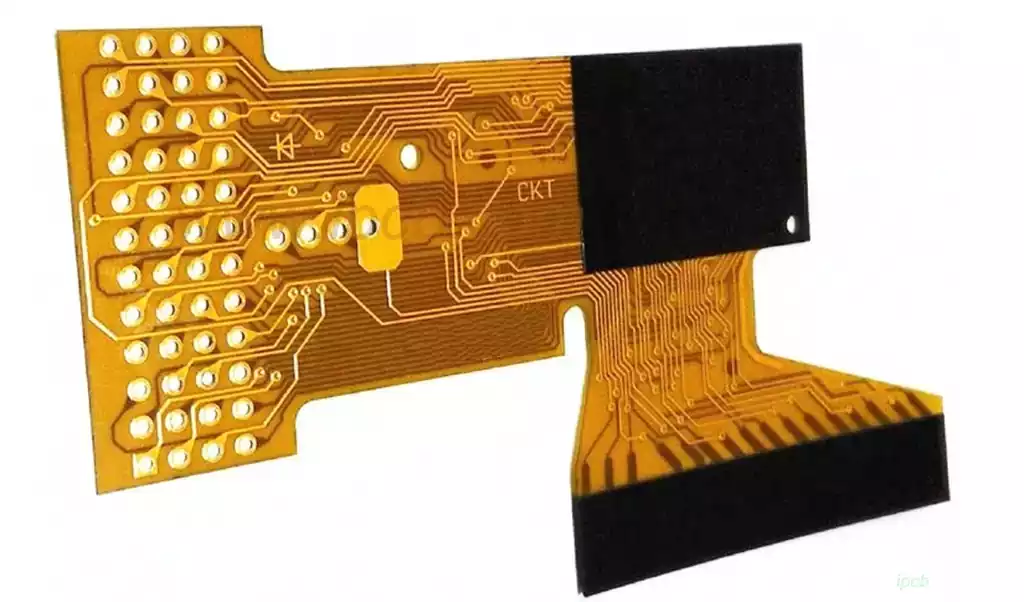
Flexible Printed Circuit Board Camera Modules, commonly abbreviated as FPC cameras, are camera modules incorporating flexible printed circuit boards (FPC). Unlike traditional rigid circuit boards, Flex pcbs are manufactured using flexible insulating substrates such as polyimide (PI), endowing them with lightweight, slim, and bendable physical properties. The camera module comprises components such as the lens, sensor, image processing chip, and FPC, with the FPC playing a pivotal role.
Within the camera module, the FPC fulfils two core functions. Firstly, it provides electrical connectivity, reliably transmitting image data captured by the camera sensor to the device’s main processing unit via its high-density wiring patterns. Secondly, it offers mechanical support, serving as a fixed mounting base for the numerous minute components within the camera module. This integrated design, combining electrical and mechanical functions, establishes the flexibel pcb board as a ‘critical component’ for modules such as cameras and displays.
The unique advantage of flexible pcb board lies in its exceptional flexibility and space efficiency. Within the increasingly compact structures of smartphones, tablets, and wearable devices, internal space is extremely valuable. Flex pcbs can freely bend, fold, and even route through three-dimensional spaces, perfectly adapting to irregular internal structures to connect multiple critical modules like screens, batteries, and cameras. For instance, a modern smartphone may utilise over 20 FPCs, handling diverse connection requirements from fingerprint recognition to dual-camera modules.
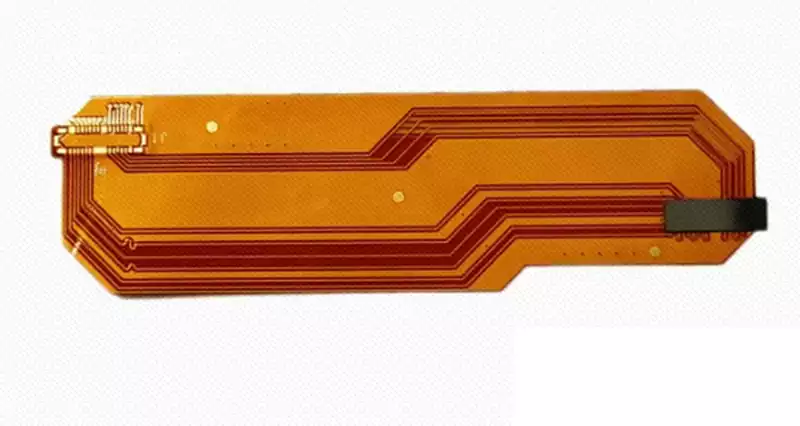
Compared to rigid printed circuit boards, the advantages of flexible pcb boards are evident. Not only does it significantly reduce the size and weight of electronic products, meeting the demand for high-density, miniaturised devices, but its excellent heat dissipation and solderability also simplify the assembly process. It is precisely these characteristics that have made FPC camera technology a fundamental driver of continuous innovation in the form factors of modern electronic devices.
The role of flexible pcb within camera modules extends far beyond mere connectivity; it directly influences camera performance and reliability. Its critical functions can be summarised in two key aspects: delivering electrical performance and providing mechanical performance. Electrically, it ensures the integrity of signal transmission; mechanically, it offers robust support for components. Underpinning these functions are the unique technological advantages of FPC.
The core technical strengths of flex pcb lie in its ‘high-density wiring’ and ‘superior flexibility’. Within the compact confines of camera modules, circuit connection points are densely packed. Traditional rigid boards or wiring harnesses struggle to achieve such intricate routing in such confined spaces. FPC, however, enables precise circuit etching on extremely thin substrates, meeting the high-speed data transmission demands of high-resolution camera modules. Simultaneously, its flexible nature permits the circuit board to bend and fold during assembly, resolving the challenge of connecting disparate components within three-dimensional spaces.
Nevertheless, flexible pcb board design presents technical challenges. Particularly in high-speed signal transmission, impedance matching proves critical. Improper FPC design may induce signal reflection and attenuation, compromising image quality. This underscores why meticulous design is paramount to ensuring camera functionality. A well-designed FPC ensures stable data transmission, whereas any flaws may precipitate malfunctions.
By harnessing flexibility to overcome rigidity and transcending spatial constraints, FPC cameras are emerging as a core engine for innovation in electronic devices. As technology advances, they will undoubtedly propel imaging technology towards new heights of slimness, intelligence, and sophistication.