The dielectric properties of PCB substrates have become a critical factor influencing device performance and stability. Conventional FR4 boards, due to their high dielectric loss, struggle to meet the demands of medium-to-high frequency signal transmission. Meanwhile, high-end, high-frequency materials remain prohibitively expensive and difficult to process, hindering their widespread adoption in consumer electronics and similar applications.
Conventional FR4 boards are clearly inadequate for mid-to-high frequency applications. The dielectric loss (Df) of standard FR4 typically ranges between 0.012 and 0.018, resulting in significant signal attenuation above 2.4GHz. Within the 5G Sub-6GHz band, the loss characteristics of traditional FR4 substantially reduce transmission distances, failing to meet terminal device communication requirements. Whilst high-end high-frequency materials like PTFE (polytetrafluoroethylene) offer exceptional loss control with Df values as low as 0.002–0.005, their cost is 5–10 times that of traditional FR4. Furthermore, their processing complexity and stringent manufacturing requirements confine their application to niche high-end sectors such as aerospace and advanced military equipment, rendering them unsuitable for mass-production scenarios in consumer electronics or industrial IoT.
The transmission characteristics of medium-to-high frequency signals impose stringent demands on the dielectric properties of PCB substrates. As signal frequency increases, the impact of dielectric loss (Df) on signal transmission becomes more pronounced—dielectric loss converts signal energy into heat, leading to signal amplitude attenuation and phase distortion, ultimately compromising communication quality and operational stability. This characteristic places medium-to-high frequency applications in a material selection dilemma between performance and cost.
The advent of low-loss FR4 precisely resolves this dilemma. Building upon traditional FR4, it employs innovative material formulations and manufacturing processes to control dielectric loss (Df) between 0.008–0.010 (tested in mid-to-high frequency bands) while maintaining dielectric constant (Dk) at 3.8–4.2. This significantly enhances mid-to-high frequency signal transmission performance while retaining traditional FR4’s advantages of low cost, excellent machinability, and robust mass production capabilities. Data indicates that at 5GHz, low-loss FR4 reduces signal attenuation by over 30% compared to conventional FR4. Within the 5G Sub-6GHz band, it extends signal transmission distances by 25%-40%, fully meeting mainstream mid-to-high frequency application requirements. This dual characteristic – ‘performance approaching high-end materials while maintaining costs near traditional FR4’ – has rapidly established low-loss FR4 as the preferred choice for mid-to-high frequency applications.
How Low-Loss FR4 Achieves ‘Loss Reduction’ and ‘Performance Balance’
1.Reducing Loss
Epoxy resin serves as the core substrate material for FR4 boards, with its molecular structure directly determining dielectric loss levels. Conventional FR4 employs bisphenol A epoxy resin, whose molecular chains contain numerous polar groups. These groups undergo polarisation relaxation in medium-to-high frequency electric fields, generating significant dielectric loss. Low-loss FR4 achieves fundamental loss reduction through epoxy resin modification: Firstly, replacing conventional resins with alicyclic epoxy resins or modified bisphenol F epoxy resins. These resins exhibit lower molecular chain polarity and weaker polarisation relaxation, reducing dielectric loss by 20%-30%. Secondly, incorporating nanoscale inorganic fillers (such as nano-silica or boron nitride) optimises the molecular arrangement within the resin, further enhancing dielectric stability and preventing substantial fluctuations in loss across medium-to-high frequency bands due to temperature or frequency variations.
2.Enhancing Dielectric Uniformity
Glass fabric serves as the reinforcing material in FR4 boards, where its dielectric properties and distribution uniformity significantly impact overall loss. Conventional FR4 employs standard E-glass fabric with a dielectric constant (Dk) of approximately 6.0–6.5. This substantial deviation from the epoxy resin’s Dk creates an uneven dielectric environment within the laminate, leading to localised loss concentration during high-frequency signal transmission. Low-loss FR4 employs low-dielectric glass fibre cloth (e.g., NE glass fibre cloth, E-CR glass fibre cloth), reducing Dk to 4.5–5.0. This brings it closer to the Dk of modified epoxy resin, substantially improving dielectric uniformity within the board and reducing localised losses during signal transmission. Simultaneously, optimising the weave density and thickness uniformity of the glass fibre cloth prevents loss fluctuations caused by weave variations, further enhancing the stability of low-loss performance.
3.Balancing Low Loss with Safety Performance
FR4 boards must meet UL94-V0 flame retardancy requirements (particularly in consumer electronics and industrial control applications). However, conventional flame retardants (such as brominated compounds or standard halogen-free agents) increase dielectric loss when added. Low-loss FR4 achieves a balance between ‘low loss’ and ‘high flame retardancy’ through optimised flame retardant selection and processing techniques: Firstly, employing low-polarity halogen-free flame retardants (such as phosphorus-nitrogen synergistic flame retardants), whose low molecular polarity minimises impact on dielectric properties without significantly increasing loss upon addition; On the other hand, optimising the flame retardant dosage and dispersion process—using nanodispersion technology to uniformly distribute the flame retardant within the resin—ensures flame retardancy meets UL94-V0 standards while preventing localised loss increases caused by flame retardant agglomeration. Furthermore, in production, low-loss FR4 employs high-precision lamination techniques with strict control over lamination temperature (175–185°C), pressure (35–45 MPa), and time (80–100 minutes) to ensure thorough resin impregnation and tight bonding with glass fibre cloth. This minimises internal voids and defects within the laminate—defects that become ‘loss hotspots’ at mid-to-high frequencies, significantly impairing signal transmission performance.
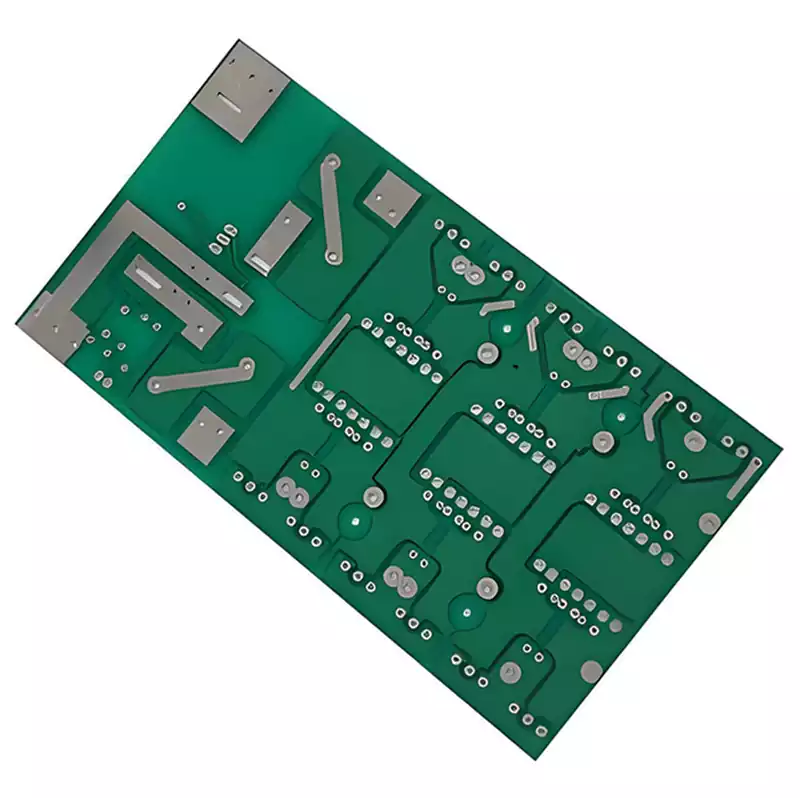
Applications of Low-Loss FR4 in the Mid-to-High Frequency Range
1.Consumer Electronics Sector
Smartphones, tablets, routers, smart televisions, and other consumer electronics constitute the largest market for mid-to-high frequency applications and represent the primary application scenarios for low-loss FR4. Within 5G Sub-6GHz smartphones, low-loss FR4 is predominantly utilised in critical components such as RF front-end PCBs and antenna linkages. Its low-loss properties ensure stable transmission of 5G signals, enhancing communication speeds and signal coverage. In WiFi 6/6E routers, low-loss FR4 is employed for Gigabit Ethernet interfaces and WiFi antenna boards, effectively reducing attenuation across 2.4GHz/5GHz/6GHz multi-band signals while enhancing the router’s wall-penetration capability and connection stability. Furthermore, given consumer electronics’ cost sensitivity and high-volume production demands, low-loss FR4’s cost-effectiveness and processing compatibility make it the optimal material choice for such products. Currently, mainstream consumer electronics brands have comprehensively adopted low-loss FR4 to replace traditional FR4 in mid-to-high frequency PCB components for their mid-to-high-end models.
2.Industrial Internet of Things (IIoT) Sector
Industrial IoT devices (such as industrial gateways, high-frequency sensors, and wireless communication modules) require stable mid-to-high frequency data transmission within complex industrial environments, demanding PCB substrates with superior loss performance and environmental adaptability. Low-loss FR4 not only fulfils signal transmission requirements in mid-to-high frequency bands like 5GHz and LoRa but also offers superior mechanical strength and moisture/heat resistance (Tg ≥ 170°C, moisture/heat rating 125°C/100% RH), making it suitable for industrial settings with high temperatures, humidity, and dust. For instance, within high-frequency data acquisition modules in smart factories, employing low-loss FR4 reduces data transmission latency by over 20%, ensuring real-time synchronisation of production data. In industrial wireless gateways, it enhances high-frequency signal penetration, enabling broader coverage across industrial production areas.
3.AI and Computing Equipment Sector
Core requirements for AI computing equipment (e.g., GPU servers, edge computing nodes) include high-speed data interconnectivity. Internal components such as PCIe 4.0/5.0 interfaces and high-speed memory links operate at mid-to-high frequencies (above 10GHz), demanding superior low-loss performance from PCB substrates. Low-loss FR4, through optimised dielectric properties, effectively reduces signal attenuation and crosstalk in high-speed interconnect links, thereby enhancing data transmission rates and stability. In recent years, driven by the explosive growth in AI computing demands, the application share of low-loss FR4 in computing equipment has surged rapidly. It has become the standard material, particularly in the PCB motherboards and daughter cards of mid-to-high-end GPU servers. Industry reports indicate that leading computing chip manufacturers such as NVIDIA and AMD have designated low-loss FR4 as their recommended substrate material for high-frequency interconnect links.
4.Automotive Electronics Sector
The advancement of smart vehicles has catalysed the adoption of mid-to-high-frequency applications within automotive systems, including in-vehicle Wi-Fi 6, 5G-V2X communication, and automotive radar (24GHz/77GHz). These applications demand exceptionally high low-loss performance and reliability from PCB substrates. Low-loss FR4 not only meets the transmission requirements for in-vehicle mid-to-high frequency signals but also adapts to the harsh conditions of automotive environments—including high temperatures, vibration, and electromagnetic interference—through optimised designs such as high Tg (≥180°C) and halogen-free flame retardancy. For instance, within automotive 5G-V2X communication modules, low-loss FR4 extends communication range and stability between vehicles and external systems, bolstering intelligent driving safety. In automotive radar systems, it reduces signal attenuation, enhancing detection accuracy and range.
The proliferation of mid-to-high frequency applications is driving technological iteration in PCB substrates, with low-loss FR4 spearheading a “democratisation” revolution for mid-to-high frequency materials. It challenges the entrenched notion that “high-end performance necessitates high-end costs”, enabling mid-to-high frequency technologies to be deployed across more application scenarios with reduced expenditure and enhanced efficiency. Looking ahead, the surge in higher-frequency applications such as 5G-A and WiFi 7 will drive continuous technological evolution in low-loss FR4. Dielectric loss will be further reduced, dielectric performance stability enhanced, while integrating additional advantages including high glass transition temperature (Tg), laser resistance, and low warpage.