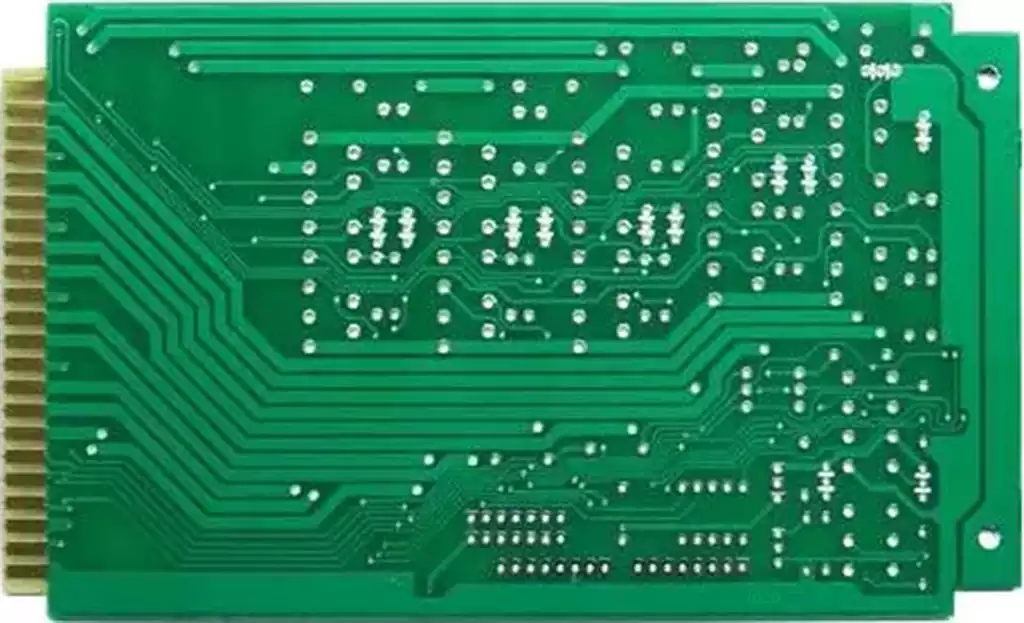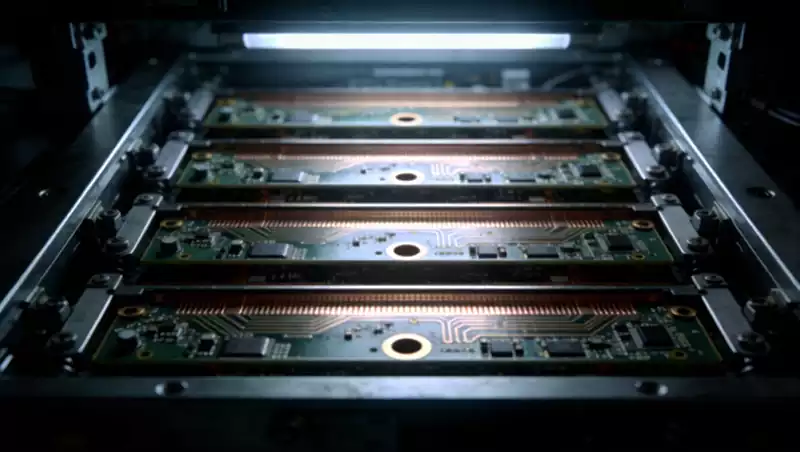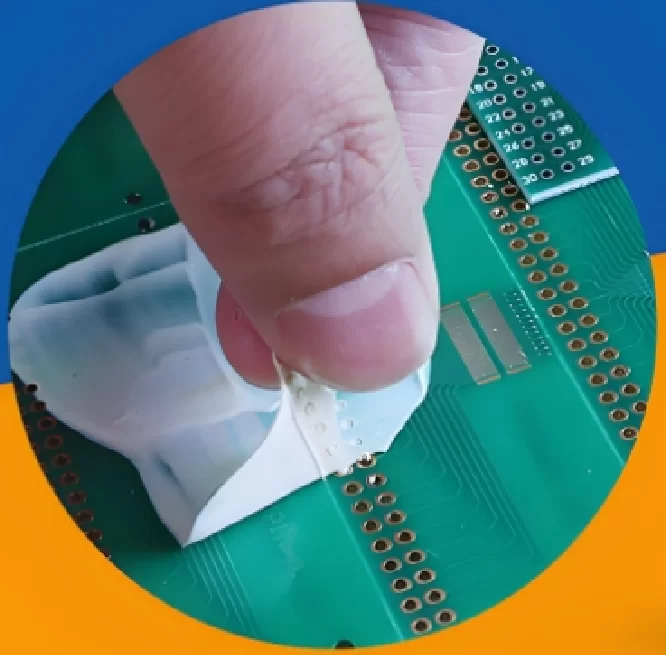
The inner layer black oxide process is one of the earliest surface treatment technologies applied in multilayer PCB manufacturing. With mature technology and relatively low cost, it is still widely used in mid- to low-end applications such as conventional multilayer PCBs and consumer electronics PCBs.
Process Principle
The core of the PCB inner layer black oxide process is an alkaline oxidation reaction. The main chemical reactions are as follows:
2Cu + O₂ + 2NaOH → Na₂Cu₂O₂ + H₂O (formation of cuprous oxide)
Na₂Cu₂O₂ + O₂ + 2H₂O → 2Cu(OH)₂ + 2NaOH (formation of copper hydroxide)
Cu(OH)₂ → CuO + H₂O (dehydration to form cupric oxide)
In simple terms, the etched inner layer core is immersed in an alkaline oxidation solution. The copper foil surface reacts chemically with the solution to form a black mixed coating composed of cupric oxide (CuO) and cuprous oxide (Cu₂O). The coating thickness is typically controlled within 0.3–0.8 μm. If the coating is too thin, it cannot effectively prevent oxidation or enhance adhesion; if too thick, it becomes brittle and prone to peeling, which negatively affects interlayer bonding.
Process Flow
1.Pretreatment
Pretreatment is the foundation of the black oxide process. Its primary purpose is to remove contaminants such as oil, oxide layers, and fingerprints from the inner layer copper surface, ensuring a clean and uniform surface for subsequent oxidation.
Pretreatment generally consists of two steps:
Degreasing: The inner-layer core is immersed in an alkaline degreasing solution at 40–50 °C for 3–5 minutes to chemically remove oils and organic contaminants from the copper surface.
Micro-etching: After degreasing, the core is placed in a micro-etch solution (mainly sulfuric acid and hydrogen peroxide). The micro-etch depth is controlled at 0.5–1.0 μm to remove surface oxides and create slight surface roughness, improving adhesion of the black oxide coating.
After pretreatment, immediate water rinsing is required to prevent residual chemicals from affecting subsequent reactions.
2.Black Oxide Treatment
This is the core step of the entire process. The cleaned inner layer core is immersed in the black oxide solution under controlled temperature, time, and solution level to ensure uniform coating formation.
The black oxide solution typically contains sodium hydroxide (alkaline medium), oxidizing agents (such as sodium hypochlorite or potassium permanganate), and complexing agents to prevent oxide detachment. While formulations may vary among suppliers, the fundamental components are similar.
The reaction temperature is generally controlled at 60–70 °C, with a processing time of 2–4 minutes. Excessively high temperature leads to overly thick and brittle coatings, while insufficient temperature results in incomplete reactions, uneven coatings, or light coloration. The solution level must fully cover the core to avoid partial blackening.
3.Water Rinsing
After black oxide treatment, the core must be immediately rinsed with flowing clean water for 1–2 minutes to remove residual black oxide chemicals. Inadequate rinsing may allow residual alkaline solution to continue reacting with copper, causing coating discoloration or peeling and adversely affecting subsequent processes.
4.Neutralization
Since the black oxide solution is alkaline, a small amount of alkaline residue may remain on the surface after rinsing. Therefore, neutralization is required.
The core is immersed in an acidic neutralizing solution (primarily sulfuric acid) for 1–2 minutes, with the pH controlled at 3–4. This step neutralizes residual alkalinity, prevents interference with drying and lamination processes, and further improves coating stability.
5.Final Water Rinsing
After neutralization, the core is rinsed again with flowing clean water for 1–2 minutes to remove residual acidic solution and ensure no corrosive substances remain on the copper surface.
6.Drying
The cleaned inner layer core is dried in an oven at 80–100 °C for 5–8 minutes to completely remove surface moisture. After drying, the surface should exhibit a uniform black appearance with no discoloration, exposed copper, or peeling.
Insufficient drying may leave residual moisture, which can cause blistering during lamination and lead to interlayer delamination. Excessive drying temperature, however, may cause the oxide coating to become brittle and detach.
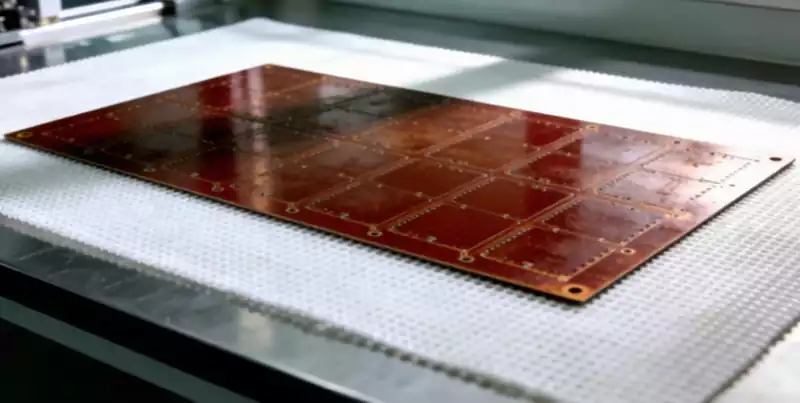
Quality Control Points for Inner Layer Black Oxide
Pretreatment cleanliness
This is the prerequisite for consistent black oxide performance. Residual oil or oxide layers can cause incomplete reactions, exposed copper areas, or uneven coatings. Degreasing and micro-etch solution concentrations should be regularly monitored and replaced as needed, with strict control of temperature and processing time.
Black oxide solution parameter control
Key parameters include concentration, temperature, and processing time. The solution concentration gradually decreases during use and must be periodically tested and replenished. Temperature and time must strictly follow process specifications to avoid excessively thick, thin, or uneven coatings.
Rinsing effectiveness
Both post-black oxide and post-neutralization rinsing must use flowing clean water to ensure complete chemical removal. Rinse effectiveness can be verified by monitoring the pH of the rinse water.
Drying temperature and time
Incomplete drying leaves moisture that may cause lamination defects, while excessive temperature can make the coating brittle and prone to peeling. Therefore, oven temperature and dwell time must be tightly controlled.
Environmental control
The production environment for the black oxide process should be maintained at 23 °C ± 2 °C and 50% ± 5% relative humidity to prevent copper surface oxidation caused by environmental fluctuations. After drying, inner-layer cores should be stored in a clean, dry environment to avoid moisture absorption and contamination.
The inner layer black oxide process for PCBs is a mature and widely adopted technology. From fundamental principles to process flow and quality control, each step is closely interconnected. In response to evolving demands in the electronics industry, continuous process optimization and refined control are essential to drive this technology toward higher quality and more environmentally sustainable development.