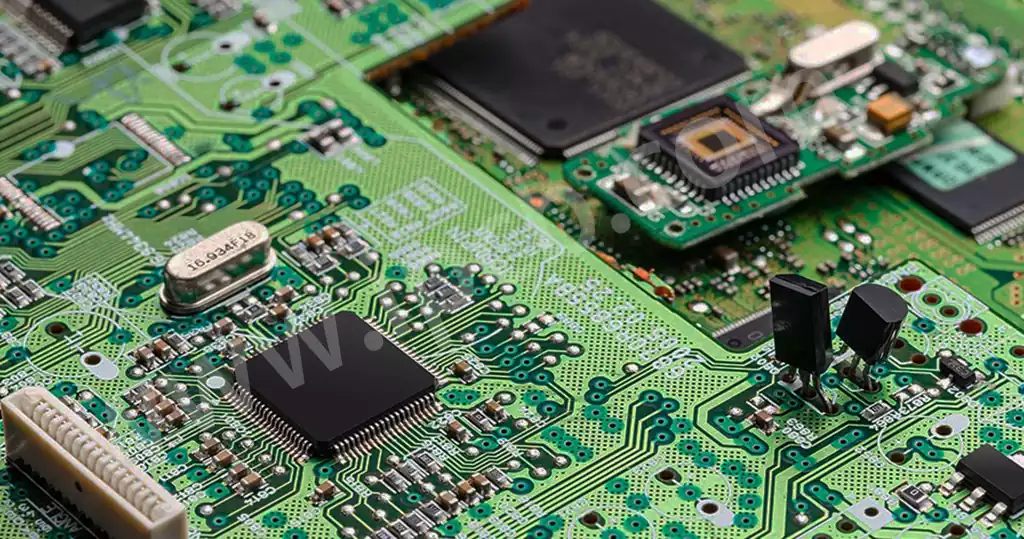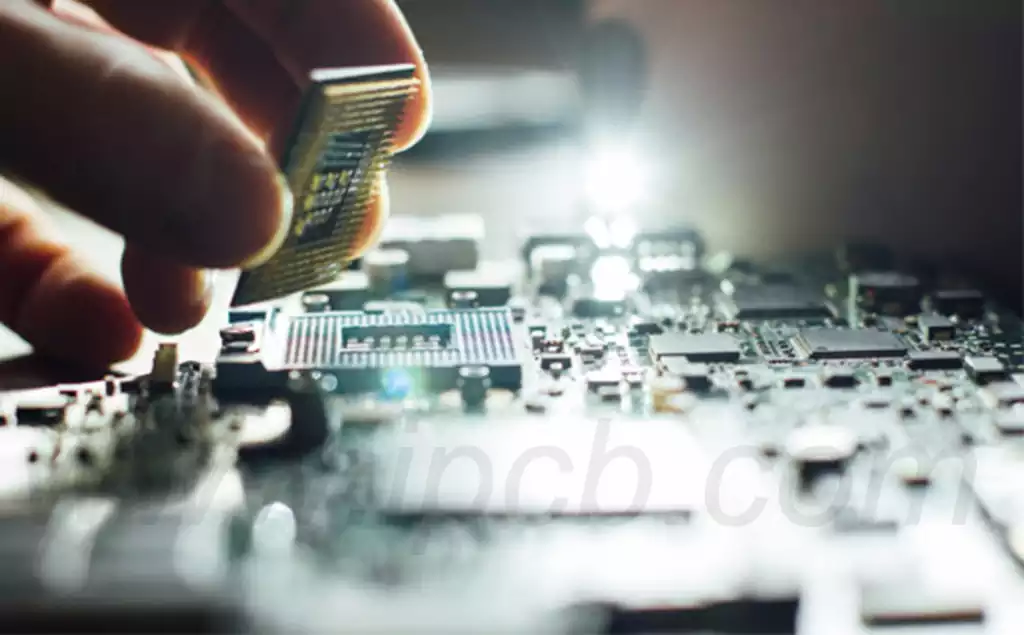
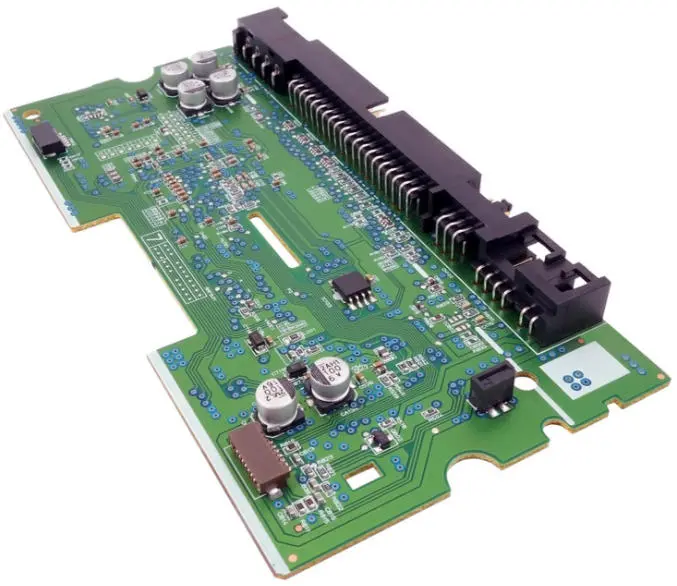
Computer pcb boards serve as the medium through which various hardware components—such as the central processing unit, memory, hard disk interfaces, and graphics cards—are interconnected via electronic circuit design. Functioning as the foundational platform for electronic components, they typically comprise multiple layers of conductive materials (such as copper) and insulating layers. Through meticulous circuit layout, the board facilitates the rational distribution and transmission of signals, currents, and voltages, ensuring the computer operates efficiently.
Types of Computer PCB Boards
Single-Sided PCB
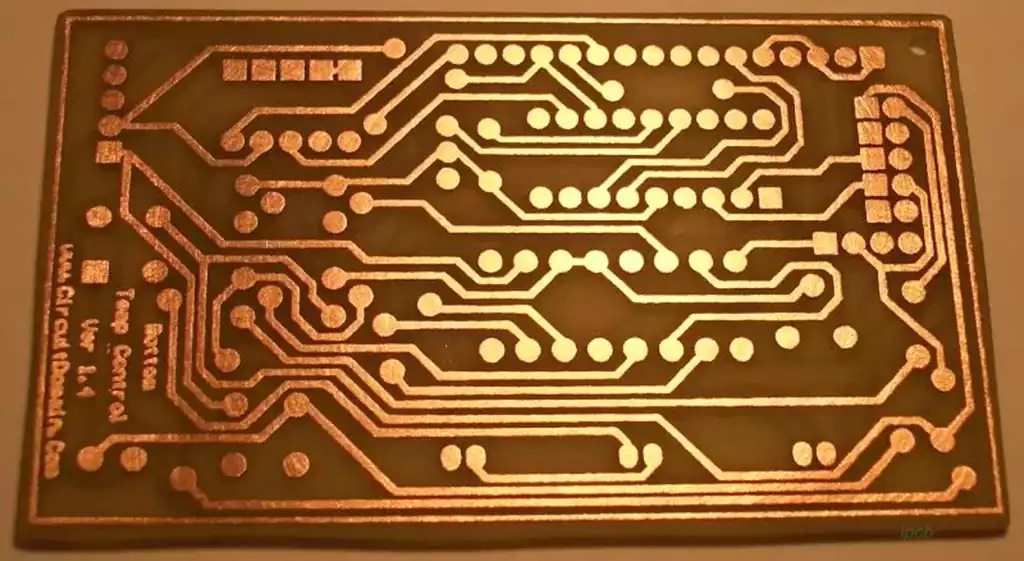
The single-sided PCB represents the most fundamental type, with all electronic components mounted on one side and circuitry concentrated there. Owing to its simplicity and low cost, it is primarily employed in relatively straightforward computer hardware.
Double-Sided PCB
Circuitry can be arranged on both sides of a double-sided PCB, increasing the usable surface area and enhancing circuit integration. It is suitable for devices requiring numerous components, such as graphics cards and network cards.
Multilayer PCB
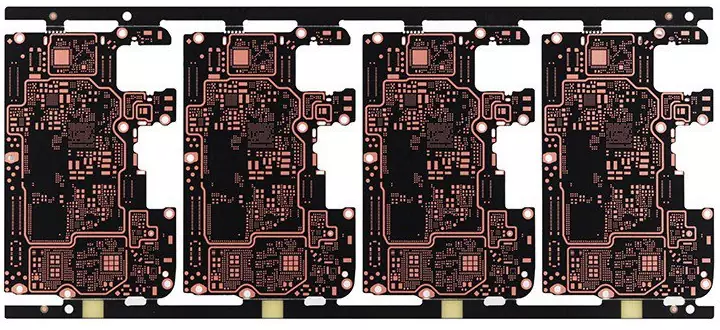
Multilayer PCBs improve integration and electrical performance by stacking multiple conductive layers. Common computer motherboards and high-end graphics cards typically employ multilayer PCBs, offering superior signal processing capabilities and higher data transfer speeds.
Flexible Printed Circuit Board (Flexible PCB)
Flexible PCBs are manufactured from pliable materials, enabling bending and coiling. They are suitable for space-constrained applications. With increasing demands for smaller and lighter computer hardware, flexible PCBs are also finding use in portable devices such as laptops and portable hard drives.
Primary Components of Computer PCB Boards
Motherboard
The motherboard stands as one of the most critical circuit boards within a computer, integrating all hardware components onto a single platform. It houses the CPU socket, memory slots, graphics card slots, storage interfaces, and various connection ports, forming the foundational framework of computer hardware. Through high-speed signal transmission channels (such as PCI-E, SATA, USB, etc.), it connects individual components to facilitate data exchange and processing.
Graphics Card PCB
The graphics card is hardware dedicated to processing graphics and images. Its circuit board (commonly termed the graphics card PCB) integrates the GPU (Graphics Processing Unit) and video output interfaces. Graphics card PCBs require not only high-speed signal processing capabilities but also efficient cooling systems to manage the high temperatures generated during graphics rendering.
Storage PCB
Storage devices such as hard disk drives (HDDs), solid-state drives (SSDs), and flash memory cards typically incorporate a circuit board to control data read/write operations and interact with the computer system. SSDs, in particular, feature a PCB integrating critical components like controllers and storage chips, which determine their performance and data storage capacity.
Power Supply PCB
The power supply PCB is responsible for converting external power into the specific voltages and currents required by various computer components, while also managing power distribution. These boards frequently handle substantial currents and demand efficient thermal management, necessitating careful design focus on current stability and heat dissipation efficiency.
The Critical Role of Computer PCB Boards
Electrical Connections and Signal Exchange
One of the core functions of a computer pcb board is to provide electrical connections. Whether facilitating communication between the CPU and memory on the motherboard, or transmitting signals between the graphics card and monitor, these processes rely on the wires, slots, and interfaces on the circuit board. The operational status of each component and the transmission of signals are smoothly accomplished through the circuit board’s role as a ‘bridge’. Different types of buses (such as data buses, address buses, and control buses) ensure efficient information exchange among internal computer components.
System Stability and Thermal Management
Given the substantial heat generated by hardware components in modern computers—particularly during high-load tasks like graphics processing, gaming, and video editing—the circuit board not only transmits current and signals but also manages heat dissipation and temperature control. Motherboards and graphics cards typically incorporate integrated cooling systems (such as heat sinks, fans, or liquid cooling) during design to maintain components at optimal temperatures during operation, preventing performance degradation or hardware damage due to overheating.
Compatibility and Expandability
The compatibility and expandability of circuit board design determine a computer system’s operability and upgradeability. By integrating standardised interfaces (such as USB, PCI-E, SATA, etc.), circuit boards allow users to conveniently add peripherals or replace hardware as required. Furthermore, the advent of multilayer circuit boards and modular designs has endowed computer circuit boards with considerable flexibility, enabling support for diverse computer systems and devices.
Challenges Faced
The Tension Between Size and Integration
As computer hardware undergoes miniaturisation, circuit board dimensions continue to shrink while component integration intensifies. This presents heightened design challenges. Arranging complex circuits within constrained spaces to prevent mutual interference while ensuring accurate signal transmission remains a significant design conundrum.
Balancing High Performance and Thermal Management
As computing power increases, the power consumption and heat generation of hardware components—particularly CPUs and GPUs—continue to rise. Designing efficient thermal management systems within highly integrated layouts to ensure long-term stable operation has become a critical aspect of circuit board design. This is especially crucial in devices like laptops and gaming consoles, where compact size and low noise levels are paramount.
Balancing Cost and Environmental Requirements
The manufacture of modern computer pcb boards necessitates high-performance materials and complex production processes, resulting in persistently high costs. Concurrently, environmental regulations are becoming increasingly stringent, such as the adoption of lead-free soldering and eco-friendly materials, which further elevate technical and material expenses during production. Therefore, maintaining performance while reducing manufacturing costs and achieving environmentally responsible production presents another significant challenge for the circuit board industry.
Future Development Trends
Higher Integration and Miniaturisation
With technological advancements, circuit boards will continue evolving towards greater integration and miniaturisation. Future computer circuit boards may incorporate more functional modules, consolidating multiple hardware devices onto a single board. This approach not only reduces device size but also enhances circuit processing capabilities.
Application of Flexible and Conformable Circuit Boards
With the proliferation of wearable devices, smart clothing, and portable computing equipment, flexible printed circuits (FPCs) will emerge as a prominent direction in future circuit board design. Flexible circuit boards can be applied to irregular shapes and confined spaces, rendering computer hardware more lightweight and comfortable—particularly suited for products involving human wear.
Intelligent and Self-Repairing Circuit Boards
Future computer pcb boards may incorporate enhanced intelligent capabilities, enabling real-time monitoring of circuit status via embedded sensors. Upon detecting faults, the board could automatically reconfigure circuits or even perform self-repair. Through integration with artificial intelligence and IoT technologies, circuit boards will develop adaptive capabilities, adjusting operational states under varying workloads to optimise performance and extend service life.
More Environmentally Friendly and Sustainable Manufacturing
Future computer pcb board manufacturing will prioritise environmental sustainability. Mainstream approaches will include utilising recyclable materials, low-energy production processes, and non-toxic soldering techniques. This not only reduces resource consumption but also minimises environmental pollution from electronic waste.
Support for High-Frequency and High-Speed Transmission Technologies
With the advancement of high-speed data transmission technologies such as 5G, Wi-Fi 6, and PCIe 4.0, future computer pcb boards will need to support higher frequencies and faster data transfer rates. This necessitates greater emphasis in board design on signal integrity, transmission speeds, and interference resistance to meet escalating bandwidth demands.
Computer pcb boards form the foundational architecture of modern computing systems, providing robust support and connectivity for hardware components. From early rudimentary boards to today’s highly integrated, multifunctional circuit systems, circuit board technology has played a pivotal role in advancing computing. As technology progresses, future computer circuit boards will become smarter, more environmentally conscious, and efficient, laying an even stronger foundation for innovation and development in computer hardware.