The Fundamental Role of PCB Socket Pins in Electronic Connections
In the design and assembly of electronic circuits, PCB socket pins are a crucial component for achieving electrical connections. They are typically used to establish reliable electrical interfaces between printed circuit boards (PCBs) and external modules, chips, or pluggable components. Compared to direct soldering connections, socket pins offer greater flexibility, allowing components to be replaced, maintained, or upgraded as needed.
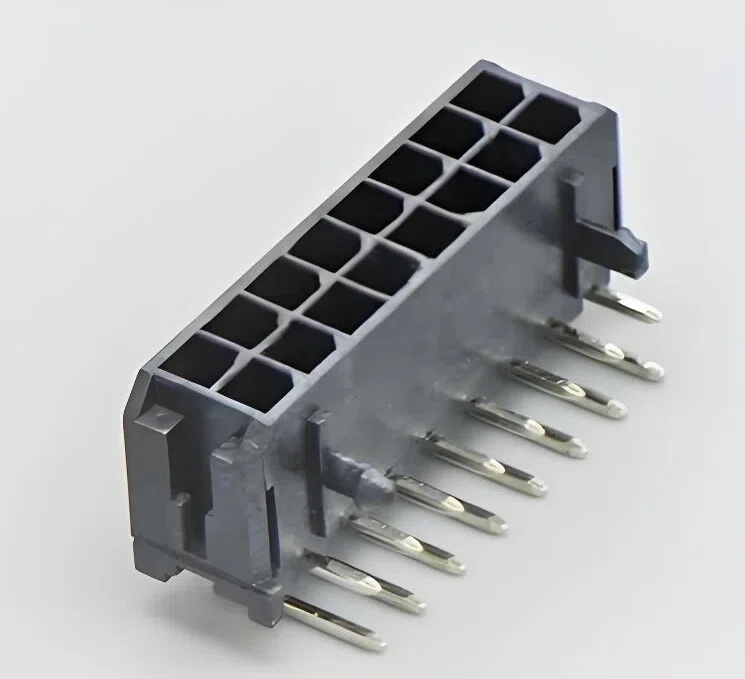
Structurally, PCB socket pins are usually made of highly conductive metal materials, such as copper alloys or phosphor bronze, and are gold-plated or tin-plated to improve conductivity and oxidation resistance. These pins are fixed to the PCB board by soldering or press-fitting, forming stable electrical connection points.
In practical applications, socket pins are commonly found in various electronic devices, such as development board interfaces, modular electronic systems, and circuit board structures with replaceable chips. By using socket pins, engineers can avoid the risks associated with frequent soldering and desoldering, while also improving the efficiency of system maintenance and debugging.
Furthermore, socket pins are also important in the prototyping stage. In the early stages of design verification, engineers often need to replace chips or modules multiple times. By using socket structures, component replacement can be performed without damaging the PCB pads, thus accelerating product development iterations.
As the requirements for modularity and maintainability in electronic devices continue to increase, the application of PCB socket pins in modern electronic design is becoming increasingly widespread. Whether in test platforms, industrial control systems, or embedded development boards, they play a crucial role in providing stable connections and flexible interfaces.
Common Types and Structural Designs of PCB Socket Pins
In electronic connection systems, PCB socket pins are not a single structure but have evolved into various types to meet different application requirements. Different pin structures differ significantly in electrical performance, mechanical stability, and mounting methods. Therefore, correctly selecting the appropriate socket pins during the PCB design and assembly stages is crucial.
Firstly, there are through-hole socket pins. This type is the most common PCB pin structure, fixed to the circuit board via through-hole soldering. After the pin passes through the PCB hole, it is soldered to the pad, thus forming a stable mechanical and electrical connection. Through-hole soldering offers high structural strength, making these socket pins commonly used in applications requiring frequent insertion and removal or subject to significant mechanical stress.
The second common type is press-fit pins. These pins utilize a special structural design to generate a certain mechanical locking force when pressed into PCB holes, achieving solderless mounting. Press-fit technology is widely used in industrial electronics and high-reliability systems because it reduces the impact of soldering thermal stress on the PCB while improving assembly efficiency.
The third type is spring-loaded pins, also known as “Pogo pins.” These pins incorporate an internal spring structure that provides continuous and stable contact pressure during contact. They are typically used in test fixtures, charging interfaces, or modular connection systems to maintain a stable electrical connection during repeated contact.
In addition, there are specialized socket pin structures, such as precision pins for integrated circuit sockets (IC sockets). These pins typically employ higher-precision manufacturing processes to ensure reliable contact of chip pins during insertion and to avoid issues with unstable contact resistance.
At the design level, the performance of socket pins depends not only on their structural form but also closely on materials and surface treatments. Common materials include copper alloys and phosphor bronze, while surfaces are typically plated with gold, tin, or nickel to improve conductivity and reduce contact problems caused by oxidation.
Therefore, when selecting PCB socket pins, factors such as electrical performance, mechanical strength, and the operating environment must be considered comprehensively. A reasonable pin structure can not only improve connection reliability but also reduce problems during assembly and maintenance.
Reliability Issues of PCB Socket Pins in Assembly and Long-Term Use
While PCB socket pins provide a flexible connection method for electronic systems, improper design or assembly can lead to a series of reliability issues during actual production and long-term use. Therefore, it is crucial to thoroughly evaluate the structure, soldering quality, and contact stability of socket pins during the PCB design and manufacturing stages.
Firstly, a common problem is unstable contact resistance. The core function of socket pins is to establish a stable electrical connection. Insufficient contact pressure between the pin and the corresponding socket, or poor surface plating quality, can cause fluctuations in contact resistance. In high-speed or low-voltage circuits, this issue can cause signal instability or intermittent equipment failure.
Secondly, there is mechanical fatigue and insertion/removal wear. In applications requiring frequent module replacement or equipment maintenance, socket pins undergo numerous insertion/removal cycles. Over time, metal contacts may wear, the surface plating may thin, and oxidation may occur, affecting the reliability of the electrical connection. Therefore, in applications with high insertion/removal cycles, thicker gold plating is typically chosen to extend the lifespan of the pins.
The third issue to consider is soldering or mounting quality. For through-hole soldered socket pins, improper soldering temperature control or insufficient solder filling can lead to cold solder joints or insufficient solder joint strength. For press-fit structures, inaccurate PCB hole diameter tolerance control can result in excessive or insufficient pressing force, affecting connection stability.
Furthermore, environmental factors can also affect the reliability of socket pins. For example, in high-humidity or corrosive environments, metal surfaces may oxidize or corrode, leading to decreased contact performance. In these applications, materials and surface plating with higher corrosion resistance are typically required.
Finally, in high-speed or high-frequency electronic systems, the parasitic inductance and capacitance introduced by socket pins also need to be considered. Due to the inherent length and geometry of the pin structure, it may affect signal integrity during high-frequency signal transmission. Therefore, in high-speed interface design, engineers typically optimize the connection structure to reduce signal distortion.
Overall, while PCB socket pins have a simple structure, their reliability involves multiple factors, including material selection, manufacturing precision, assembly quality, and the operating environment. Only by fully considering these factors during the design and manufacturing stages can the stability of the connection system be ensured during long-term operation.
How to Choose the Right PCB Socket Pins to Improve System Stability
In electronic system design, selecting the right PCB socket pins is crucial for ensuring the stability of electrical connections and the long-term reliable operation of equipment. Because different application environments and electrical requirements vary, multiple factors need to be considered when selecting socket pins, not just their basic connection functions.
First, selection should be based on electrical performance requirements. Different socket pins differ in conductivity and contact resistance. In high-speed signal or low-voltage applications, stable and low-impedance connections are paramount. Therefore, highly conductive metals are typically preferred, often with gold or nickel plating to reduce contact resistance and improve oxidation resistance.
Secondly, mechanical strength and insertion/removal life should be considered. If socket pins are used in modular systems or test equipment, they may need to withstand frequent insertions and removals. In such cases, the elasticity of the pin material, the structural design, and the plating thickness all affect their durability. High-quality pins can typically withstand thousands or even more insertion/removal cycles without significantly affecting contact performance.
Thirdly, the mounting method and PCB structure must be carefully considered. For example, through-hole soldering pins are suitable for applications requiring high mechanical strength, while press-fit structures are suitable for applications that need to avoid the heat effects of soldering or improve assembly efficiency. Engineers should ensure that the dimensions, tolerances, and mounting methods of socket pins perfectly match the PCB design when selecting them.
Furthermore, in some special application environments, environmental adaptability must be considered. For example, electronic equipment operating in high-temperature, high-humidity, or vibrating environments places higher demands on connector reliability. In these cases, socket pins with stronger corrosion resistance and a more stable structure are more suitable. Finally, in high-speed or high-density electronic systems, the layout and structure of socket pins also need to consider signal integrity. Appropriate pin spacing and connection methods can reduce parasitic inductance and capacitance, thereby ensuring signal transmission stability.
Overall, selecting suitable PCB socket pins is not simply a matter of component selection, but a comprehensive decision involving electrical performance, mechanical reliability, and assembly processes. By fully evaluating these factors during the design phase, the overall stability and long-term reliability of electronic systems can be effectively improved.
Summary
The Key Value of PCB Socket Pins in Electronic Connections
In modern electronic devices, stable and reliable connection structures are crucial for system performance. PCB socket pins, as a common connection solution, play an important role in enabling modular design, facilitating maintenance, and improving assembly flexibility.
By using socket pins, engineers can establish reliable electrical connections between the PCB and external modules, chips, or interfaces, while avoiding the potential risks associated with frequent soldering and desoldering. In the prototyping stage, this structure can accelerate the testing and debugging process; in mass-produced products, it helps improve system maintainability and upgradeability.
However, the performance of socket pins depends not only on their basic structure but also on factors such as material selection, surface plating, assembly processes, and the operating environment. Failure to adequately consider these factors during the design phase can lead to problems such as unstable contact resistance, mechanical wear, or decreased long-term reliability.
Therefore, in the PCB design process, appropriately selecting the socket pin type and optimizing its installation method is crucial for improving connection stability and system reliability. As the demand for modularity and high reliability in electronic products continues to increase, PCB socket pins will play an increasingly important role in electronic applications.