Micro-hole machining on ceramic substrates represents the final hurdle in realising the performance of high-end electronic devices. The brittle yet hard ceramic materials (such as aluminium oxide and aluminium nitride) impose extreme demands on drilling precision and stability, particularly for micro-holes ≤0.5mm in diameter. Improper processing readily leads to defects like chipping, cracking, and rough hole walls, directly resulting in substrate scrap and diminished product reliability. Laser drilling and mechanical drilling, as the two predominant techniques, are not mutually exclusive choices. They exhibit distinct differences in their suitability for specific scenarios, processing outcomes, and cost implications.
Rigid Constraints of Ceramic Substrate Properties on Micro-hole Machining
The material characteristics of ceramic substrates dictate that micro-hole machining cannot simply replicate the drilling logic of traditional circuit boards, forming the root cause for the need for targeted optimisation in both processes. Aluminium oxide ceramics exhibit a hardness of HRA 85-90, while aluminium nitride ceramics possess even greater hardness. Both materials are highly brittle with poor impact resistance, making stress control and temperature management during micro-hole machining directly decisive for final product quality.
The core requirements for micro-hole processing converge on four key aspects: precision (hole diameter tolerance, positional deviation), hole wall quality (free of burrs, cracks, and low surface roughness), loss control (chipping rate ≤1%), and mass production compatibility (balancing efficiency and cost). Processing difficulties vary significantly across ceramic materials: Alumina ceramics, being cost-effective with slightly superior toughness, serve as the mainstream substrate for micro-hole processing. Aluminium nitride ceramics, while offering excellent thermal conductivity, exhibit greater brittleness, posing higher risks of chipping and cracking during drilling and demanding stricter process parameter control. Beryllium oxide ceramics boast outstanding dielectric properties but are highly toxic, necessitating additional protective measures during processing and limiting process options.
Laser Drilling vs Mechanical Drilling Comparison
1.Processing Principles and Core Advantages
Laser drilling relies on the thermal or photochemical effects of high-energy-density laser beams to melt, vaporise, or ablate material from ceramic substrates, forming micro-holes. Its core advantage lies in exceptional precision, achieving apertures as small as 0.05mm with diameter tolerances controlled within ±2μm and positional deviation ≤3μm. The non-contact processing eliminates mechanical stress, effectively mitigating chipping and cracking risks in ceramic substrates while delivering outstanding wall smoothness (roughness Ra ≤0.8μm). It is particularly suited to extremely brittle ceramic materials such as aluminium nitride, as well as high-precision, fine-aperture machining requirements.
Mechanical drilling employs diamond-coated drill bits rotating at high speeds to cut ceramic materials, constituting a contact-based process. Its core advantage lies in high mass-production efficiency: for micro-holes of 0.2–0.5mm diameter, the processing time per hole is merely one-third to one-half that of laser drilling. Furthermore, equipment acquisition costs are low, amounting to only one-quarter to one-half of laser drilling machinery, making it suitable for batch processing scenarios with moderate precision requirements. Furthermore, mechanical drilling produces no heat-affected zone, preventing high-temperature degradation of ceramic properties and demonstrating excellent compatibility with alumina ceramics.
2.Limitations and Process Shortcomings
Laser drilling’s shortcomings centre on cost and efficiency. Equipment acquisition and maintenance expenses are substantial, and single-hole processing times are lengthy. For micro-holes exceeding 0.3mm in diameter, efficiency falls significantly below mechanical drilling. High-temperature processing generates a heat-affected zone (typically 5–10μm), potentially inducing crystalline phase changes in the ceramic material surrounding the hole walls, thereby reducing insulation properties and mechanical strength. Processing thick substrates (thickness >1.0mm) is challenging, often resulting in issues such as hole wall inclination and inconsistent hole diameters.
The limitations of mechanical drilling stem from its contact-based processing nature. Precision is constrained, with the minimum achievable aperture being 0.15mm, an aperture tolerance of ±5μm, and a positional deviation ≤8μm, making it difficult to meet high-precision application requirements. Mechanical friction between the drill bit and ceramic substrate readily generates stresses, increasing the risk of chipping and cracking, particularly for aluminium nitride ceramics where the wear rate can reach 5%-8%. Drill bit wear is rapid; diamond-coated bits for alumina ceramics typically last 5,000–8,000 holes, necessitating frequent replacement and increasing consumable costs alongside downtime.
Considering the characteristics of both processes and the material differences of ceramic substrates, the following selection recommendations are provided based on processing requirements to achieve an optimal balance between performance and cost:
1.High-precision, fine-aperture scenarios (aperture ≤ 0.15mm)
Prioritise laser drilling. These applications are prevalent in 5G base stations and aerospace high-end modules, demanding exceptional hole diameter precision and wall quality unattainable through mechanical drilling. Recommend pulsed fibre laser drilling equipment with optimised parameters (pulse width 10–20ns, frequency 50–100kHz) to reduce the heat-affected zone to under 5μm. For aluminium nitride ceramics, employ a ‘laser pre-drilling + secondary polishing’ process to further enhance bore wall smoothness and reduce loss rates.
2.Medium-precision, mass-production scenarios (aperture 0.2–0.5mm)
Prioritise mechanical drilling. These scenarios are common in new energy vehicle power modules and domestic LED driver substrates, primarily involving alumina ceramics where cost and efficiency are critical. Select diamond-coated drill bits (diameter matching hole size, 118° cutting edge angle), optimise rotational speed (30,000–50,000 rpm) and feed rate (50–100 mm/min) to minimise mechanical stress. Employ air cooling combined with dust extraction systems to promptly remove swarf, reducing chipping risks and controlling wastage rates below 1%.
3.Scenarios involving thick substrates and complex hole geometries (thickness > 1.0mm, irregular/stepped holes)
Employ a ‘laser + mechanical’ hybrid process. Mechanical drilling excels at rough machining thick substrates, rapidly establishing base apertures to enhance efficiency. Laser drilling is reserved for finishing operations, refining hole accuracy and optimising wall quality while mitigating stress-induced defects inherent to mechanical processing. For complex structures like irregular or stepped holes, laser drilling’s flexibility proves advantageous. It enables precise hole shape control through programming without tool changes, whereas mechanical drilling requires customised drills—a costly and inflexible approach.
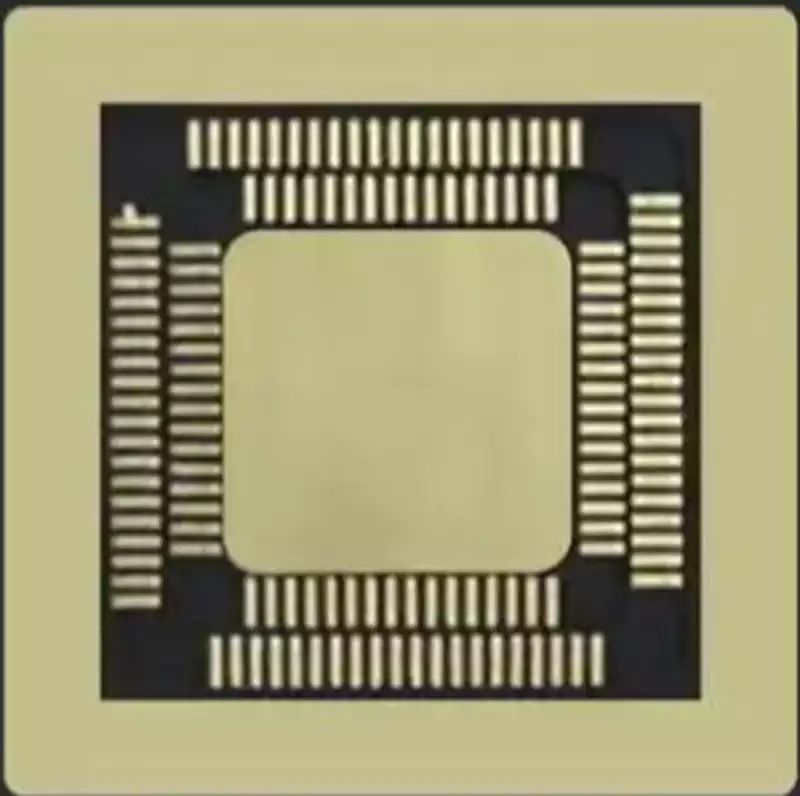
4.Alumina/Beryllium Oxide Ceramic Processing
Laser drilling is the preferred method for aluminium nitride ceramics. Non-contact processing minimises the risk of chipping and cracking. Surface grinding pre-treatment is required prior to processing to enhance laser absorption efficiency. Due to toxicity restrictions, mechanical drilling of beryllium oxide ceramics generates cutting debris that may cause contamination. Laser drilling is therefore prioritised, utilising sealed processing equipment and protective devices to ensure operational safety.
Key Quality Control Points
Common defects in micro-hole processing of ceramic substrates include chipping, cracking, rough hole walls, and diameter deviation, necessitating comprehensive quality control throughout the process.
Raw Material Pre-treatment: Prior to storage, ceramic substrates undergo flatness inspection (tolerance ≤0.02mm). Surface contaminants and scratches are removed via grinding to prevent stress concentration during processing. For aluminium nitride ceramics, low-temperature annealing may be applied to relieve internal stresses. Process Inspection: Employ automated optical inspection (AOI) to monitor hole diameter accuracy, positional deviation, and wall quality in real-time, adjusting process parameters immediately upon defect detection. Conduct small-batch trials (50-100 pieces) prior to mass production to validate process feasibility. Post-Processing: Remove debris from holes via ultrasonic cleaning. Subject thick substrates to pressure testing and mechanical strength assessment to ensure absence of latent cracks.
Best practice in micro-hole processing for ceramic substrates never lies in pursuing the ultimate performance of a single technique. Instead, it involves selecting the most suitable process based on material properties, aperture requirements, precision standards, production scale, and cost constraints. Through parameter optimisation and comprehensive quality control throughout the process, maximum processing effectiveness is achieved. Laser drilling excels in high precision, while mechanical drilling offers superior efficiency—each has distinct strengths in ceramic substrate processing. Indeed, complementary advantages can be realised through hybrid processes.
As high-end electronic devices demand ever-greater precision and density in ceramic substrate micro-holes, both laser and mechanical drilling technologies will continue to evolve. Laser drilling’s efficiency and cost challenges will gradually diminish, while mechanical drilling’s precision will further improve. For processing enterprises, accurately understanding the characteristics of both techniques and optimising solutions based on practical requirements is essential to gain a competitive edge in ceramic substrate processing. This approach provides robust support for realising the performance capabilities of high-end electronic devices.