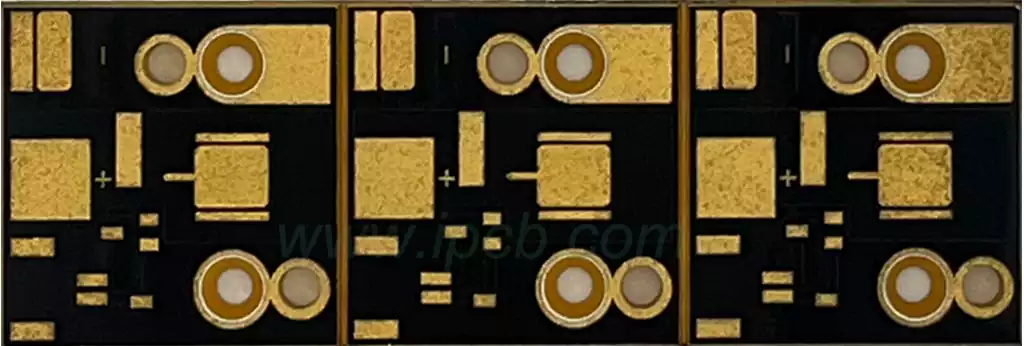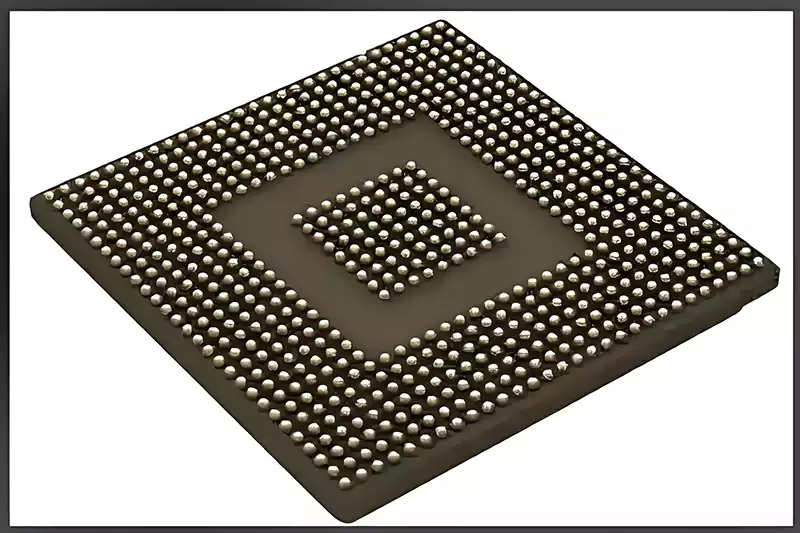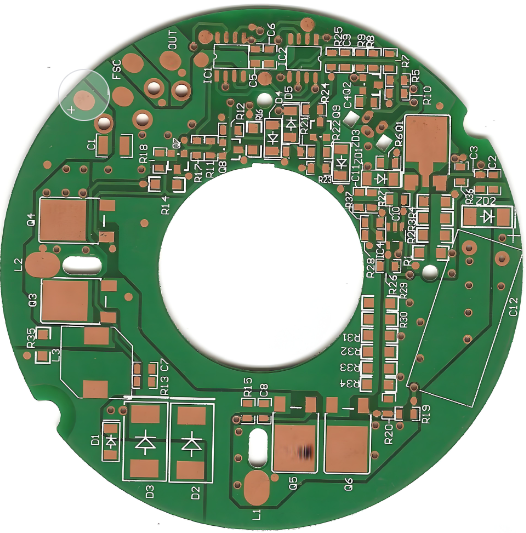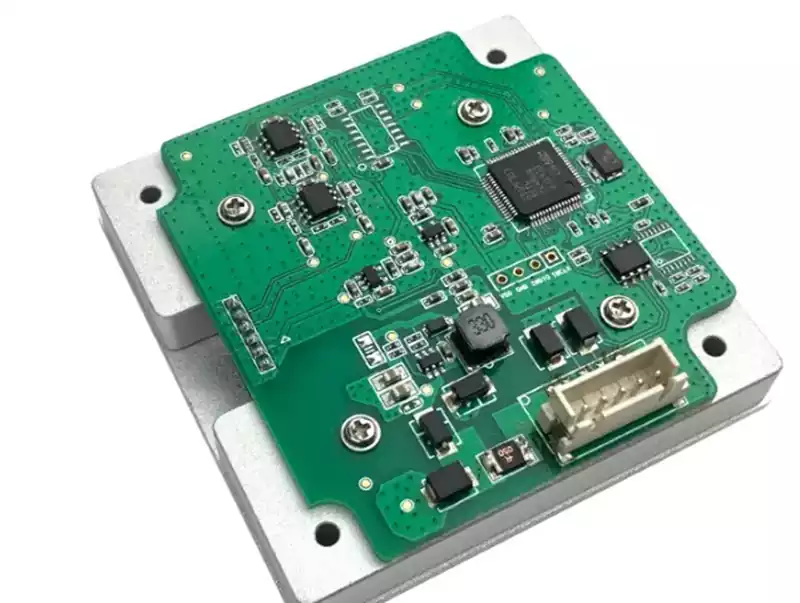
The drone pcb board serves as the core component of the flight system, and its electromagnetic compatibility directly affects the stability of the drone’s flight. In high-frequency operating environments, circuit boards are susceptible to various forms of electromagnetic interference; it is therefore necessary to identify the causes of such interference and implement targeted mitigation measures.
Common Electromagnetic Interference in drone pcb boards and Their Causes
1.Power System Interference
The power system (lithium battery, BEC, power distribution board) is the primary source of interference: ripple and spike noise generated by the switching of voltage regulators, coupled with insufficient filtering, can interfere with the flight controller; back-EMF generated by the commutation of brushless motors can feed back through the power bus, interfering with the flight controller and video transmission.
2.High-Frequency Radiation from Motors and ESCs
The ESC is the strongest source of radiated interference: high frequency PWM modulation driving MOSFET switching generates differential-mode and common-mode interference; if the three-phase wires of the ESC and motor are not shielded or twisted together, they will radiate high-frequency harmonics, interfering with the receiver and video transmission antennas,leading to loss of control or video transmission anomalies.
3.Interference from Digital Circuits and Clock Signals
The flight controller’s MCU generates high frequency noise during operation: if clock signals and their higher harmonics fall within the GPS or radio frequency bands, they will increase background noise; an incomplete ground plane can generate ground bounce noise, affecting the accuracy of ADC data acquisition.
4.High-Speed Interfaces and Signal Reflection
If USB interface traces are not impedance matched,signal reflection and radiation may occur, interfering with the IMU;poor RF shielding or loose feedlines in the video transmission module may cause RF energy leakage, leading to flight controller crashes or sensor malfunctions.
5.Sensor Sensitivity to Interference
High frequency, high current traces near the IMU can cause attitude drift; magnetic compasses are susceptible to interference from ESCs,motor magnetic fields and high currents; if laid out improperly,this can lead to abnormal heading and loss of flight control.
6.Ground Loop Interference
Ground loops formed by the flight controller,video transmission module and battery negative terminal via the frame can induce currents from external electromagnetic fields, introducing noise that causes video stripes or sensor data jitter.
Methods and Measures for Suppressing Electromagnetic Interference in drone pcb boards
PCB Layout Optimisation
A rational layout is fundamental to reducing electromagnetic interference. The key lies in ‘zoning and isolation, proximity placement, and shortening signal paths’ to block interference at source.
Zoning and Isolation: Clearly separate interference sources (such as switching power supplies and ESCs) from sensitive components (such as flight control chips and GPS modules); maintaining a distance of 10–15 mm can effectively reduce interference.
Signal Zoning: Digital, analogue and high-frequency signals should be arranged in separate zones to avoid criss-crossing and overlap; high-frequency modules should be positioned close to the antenna interface to shorten signal paths.
Proximity Layout: Group related components together to minimise the power loop area (e.g., within 1 cm²), thereby reducing radiated interference. This also shortens the length of critical signal lines, minimising signal reflection and crosstalk.
Upgraded Wiring Design
Wiring must ensure signal integrity, adhering to the principles of “impedance matching, differential transmission, and interference avoidance”.
Impedance Matching: High-frequency signal lines (such as RF and differential signals) should be set to a suitable impedance (e.g. 50Ω, 100Ω), avoiding sharp bends to minimise signal reflection and radiation.
Differential Pair Routing: Use differential pairs for high-speed signals, arranging them with equal lengths to effectively suppress common-mode interference and avoid crossing with other signal lines.
Grounding and Power Routing: Adopt a method where digital ground, analogue ground and power ground are separated and connected at a single point. Use a continuous ground plane, combined with thick, short ground traces and decoupling capacitors, to reduce common-mode impedance coupling and power supply noise.
Material and Process Selection
Materials and processes directly influence interference immunity and environmental adaptability.
Material Selection: High-Tg FR4 substrate combines lightweight properties with interference immunity; For PCB boards with high-frequency signals, high-frequency substrates such as RO4350B may be selected, whilst core modules may be paired with shielding materials such as metallised polyimide.
Shielding Processes: Internally, a Faraday cage is formed by optimising the layer stack-up (e.g., a five-layer stack) and arranging ground vias around high-frequency components; externally, aluminium shielding enclosures and conductive elastomers are used, achieving a shielding effectiveness of up to 120 dB.
Soldering and Assembly: Ensure reliable connections for ground vias; utilise laser reflow soldering for high frequency components to minimise contact issues caused by vibration; employ twisted-pair cables or metal braided shielding to prevent them from becoming conductive paths for interference.
Filtering and Isolation
As a final line of defence, filtering and isolation technologies further ensure the stable operation of the module.
Filtering Technology: Multi-stage LC filters and ferrite beads are employed on the power supply side to suppress switching ripple and power-line interference; common-mode/differential-mode filters or band-pass filters are fitted to signal interfaces to enhance signal purity.
Isolation Techniques: Optical isolation (e.g. optocouplers) breaks the electrical connection and is suitable for use between the flight controller and the ESC; electromagnetic isolation (e.g. transformers, inductors) is used between the power supply and the core modules to effectively block the conduction of interference.
Electromagnetic compatibility design for drone pcb boards must be integrated throughout the entire process; engineers must understand the causes of interference, adhere to relevant principles and optimise processes to ensure the stable operation of the UAV.