In the mSAP process, the core of impedance control lies in ensuring that the impedance of PCB traces meets design standards through comprehensive parameter management throughout the entire process. Compared to traditional subtractive methods, impedance control in the mSAP process is characterised by three key aspects: precision, consistency and adaptability. Whilst impedance deviations in traditional processes typically range around ±10%, a mature mSAP process can control tolerances to within ±7%, thereby better meeting the demands of high-frequency and high-speed applications.
In the mSAP process, the core of impedance control lies in ensuring that the impedance of PCB traces meets design standards through comprehensive parameter management throughout the entire process. Compared to traditional subtractive methods, impedance control in the mSAP process is characterised by three key aspects: precision, consistency and adaptability. Whilst impedance deviations in traditional processes typically range around ±10%, a mature mSAP process can control tolerances to within ±7%, thereby better meeting the demands of high-frequency and high-speed applications.
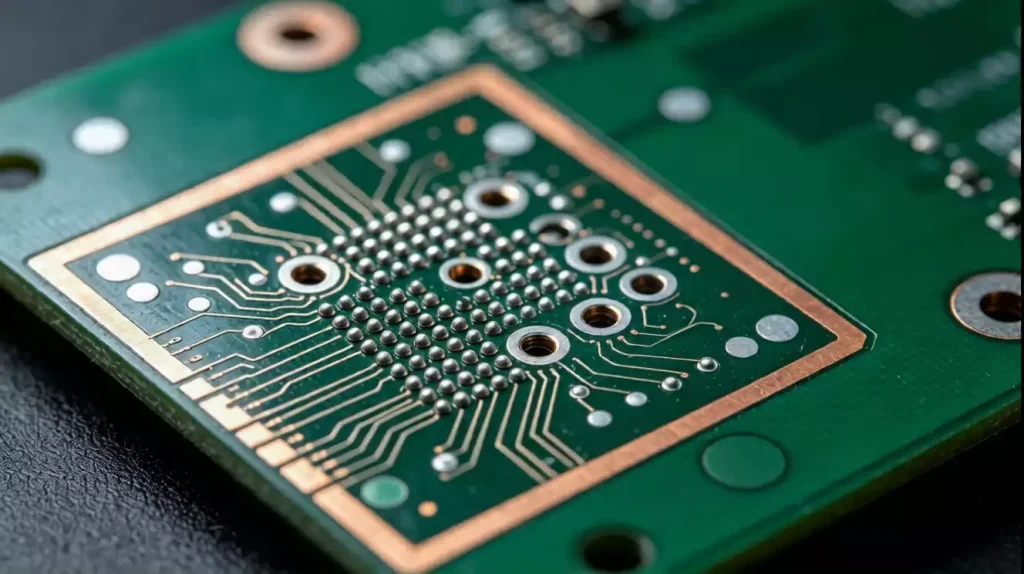
In terms of precision, the mSAP process utilises an ultra-thin seed copper layer with a thickness of ≤3 μm. Combined with selective plating to increase thickness, this enables precise control over the thickness and width of the traces, reducing the impedance fluctuations caused by uneven etching in traditional subtractive methods.
Specifically, the surface profile of the seed copper layer must be controlled to Rz ≤ 1.5 μm; otherwise, excessive roughness will affect the formation of fine circuits and interfere with high-frequency signal transmission. During the plating stage, current density and temperature are regulated to ensure uniform circuit thickness, thereby maintaining stable impedance. These measures enable the mSAP process to be suitable for high-frequency applications such as 5G millimetre-wave and 1.6T optical modules.
Consistency is a key factor in ensuring the large-scale mass production of the mSAP process. In high density PCBs, a single board often integrates hundreds of fine lines, and the impedance consistency of each line directly affects signal synchronisation and stability. Through fully automated process control, the mSAP process can limit impedance consistency deviations between products within the same batch, on the same panel, and across different batches to ≤3%, whereas traditional processes typically achieve ≤8%.
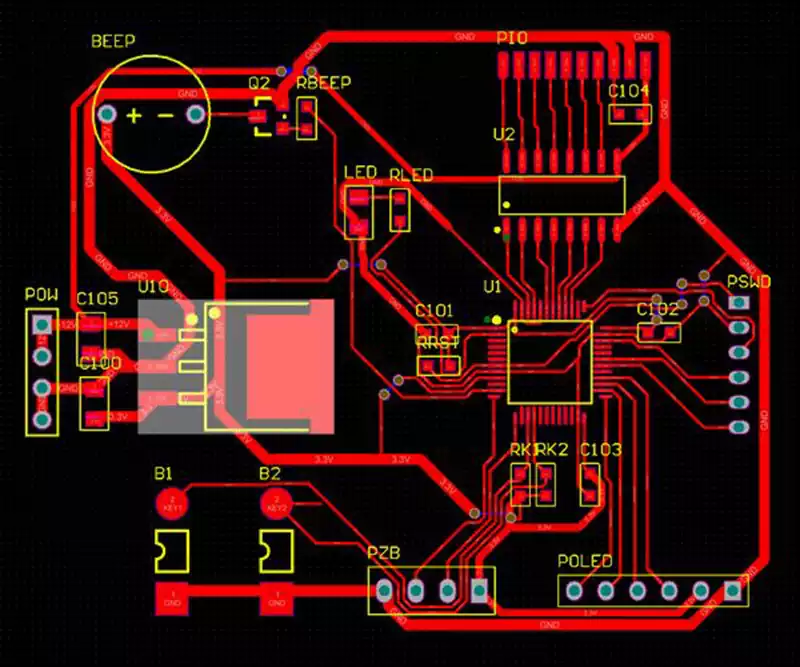
Adaptability demonstrates the mSAP process’s flexibility in responding to diverse high-end applications. With the development of sectors such as AI, 5G and new energy vehicles, PCB impedance requirements vary significantly: 5G millimetre-wave base stations typically require a characteristic impedance of 50Ω, AI servers require a differential impedance of 100Ω, whilst IGBT modules for new energy vehicles must be adapted to high-voltage environments.
By adjusting substrate parameters, circuit design and laminate structure, the mSAP process enables precise impedance control whilst achieving high-density integration, making it suitable for a wide range of products including RF packaging substrates, SiP packaging substrates and PMIC packaging substrates.
Impedance control in the mSAP process spans the entire workflow from substrate selection to final product inspection, adopting a model of ‘pre-emptive prevention, in-process control and post-process verification’. During substrate selection, high-frequency characteristics must be met: dielectric constant variation must be controlled within ±0.2, the dielectric loss tangent must be ≤0.002, and substrate thickness deviation must be ≤±5μm; carrier copper foil thickness must be ≤3μm, and surface roughness (Rz) must be ≤1.5μm.
During the circuit formation stage, the seed copper layer is applied via sputtering or electroless plating to ensure uniformity and the absence of pinholes; the current density for selective electroplating is typically 1–3 A/dm²; flash etching precisely removes excess copper layers to ensure smooth circuit edges, with impedance accuracy controlled within ±5%. During the lamination and drilling stages, the spacing between the circuit lines and the reference plane is controlled to <10 μm, with blind via diameters of 25–50 μm. Laser drilling reduces the wall roughness to below Ra 0.5 μm, thereby minimising signal reflection.
During final inspection, high-precision impedance testers (accuracy ±1 Ω) are used in conjunction with AI vision inspection systems to perform 100% inspection of critical circuits, rather than the sampling inspection typical of traditional processes, thereby improving the pass rate for impedance control.
The Role of Impedance Control in the mSAP Process
1.Ensuring lossless transmission of high-frequency signals. High-frequency signals (such as 5G millimetre-wave at 24–100 GHz and AI servers at 56 Gbps+) are sensitive to impedance continuity; a deviation of just 1 Ω can cause signal reflection and an increase in bit error rate. The mSAP process achieves line width alignment accuracy of ±3 μm via LDI, whilst electroplating ensures line thickness uniformity within ±1 μm, line sidewall perpendicularity >85°, and surface roughness Rz ≤3 μm. Compared to traditional processes, this reduces surface roughness by approximately 60% and reduces insertion loss by 40% in the 20 GHz frequency band.
2.Supporting fine-line and high-density integration. The mSAP process can achieve line widths and spacings of 10–30 μm, with impedance control serving as the key indicator for assessing the quality of such fine-line processing: for example, at a line width of 10 μm, a copper thickness deviation exceeding ±2 μm may cause the impedance to drop from 100 Ω to below 90 Ω. At the same time, through precise impedance control, consistency can be maintained even when line spacing is reduced. For instance, increasing the spacing between differential pairs from 20 μm to 40 μm can significantly reduce crosstalk, whilst keeping impedance deviation within ±5%.
3.Improving mass production yield and stability. Proactive prevention, in-process control and post-process verification throughout the entire process reduce the risks associated with process fluctuations, helping enterprises to mass-produce high-end PCBs.
The impedance control of the mSAP process relies on comprehensive parameter management throughout the entire process, providing a stable foundation for signal transmission in applications such as 5G millimetre-wave, AI servers and new energy vehicles, whilst simultaneously improving mass production yield and reducing rework costs.