Deciphering the Underlying Dissolution Mechanism of PCB board Cleaner Spray
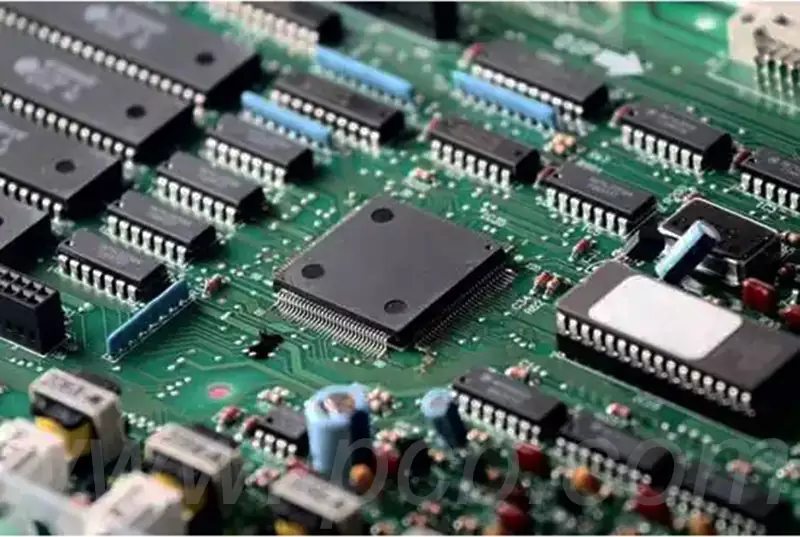
When a cleaning agent spray is applied to a motherboard that has just undergone a high-heat reflow oven at 260°C, the layer of charred, yellowish flux residue on the surface does not simply disappear. The physical essence of cleaning lies in utilizing the thermodynamic mutual solubility principle between specific organic chemical solvent molecules and contaminant molecules to forcibly break down, encapsulate, and wash away the residue.
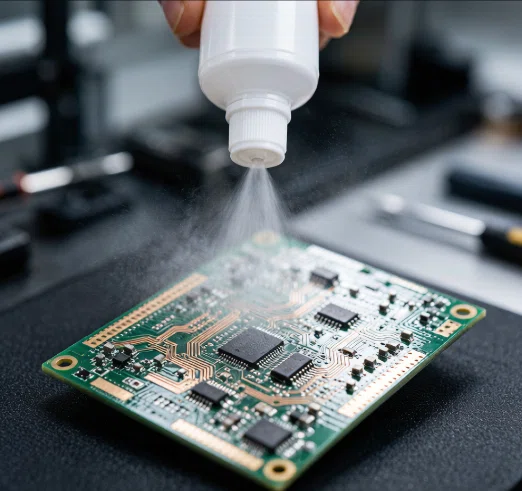
Kauri-Butanol Value (KB Value) and the Physical Contrast Between Polarity and Non-polarity: The core indicator for evaluating the chemical solubility of a PCB board cleaner spray is its KB value. The KB value represents the solvent’s ability to dissolve a specific natural resin at a standard volume, directly defining the solvent’s “solubility”: high KB value solvents (KB > 100, such as halogenated hydrocarbons and certain esters) possess extremely aggressive microscopic chemical shear forces. When sprayed onto carbonized, high-temperature rosin or highly cross-linked modified synthetic resin flux, it can instantly break down their strong molecular chains, dissolving and diluting them before they are washed away by the airflow.
However, a high KB value is a dangerous double-edged sword. If used improperly, it can cause swelling, cracking, or physical dissolution along with the plastic connector housings on the motherboard, the rubber seals of electrolytic capacitors, and even the solder mask. Medium/low KB solvents (KB 30~50, such as isopropyl alcohol IPA, modified alcohols): These are chemically extremely mild. They perform well in removing unheated rosin and rosin-derived fluxes (RO category) and have 100% material compatibility with all polymer plastic parts and screen-printed inks on circuit boards, making them a versatile safety measure for routine manual rework and repair workstations.
However, in modern high-density SMT processes, flux residues are extremely complex, containing both non-polar rosin matrix and polar organic acid activators (such as adipic acid and succinic acid). Pure polar solvents (such as deionized water) can only wash away activator salts, having no effect on rosin; while pure non-polar solvents (such as traditional hydrocarbons) are completely immune to polar activators. Therefore, cutting-edge industrial-grade PCB cleaning sprays are not simply isopropanol, but rather multiphase modified alcohol compounds formulated using azeotrope technology. By perfectly locking the molecular structures of two different polarities within the same chemical solvent fluid, the spray can launch a simultaneous physical attack on both polar and non-polar contaminants upon contact with the board surface, dissolving and eliminating them all.
The Ultimate Penetration of Microscopic Gaps by Ultra-Low Surface Tension
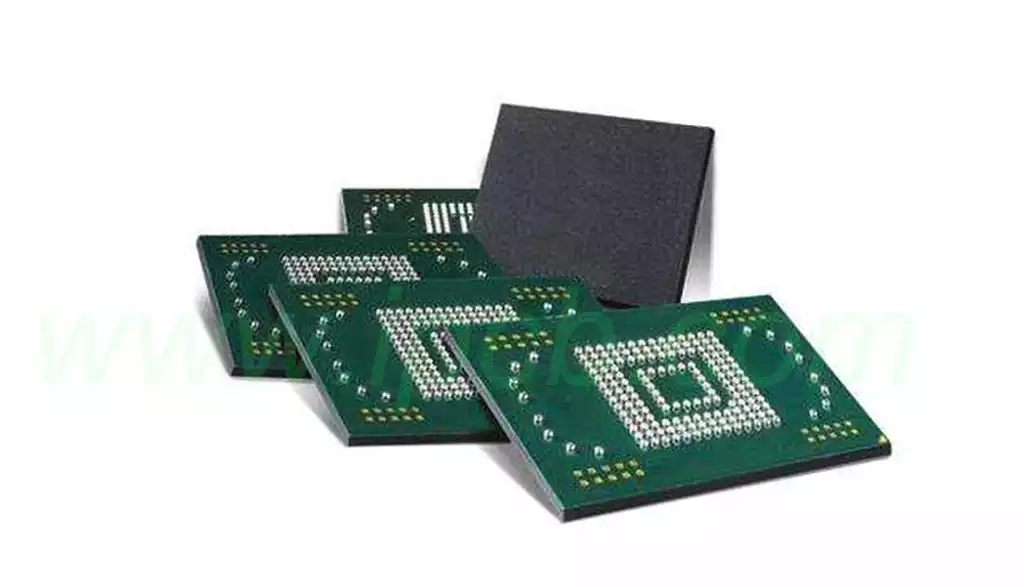
As electronic components race towards ultra-miniature resistive and capacitive elements at the 01005 or even 008004 level, the vertical physical gap between the flip chip on the bottom of BGA and WLCSP chips and the motherboard substrate has been squeezed to within 20 micrometers. In this almost air-isolated, high-density microscopic dead zone, flux residue squeezed out during reflow soldering is trapped inside due to capillary effect. If the surface tension of the cleaning agent spray is too high (for example, the surface tension of pure water is as high as 72 mN/m), then the solvent molecules, upon contacting the edge of the component, will degenerate into a huge “water shield” due to their extremely strong surface cohesion, making it impossible to flow into this 20-micrometer micro-canyon, creating a physical cleaning blind spot.
Professional PCB board cleaner sprays must be forced to adjust the surface tension to below 20 mN/m or even 15 mN/m (e.g., fluorinated liquids or special modified alcohols). This fluid, with its ultra-high wetting ability, has a contact angle close to zero after being sprayed. Like a ghost, it can spontaneously overcome spatial obstacles and penetrate the BGA in a fraction of a second. The deepest crevices of the chip come into chemical contact with the hardened flux residue hidden deep inside, dissolving and liquefying it. Then, using the kinetic energy of the liquid ejected by the high-pressure spray, this contaminated waste liquid is forcibly “pushed” out from the other end, achieving a thorough microscopic cleaning of the chip’s bottom.
The Long-Term Reliability Disaster Triggered by Improper Cleaning
In many hardware rework sites, a strange phenomenon often occurs: after engineers clean the board with a cleaning spray, the surface appears spotless, but as the solvent evaporates, a thin layer of white mist or white residue suddenly appears on the motherboard surface, especially around component leads. In surface physics, this is a physical warning sign that the substrate is undergoing catastrophic degradation.
The Crystallographic Nature of the “White Mist”: Partially Dissolved Hardened Resin Salts. This troublesome white mist is definitely not due to the cleaning agent itself being toxic, but rather a change in the electrochemical properties of the flux after being heated and carbonized. The organic acid activators inside the flux undergo a change in electrochemical properties during the 260°C lead-free reflow soldering process. At extremely high temperatures, if the localized contact time is too long, the activator will undergo violent thermochemical cross-linking with the rosin resin and react with tin-lead metal ions in the solder paste, degenerating into a highly insoluble metal salt and highly polymerized inorganic crystals. When engineers use a weak cleaning spray (such as low-purity industrial alcohol) with mismatched dissolving power to rinse, the solvent can only quickly dissolve the fragile, undegraded surface layer of rosin.
However, the highly polymerized inorganic metal salt crystals, after being immersed in the solvent for a short time, have their outer resin protective shell peeled off, exposing a hard skeleton insoluble in that solvent. The rapid evaporation of the cleaning agent causes these inorganic crystals, now freed from solvent encapsulation, to undergo secondary precipitation and electrochemical crystallization in situ, reforming on the board surface into a layer of white powder. This white mist possesses extremely strong hygroscopicity. It actively adsorbs trace amounts of water molecules from the air year-round, degenerating into a region of acidic electrolyte conductive film.
Dendrite Implosion: A Catastrophic Migration of Silver Due to the Growth of Dendrites. If this layer of acidic white electrolyte, resulting from incomplete cleaning, remains on the motherboard surface, and this area happens to be under two continuously applied DC voltages (such as…),… Between the adjacent pins of the 5V power supply rail and GND, a devastating battle of electrochemical migration (ECM) erupts in the microscopic world. Anodic Dissolution: The metal at the high potential positive electrode pin (such as tin or copper in solder) begins to ionize in the acidic water film, continuously releasing free metal cations Sn2+ or Cu2+.
Ionic Migration: Driven by the strong Coulomb force of the DC electric field, these metal ions frantically drift towards the low potential negative electrode along the microscopic electrolyte channels formed by the white mist residue. Cathodic Deposition: When metal ions finally touch the negative electrode pin, they instantly reclaim electrons, reverting to a pure metal solid. These deposited metal atoms are not flat; using the negative electrode as a base, they grow wildly towards the positive electrode in antler-like or tree-like geometric shapes, against the direction of the electric field. Within just a few hours or even minutes, this microscopic “metal tree,” formed from pure tin or copper growing in situ within a water film, can traverse a barrier of tens of micrometers. The instant its tip physically touches the positive electrode, a violent metal short circuit is triggered across the previously absolutely insulated signal line.
A sudden surge of several amperes of current can cause anything from frequent resets and unexplained false alarms in the entire control logic to completely burning out the weak signal input port. A bottle of a precisely formulated, high-efficiency PCB board cleaner… The core mission of spray is to use highly efficient multiphase chemical complexing agents to completely break down hardened metal salt crystals into completely soluble micromolecules, which are then flushed 100% away from the motherboard by a high-pressure solvent stream, thus eradicating any potential breeding ground for silver migration dendrites at its physical source.
The Trade-off Between Evaporation Rate and Electrical Insulation Constant
As a chemical agent requiring on-site spraying, or even blind spraying under energized conditions (not recommended, but common in engineering), cleaning spray must, while addressing its dissolving power, establish an absolutely safe engineering defense line between its own physical self-drying rate and dielectric properties.
Thermodynamic Dead Zone of Evaporation: Containing Condensation Secondary contamination introduced by wastes: Conventional cleaning solvents undergo rapid vaporization and evaporation after spraying. According to the laws of thermodynamics, liquid vaporization absorbs a large amount of heat from the surrounding environment instantaneously. If a cleaning spray’s evaporation rate is set too fast (e.g., pure chlorofluorocarbons or ultra-low boiling point hydrocarbon solvents), the surface temperature of a localized area on the motherboard can plummet within seconds upon spraying. If the relative humidity in the rework area is high at this time, when the board surface temperature is below the dew point of the surrounding air, water vapor in the air will instantly condense into a dense layer of microscopic condensation droplets on the freshly cleaned circuit board surface.
This condensation layer can penetrate directly into the roots of components that are not completely dry, trapping around the holes in multilayer boards. Combining with residual trace impurities, it can trigger a new round of leakage risks. Therefore, cutting-edge precision electronic cleaning sprays employ gradient-controlled evaporation formulas. By mixing solvent components with different boiling points, the spray achieves a controlled evaporation rate after impacting the board surface and rinsing away the dirt. Maintaining a liquid state for 3 seconds provides engineers with ample time to tilt the board and allow the waste liquid carrying contaminants to flow away smoothly. Subsequently, it achieves highly stable and uniform self-drying within 10 to 30 seconds, leaving no solvent residue and preventing the board surface from cooling below the dew point, elegantly avoiding the physical trap of condensation.
The Industrial Core Standard of Surface Insulation Resistance (SIR): A qualified circuit board cleaning spray, after complete evaporation and drying, must leave behind any traces on the board surface with extremely high surface insulation resistance (SIR). Industrial standards (such as IPC-TM-650) require that, after cleaning, test comb patterns, under prolonged high-temperature and high-humidity (e.g., 85°C/85%RH) electric field bombardment, maintain an insulation resistance of 10^8 ohms or even 10^10 ohms. Above ohms. This means that any surfactants or additives used in the cleaning agent must not degenerate into ionic conductors after drying under heat. Top-tier cleaning agent sprays, after complete evaporation, leave virtually zero physical residue at the molecular level. It not only eliminates visible dirt but also restores the dielectric constant between conductors on the board surface to the purest intrinsic state of the substrate at the microscopic level, ensuring that high-frequency radio frequency signals (RF signals) and weak analog sensor signals at several gigahertz frequencies operate with unwavering accuracy on the cleaned board surface.
Fully Independent High-Purity Fine Chemical Cleaning Strategy
As global reliability requirements for automotive 800V electric drive inverters, 5G/6G communication microwave base stations, and high-performance AI servers increasingly approach the rigid industrial red line of “15 years of zero failures,” PCBA… Cleaning has transformed from an “optional cosmetic step” into a “mandatory main line of defense” in the manufacturing process. However, the supply chain for specialized high-purity, automotive-grade safe printed circuit board (PCB) cleaning materials has long been monopolized by a few overseas fine chemical giants.
The “technological gap” in traditional bulk materials and the “auxiliary material desperation” of agile engineering have created a situation where the current electronic manufacturing auxiliary materials market is flooded with a large amount of low-end “PCB cleaning solutions” with unknown ingredients. These bulk PCB cleaning solutions, in pursuit of extremely low costs, often contain large amounts of n-hexane, which is highly neurotoxic to humans, or chlorofluorocarbons (CFCs), ozone-depleting substances already banned by international environmental conventions. Their KB values are usually ridiculously high and completely uncontrollable. After flowing into the workshop, serious quality incidents (collateral damage) frequently occur, such as the instant whitening and melting of plastic lenses on rows of LED beads and the peeling off of solder resist ink. Meanwhile, automotive Tier-1 R&D teams and medical and military prototyping laboratories urgently need to find solutions that comply with REACH/RoHS. When it comes to specialized precision cleaning sprays that meet environmental regulations and possess automotive-grade high SIR insulation certification, large overseas manufacturers, due to their deeply layered supply chains, often only provide large EMS factories (such as Foxconn and Jabil) with ton-sized, routine industrial supplies. For agile innovation teams urgently needing a case or two of these specialized high-pressure sprays for NPI prototyping or on-site equipment repair and maintenance, the supply chains of these large manufacturers often present a cold and unfriendly image: either the minimum order quantity is unacceptably large, or the delivery time is several weeks long, severely slowing down the clearance speed of high-end hardware in the final stage of cleaning process compliance certification.
A Truly Automotive/Aerospace-Grade Reliable Agile Fine Chemical Response Channel
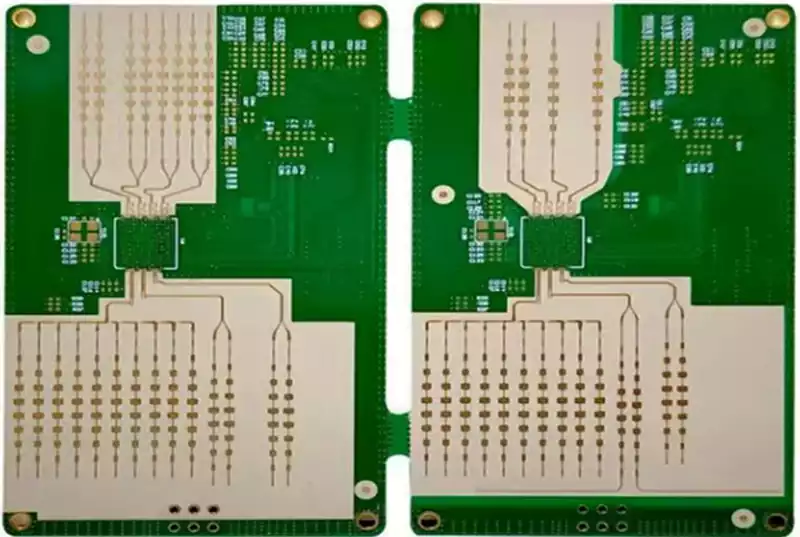
To unleash the innovation and repair potential of high-end industrial hardware globally, a leading fine chemical manufacturing service provider has broken the monopoly, deeply integrating automotive-grade high-reliability cleaning formulas with a 100% green and environmentally friendly agile flexible warehousing system. This opens up a truly zero-barrier agile small-quantity supply (True Zero MOQ Supply) to every hardware manager worldwide facing high-voltage leakage or cleaning whitening defects. Whether it’s high-pressure spraying with modified alcohol to deal with residues from no-clean solder paste, or chlorine-free fluorinated cleaning solvents specifically designed for high-frequency radar boards, the prototyping and maintenance department never sets any minimum order quantity threshold.
Even if you only need 2 or 5 bottles of engineering sample spray for new product NPI testing, the advanced application engineering team will instantly provide one-on-one expert-level online guidance on material compatibility and cleaning processes. Lightning-fast environmental compliance response and ultra-fast inventory turnover: The factory maintains a full range of specialty cleaning materials that fully comply with REACH, RoHS, halogen-free, and the world’s most stringent VOC emission standards. Leveraging a digital intelligent warehousing network, we completely shatter the traditional week-long delivery barriers of major overseas auxiliary material manufacturers, reducing material turnaround time for sampling and emergency maintenance to within hours.
Impeccable high-reliability verification: Every specialty PCB board cleaner spray supplied has undergone extremely rigorous verification by authoritative third-party laboratories. Each unit comes standard with a detailed ICP-TM-650 standard surface insulation resistance (SIR) long-term test report, a certificate of conformity for non-metallic material swelling and material compatibility of components, and 100% ion contamination test (IC test) data. These rigorous chemical experimental data ensure that every multilayer precision circuit board, after cleaning, exhibits steel-like insulation stability under the brutal extreme industrial environments of high temperature, high humidity, and high voltage.