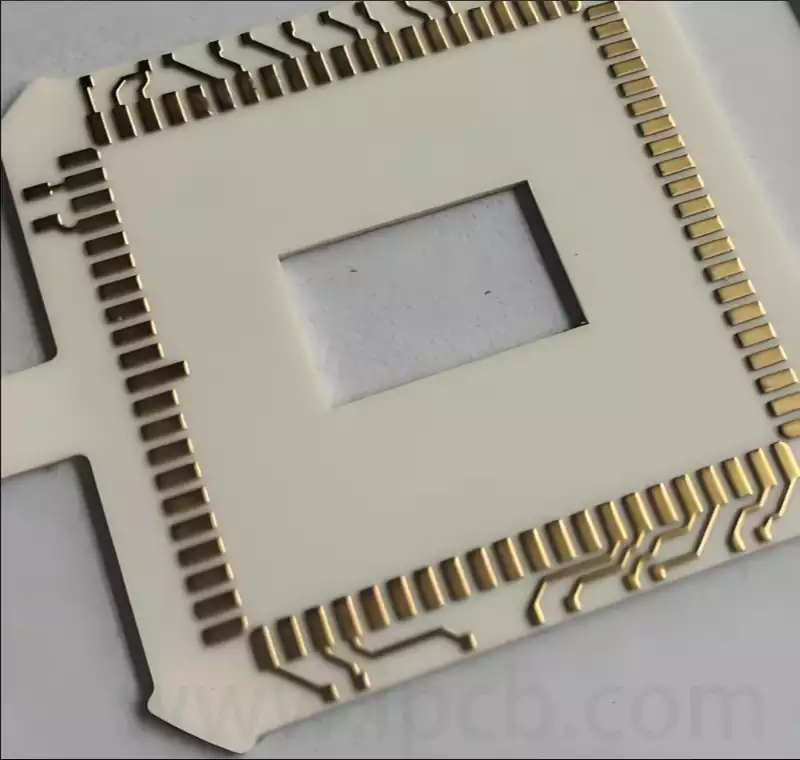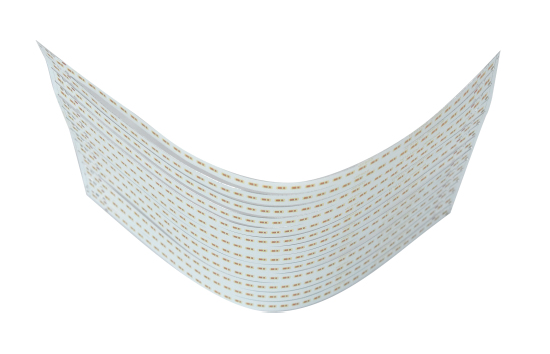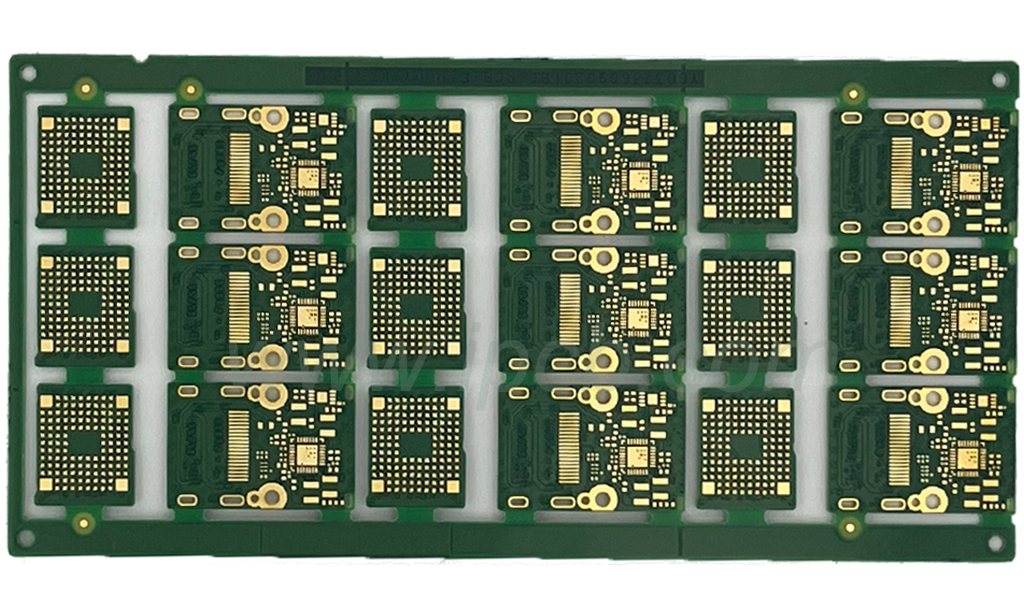
Metal Core PCB (MCPCBs), also known as Insulated Metal Substrate (IMS) PCBs or thermal PCBs, are a type of printed circuit board that uses a metal plate as the substrate instead of traditional FR4 fibreglass cloth, and are primarily used to address heat dissipation issues in high-power electronic components.
MCPCBs consist of a three-layer structure: the circuit layer (top layer), the insulating layer (middle layer) and the metal core layer (bottom layer). Its core advantage lies in its highly efficient heat dissipation: whilst the thermal conductivity of traditional FR4 PCBs is only approximately 0.3 W/m·K, that of MCPCBs can reach 2–385 W/m·K depending on the metal core material. This enables rapid conduction of heat away from components, preventing overheating failures and extending the service life of equipment. This characteristic makes MCPCBs a key component in high-power electronic devices.
Metal Core PCB Structure and Materials
1.Three-layer structure
Circuit layer (top layer): Typically consists of 1–6 oz (commonly 1–2 oz) copper foil, etched to form conductive traces and pads. The higher the power rating, the thicker the copper foil required to prevent high currents from burning out the traces.
Insulation Layer (Middle Layer): Approximately 50–150 µm thick, this layer utilises a medium that is both highly thermally conductive and electrically insulating (such as epoxy resin doped with ceramic fillers or highly thermally conductive polymers). As this layer must both isolate the circuitry from the metal core (to prevent short circuits) and efficiently conduct heat, the material costs are relatively high.
Metal Core Layer (Bottom Layer): With a thickness of 30–125 mil, this serves as the primary heat dissipation component. It rapidly distributes heat transferred from the insulating layer across the entire board surface, before dissipating it into the environment or to an external heat sink.
2.Common Metal Core Materials
Aluminium-based MCPCB: Accounting for over 70% of the market, with a thermal conductivity of approximately 2–12 W/m·K. Offering good value for money and lightweight construction, it is suitable for medium-to-low power applications such as LED street lighting, high-brightness indoor lighting and standard power supplies.
Copper-based MCPCB: With a thermal conductivity of up to 385 W/m·K (using direct thermal path technology), it offers excellent heat dissipation performance but is costly and heavy. It is used in high-power, high-heat-dissipation applications such as LEDs with power ratings exceeding 3 W, RF power amplifiers, and automotive battery management systems.
Steel-based MCPCB: Although thermal conductivity is relatively poor, it offers high mechanical strength and rigidity, making it suitable for harsh industrial environments involving high temperatures and vibration. It is used in scenarios where mechanical performance takes precedence over heat dissipation, such as industrial welding equipment and small outdoor electronic devices.
Working Principle and Thermal Advantages
The heat dissipation process of an MCPCB resembles a ‘heat relay’:
Electronic components (such as LED chips and power MOSFETs) generate heat during operation, which is transferred to the top circuit layer;
The circuit layer conducts the heat to the insulating layer; high-thermal-conductivity insulating materials allow the heat to pass through rapidly, preventing accumulation;
The insulating layer transfers the heat to the metal core layer, which diffuses the heat across the entire board surface and dissipates it into the environment via natural convection or an external heat sink.
In short, an MCPCB is equivalent to having a built-in heat sink for the components, whereas traditional FR4 PCBs lack this structure, making it easy for heat to accumulate on the board surface and leading to overheating and failure.
Comparison of Thermal Dissipation Performance with FR4 and Ceramic PCBs
| Type | Thermal conductivity (W/m·K) | cost | Typical use cases |
| FR4 PCB | ~0.3 | lowest | Low-power devices with no heat dissipation requirements (remote controls, small sensors) |
| Aluminium-based MCPCB | 2~12 | lower | Low to medium power, value for money is a priority (LED lighting, standard power supplies) |
| Copper-based MCPCB | Up to 385 | higher | High power and high thermal dissipation requirements (automotive electronics, RF amplifiers) |
| Ceramic PCB | 400~600 | Highest | Ultra-high-power, high-end precision equipment (aviation electronics, medical equipment) |
Key Manufacturing Processes
Metal core pre-treatment: Cleaning and polishing to ensure a tight bond with the insulating layer.
Insulating layer coating: Uniformly applying a highly thermally conductive insulating material to the surface of the metal core.
Copper foil lamination: Covering the insulating layer with copper foil, followed by curing under high temperature and pressure.
Circuit Etching: Etch the copper foil according to the design drawings to form conductive circuits.
Final Inspection: Test insulation performance, thermal conductivity and circuit precision to ensure compliance with standards.
Key Considerations During Manufacturing
Uniform Insulation Layer Thickness: Uneven thickness can lead to poor local heat dissipation or create weak points in the insulation, causing short circuits.
Precise high-temperature, high-pressure curing parameters: Excessively high temperatures accelerate insulation layer ageing, whilst excessively low temperatures result in poor adhesion between the copper foil and the insulation layer, affecting heat dissipation and electrical conductivity.
Comprehensive finished product testing: In addition to circuit precision, insulation and thermal conductivity must be tested, particularly in the industrial and automotive electronics sectors, where MCPCB quality directly impacts equipment safety.
Core Application Areas
1.LED Lighting (Largest Market)
Outdoor lighting: street lights, tunnel lights, floodlights, landscape lighting
Automotive lighting: headlights, daytime running lights, tail lights, ambient lighting
Commercial/industrial lighting: panel lights, downlights, industrial and mining lights, stage lighting
Backlight displays: LED backlight panels for televisions, monitors and laptops
2.Automotive Electronics
New Energy Vehicles: Motor controllers, OBC chargers, DC-DC converters, BMS battery management systems
Conventional Combustion Engine Vehicles: Engine ECUs, HID/LED headlight drivers, brake control systems
Autonomous Driving: LiDAR, millimetre-wave radar power modules
3.Power Supplies and Power Electronics
Switching Power Supplies: Server power supplies, industrial power supplies, adapters
Frequency Converters and Servo Systems: Industrial motor drives, servo controllers
Renewable Energy: Photovoltaic inverters, energy storage converters, UPS
Fast Charging Equipment: PD fast charging for mobile phones/laptops, electric vehicle charging stations
4.Communications and RF (5G/6G)
Communication Base Stations: Power amplifiers for macro and micro base stations
RF Equipment: Radar, satellite communications, RF heating, signal transmitters
Data Centres: Server power supplies, optical modules, high-speed switching equipment
5.Industrial and Medical Equipment
Industrial Control: Welding equipment, PLCs, high-power industrial control modules, instruments and meters
Medical Equipment: Laser therapy units, CT/MRI scanners, ultrasound diagnostic equipment, high-precision monitoring devices
Aerospace: Airborne radar, satellite power supplies, avionics control systems
6.Consumer and High-End Electronics
Home Appliances: Induction hobs, microwave ovens, inverter air conditioners, inverter drives for washing machines
Computers: Graphics cards (GPUs), CPU power supply modules, server motherboards
Audio: High-end power amplifiers, Hi-Fi audio systems, car audio power boards
Through a streamlined design comprising circuit layers, insulating layers and a metal core layer, metal core PCBs provide a practical and reliable heat dissipation path in high-power electronic equipment. The selection of different metal substrates allows for a balance between cost and performance, meeting diverse engineering requirements ranging from LED lighting to automotive electronics.