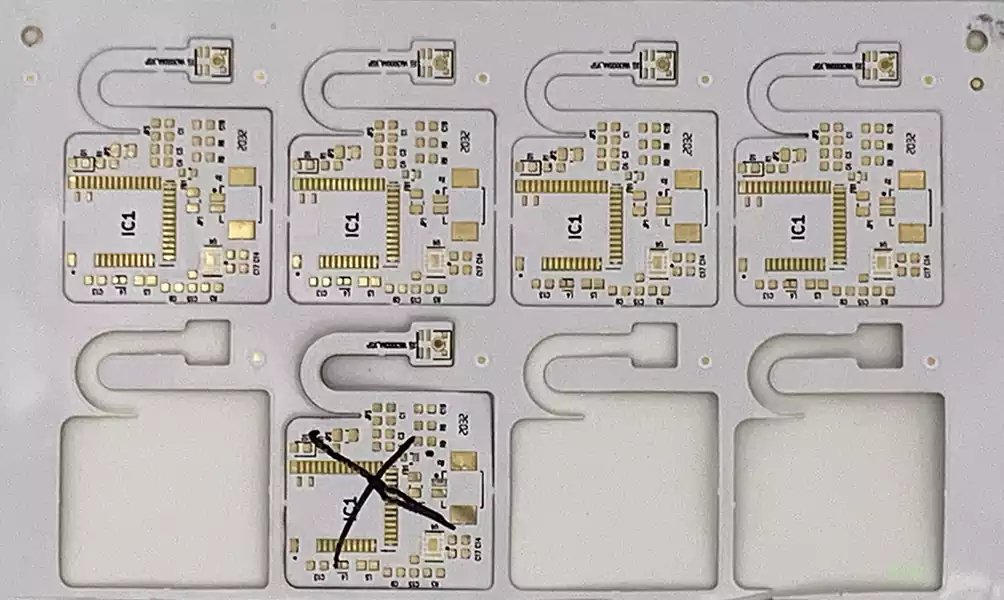
Inside products such as smart bands, TWS earbuds, smartwatches, and health monitoring patches, there is a constant tension between extremely limited internal space and ever-increasing communication requirements. Serpentine antennas, with their compact layout, high level of integration, and stable RF performance, have become a mainstream solution to this challenge, enabling a more efficient integration of PCB manufacturing and RF design in wearable devices.
A serpentine antenna is not simply a bent trace. It is a type of onboard antenna that extends its electrical length through a folded structure, allowing it to meet resonant frequency requirements within a very small physical footprint. Leveraging mature PCB manufacturing processes, it can be mass-produced without additional brackets or assembly steps, and can be directly formed on rigid boards or flexible substrates. This makes it well suited to the lightweight, compact, and irregular form factors of wearable devices. Compared with traditional external antennas or ceramic chip antennas, serpentine antennas offer clear advantages in cost, consistency, and structural flexibility, making them a preferred solution for low- to mid-power wireless wearable products.
The usage scenarios and physical forms of wearable devices impose multiple constraints on antenna design. These constraints converge on one core objective: maintaining stable communication within extremely limited space.
From a structural perspective, mainstream smart band PCBs are typically only 12–20 mm wide. In TWS earbuds, the available internal height of a single earbud is often less than 5 mm. Smartwatches are constrained by the dial, strap, battery, shielding covers, and metal mid-frames, which significantly compress the antenna clearance area. Traditional straight-line antennas require sufficient physical length to operate at 2.4 GHz and similar frequency bands, making them nearly impossible to deploy in such compact devices.
From an environmental perspective, the human body is a high-loss medium that absorbs and reflects electromagnetic waves. This reduces antenna efficiency, shortens communication distance, and increases power consumption. In addition, enclosure materials, battery placement, and sensor layout can alter antenna impedance and affect matching performance.
From a performance standpoint, wearable devices commonly use low-power protocols such as BLE Bluetooth, 2.4 GHz WiFi, and ZigBee. Antennas must therefore maintain appropriate gain, bandwidth, and radiation patterns within a small size, while also complying with RF regulations such as FCC, CE, and SRRC.
From a cost and mass production perspective, consumer-grade wearable devices are highly sensitive to BOM costs. The antenna solution must be compatible with standard PCB processes, require no special materials or high-precision assembly, and ensure high yield and consistency in large-scale production.
It is precisely these constraints that allow the serpentine antenna to stand out among miniaturized antenna options. By folding what would otherwise be a straight antenna arm into a compact two-dimensional meandering structure, it compresses physical size while preserving electrical performance.
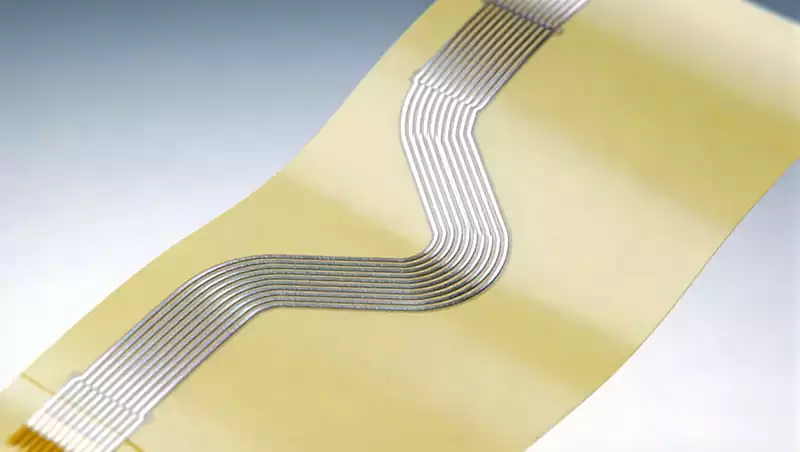
Working Principles and Structural Advantages of Serpentine Antennas
Extreme space utilization
For the same electrical length, the occupied area can be reduced by more than 60%, making it ideal for ultra-compact products such as earbuds and smart bands.
PCB-integrated design
Directly etched onto FR-4 rigid boards or FPC flexible boards, requiring no additional components and simplifying structure and assembly.
High adaptability to form factors
Can bend and fold with flexible substrates, conforming to curved housings and supporting flexible wearable forms such as smart straps and medical patches.
Controllable mass production cost
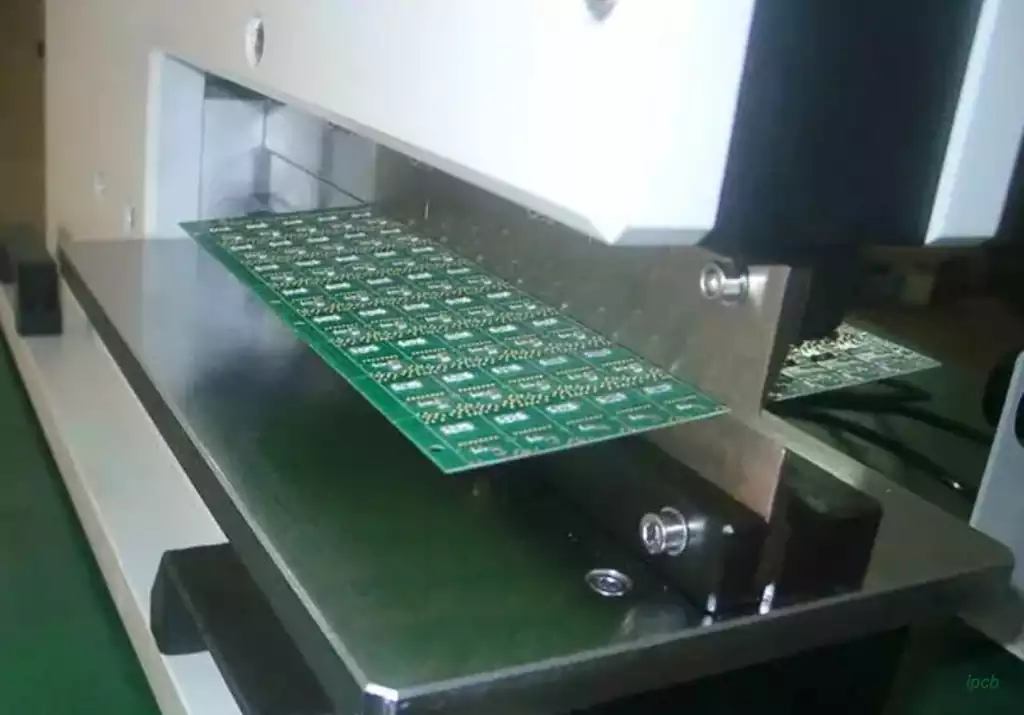
Based on standard PCB processes such as etching, solder mask application, and surface finishing, ensuring high dimensional accuracy and batch consistency suitable for high-volume production.
A properly designed serpentine antenna can achieve radiation efficiency of 40%–60% in the 2.4 GHz band, meeting the typical requirement of stable connections within 10 meters for wearable devices. When paired with high-sensitivity RF chips, connection distance and interference resistance can be further improved.
Typical Applications in Wearable Devices
1.Smart Bands and Health Watches
These devices feature narrow PCBs, high battery occupancy, and multiple metal components. Serpentine antennas are typically placed at the strap root or at the end clearance area of the mainboard, often using monopole or inverted-F structures. Some products employ flexible FPC serpentine antennas extending along the inner side of the housing to enhance radiation performance.
2.TWS True Wireless Earbuds
With extremely limited space inside both the charging case and each earbud, traditional antennas are difficult to implement. A serpentine inverted-F antenna (MIFA), typically around 7 mm × 11 mm in size, enables stable Bluetooth connectivity for audio transmission, touch control, and battery synchronization. High-precision PCB manufacturing ensures consistent antenna parameters between left and right earbuds, reducing the likelihood of disconnection or audio dropouts.
3.Flexible Wearables and Medical Patches
Flexible electronics require antennas that can bend or stretch. The serpentine structure inherently provides some deformation capability. Combined with flexible substrates such as PI or PET, stretchable serpentine antennas can be produced and attached to skin or curved device surfaces for applications such as dynamic heart rate monitoring and rehabilitation tracking.
4.Children’s Positioning and Elderly Monitoring Devices
These devices often require dual-mode communication, such as Bluetooth combined with BeiDou or GPS. A miniaturized ceramic antenna is typically used for the GNSS band, while a PCB-integrated serpentine antenna handles Bluetooth. Zonal layout and interference isolation enable positioning and data transmission within a compact enclosure.
Key Impact of PCB Manufacturing on Serpentine Antenna Performance
1.Substrate Selection
For mid-to-low frequency bands such as 2.4 GHz, high-Tg FR-4 materials with stable dielectric constant and low loss are preferred to prevent frequency drift. Flexible wearables use low-modulus PI substrates to balance bending reliability and RF performance. For higher-frequency or high-precision applications, materials such as Rogers can be selected to improve efficiency and bandwidth.
2.Trace Width and Spacing Accuracy
Serpentine antennas are highly sensitive to geometric parameters. Errors in trace width, bend radius, or spacing exceeding 0.05 mm may shift the resonant frequency and reduce efficiency. High-precision etching processes are required, with trace width tolerance controlled within ±0.02 mm to ensure consistency with simulation results.
3.Corner Treatment
High-frequency signals are prone to reflection and impedance discontinuities at right-angle corners. Industry best practice uses rounded corners or 45° chamfers to reduce edge effects and improve current continuity and radiation stability.
4.Clearance Area and Grounding
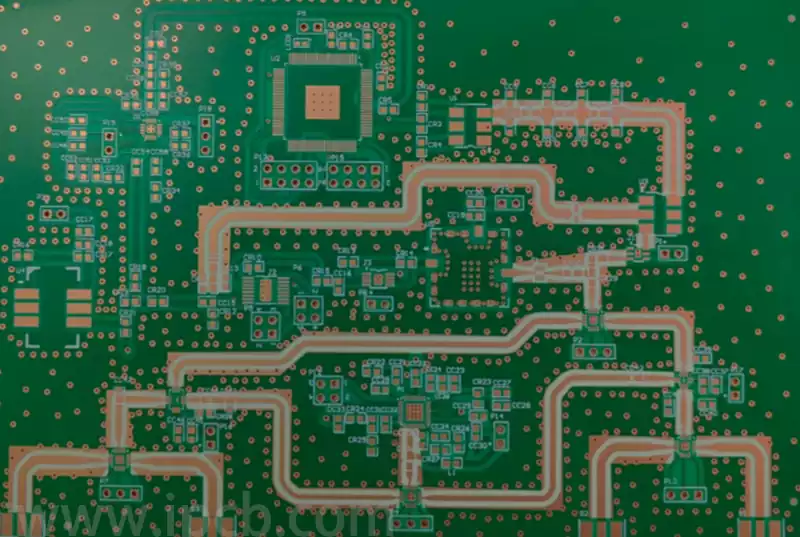
Sufficient clearance must be maintained beneath and around the antenna. Copper pour, routing, and component placement are typically prohibited within at least 3 mm. The number and placement of ground vias, as well as the length of the shorting arm, directly affect impedance matching and must be clearly defined during PCB design and strictly controlled in manufacturing.
5.Surface Finishing
Surface finishes such as ENIG, immersion gold, or OSP influence conductor loss and long-term reliability. Wearable devices commonly use immersion gold to reduce contact resistance and oxidation, ensuring stable performance in prolonged wearing environments.
Future Development Trends
As wearable devices evolve toward multimode communication, health monitoring, and flexible, unobtrusive designs, higher requirements are being placed on serpentine antennas:
Multi-band and wideband capability: A single antenna supporting BLE, WiFi, BeiDou, UWB, and other bands to reduce antenna count and free internal space.
Flexible and stretchable structures: Combining bio-inspired serpentine geometries with stretchable circuits for skin-adhered wearables.
Higher integration: Co-design of antennas with sensors and touch circuits on the same board to further simplify structure.
Lower power consumption: Improved antenna efficiency directly reduces transmission power and extends battery life.
With its minimalist structure, the serpentine antenna effectively resolves the space-versus-communication challenge in miniaturized wearable devices. Built upon mature PCB manufacturing processes, it offers high cost-effectiveness, high integration, and stable mass production performance, making it a mainstream solution for wireless connectivity in smart wearables. From simulation and material selection to trace precision and surface finishing, every step ultimately determines the final RF performance.