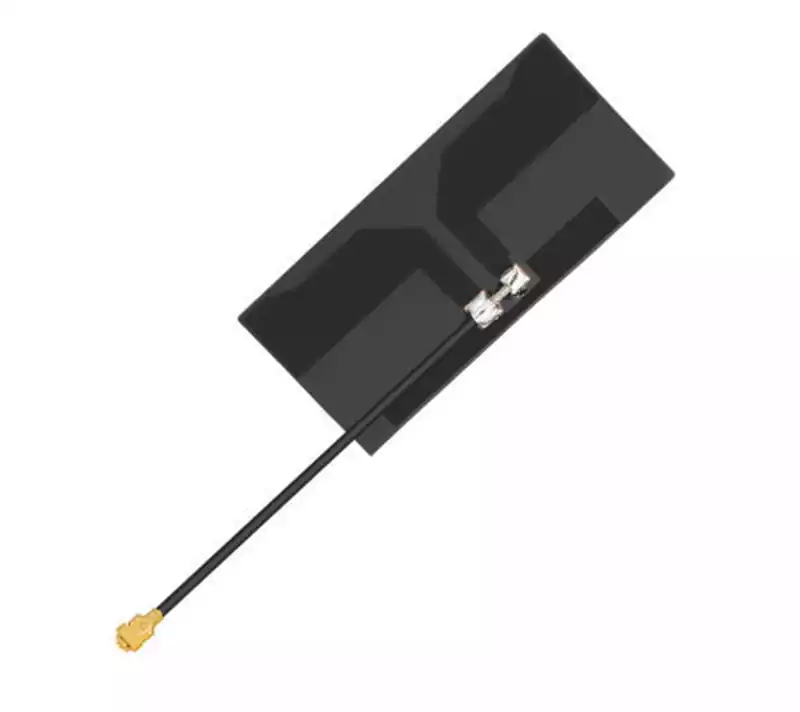
The fundamental challenge in assembling flexible antennas lies in the contradiction between “physical flexibility” and “assembly precision.” The substrate is extremely thin—almost paper-like—yet it must support micron-level alignment accuracy. The circuitry is delicate and flexible, yet it must maintain signal integrity across various operating conditions.
Drawing on hands-on experience from the PCB manufacturing industry, we have identified four common challenges in flexible antenna assembly and developed practical, end-to-end solutions that can be readily implemented in production.
Challenge 1: Fragile Substrates and Yield Pressure
Flexible antenna substrates—typically PI (polyimide) or LCP (liquid crystal polymer)—are usually only 0.1–0.2 mm thick. Their ultra-thin structure makes them highly vulnerable during pickup, positioning, and bonding processes. Even minor mishandling can cause wrinkling, tearing, or deformation.
LCP substrates, while excellent for high-frequency performance, tend to be relatively brittle. Excessive bending force can easily lead to cracks or fractures. According to industry estimates, substrate damage alone can cause yield losses of 10–15%, becoming a major contributor to production cost.
Solutions: Refined Handling and Physical Reinforcement
Optimize fixture design
Use flexible fixtures made of soft silicone materials to avoid scratching the substrate. Clamping force should be just sufficient to hold the antenna without causing deformation.
Standardize manual handling procedures
Operators should wear ESD gloves and hold the antenna by its edges during pickup, avoiding direct contact with copper traces or fragile areas.
Apply localized reinforcement
For brittle materials such as LCP, stiffeners can be pre-attached in bending zones or weak points to improve mechanical resilience.
Strict environmental control
Maintain ambient temperature at 20–25°C and humidity at 40–60% to prevent substrates from becoming brittle due to excessive dryness.
Challenge 2: Alignment Errors Affecting Signal Performance
Flexible antenna pads are extremely small and require alignment with PCB pads within 0.1 mm tolerance. Any misalignment or uneven pressure can lead to poor contact, cold solder joints, or short circuits.
For high-frequency antennas, even slight positioning deviations may introduce signal reflection and increased loss, directly affecting transmission performance in bands such as 5G and Wi-Fi 6E.
Solutions: High-Precision Equipment and Process Optimization
Introduce machine vision alignment systems
Use high-precision placement equipment with ±0.05 mm accuracy. Machine vision automatically identifies and calibrates pad positions, replacing manual alignment and reducing human error.
Design dedicated positioning fixtures
For mass production, customized alignment jigs ensure consistent flexible antenna placement across all units.
Optimize the soldering process
Adopt low-temperature solder paste (melting point ~138°C) to prevent substrate deformation caused by excessive heat. Utilize reflow soldering to ensure uniform and reliable solder joints.
Challenge 3: Electrostatic Discharge (ESD) Damage
Flexible antennas often integrate sensitive RF components, and their fine copper traces are highly susceptible to electrostatic discharge. During assembly, manual operations, equipment motion, and dry environments can generate static electricity.
ESD damage is often latent, meaning it may not be detected until final product testing, significantly increasing rework and repair costs.
Solutions: Full-Process ESD Protection System
Upgrade the production environment
Install ESD flooring and ionizing air blowers, keeping workstation static levels below 1000 V.
Standardize operator protection
Personnel must wear complete ESD protection gear, including garments, gloves, and shoes, and undergo pre-shift electrostatic checks.
Protect sensitive components
Apply ESD protective films to sensitive RF components before assembly and use ESD-safe tools such as tweezers and trays.
Add ESD inspection checkpoints
Introduce random electrostatic inspections after key processes to intercept potential latent defects early.
Challenge 4: Weak Bonding and Reliability Risks
If the bonding between the flexible antenna and the PCB or device housing contains air bubbles, contaminants, or unsuitable adhesives, vibration or temperature changes during use may cause displacement or detachment, leading to signal interruption.
This issue is particularly critical in automotive and industrial environments, where operating conditions are more demanding.
Solutions: Material Matching and Process Standardization
Select application-appropriate adhesives
Consumer electronics typically use thin, high-adhesion double-sided tapes, while automotive and industrial applications require high-temperature, vibration-resistant structural adhesives.
Enhance surface preparation
Thoroughly clean substrate surfaces before bonding to remove oil, dust, or contaminants.
Use roller pressing to eliminate air bubbles
Apply pressure with a roller from the center outward to remove trapped air and ensure uniform bonding.
Controlled curing
Perform constant-temperature curing according to adhesive specifications to strengthen bonding reliability.
Add mechanical reinforcement
For high-risk areas, additional stiffeners, clips, or mechanical supports can further secure the antenna.
Additional Factors Affecting Assembly Yield
Beyond the four major challenges, three key factors influence the overall assembly quality throughout the process:
Cleanliness is the baseline
Even microscopic contaminants on pads or bonding surfaces can cause poor contact or signal interference. It is recommended to clean components with lint-free cloths and specialized cleaning agents, while maintaining a clean workstation environment.
Operator training is critical
The operator’s understanding of flexible material behavior directly affects execution quality. Regular hands-on training and performance assessments can significantly reduce human error.
Full-process inspection ensures quality
Inspection checkpoints should be implemented at critical stages such as substrate pickup, pad alignment, bonding, curing, and final performance testing, forming a closed-loop quality control system to prevent defective products from leaving the production line.
Strategic Significance for PCB Manufacturers
For PCB manufacturers, the assembly challenges of flexible antennas represent both technical barriers and opportunities to build competitive advantages.
As demand for flexible antennas continues to grow in 5G terminals, automotive electronics, and industrial IoT, mastering high-precision and high-reliability assembly processes will become a key qualification for entering high-end supply chains.