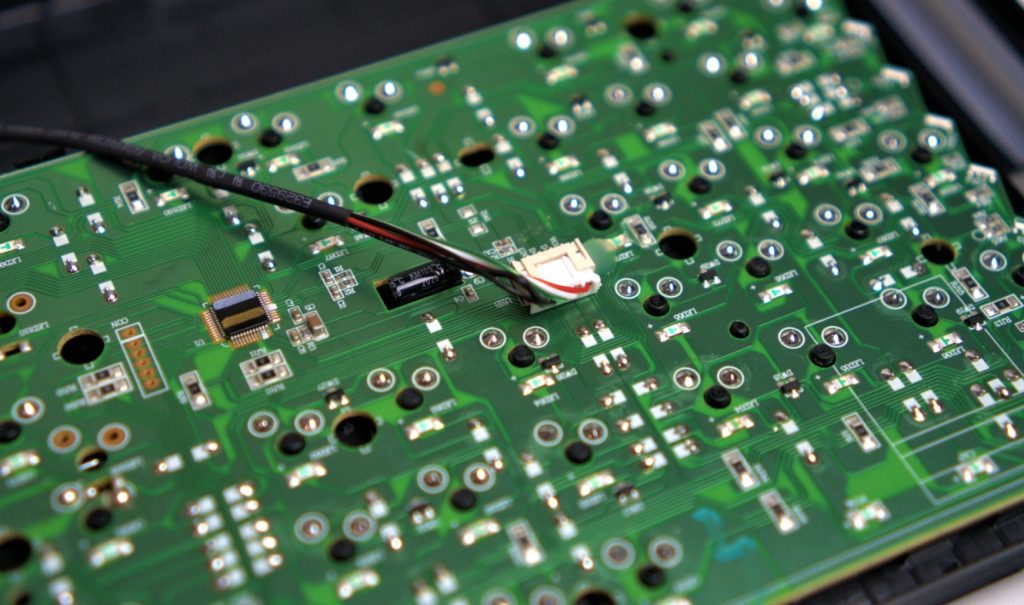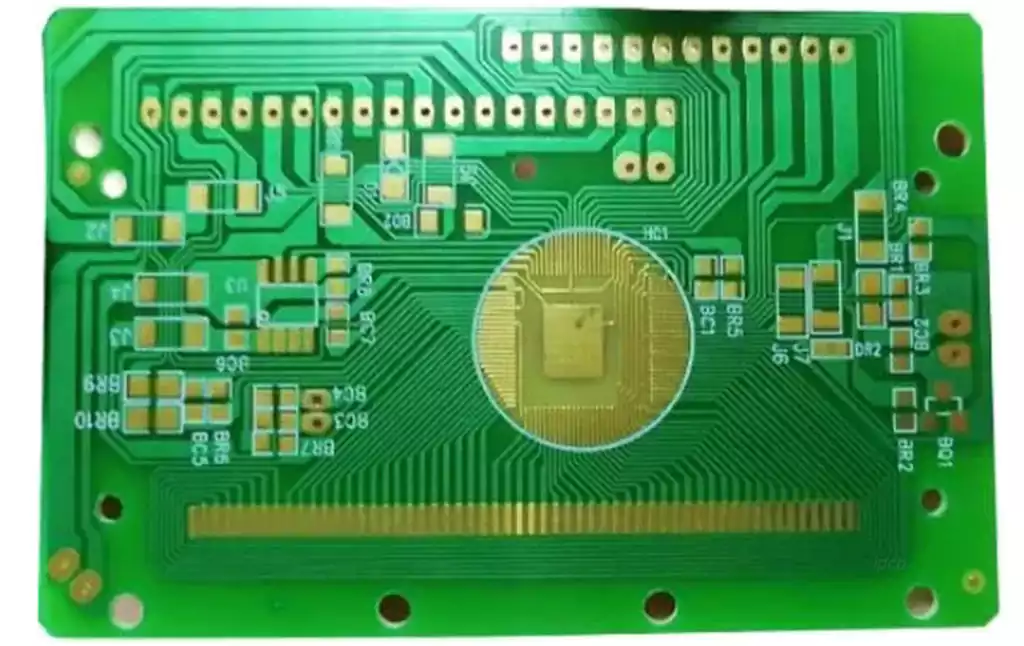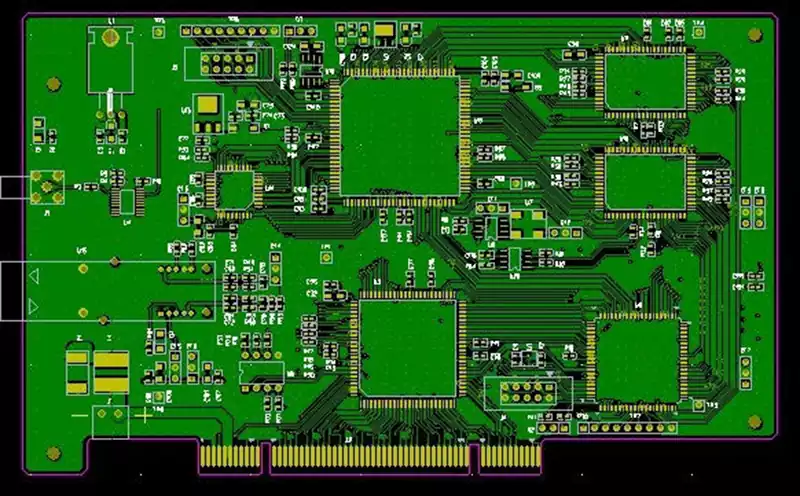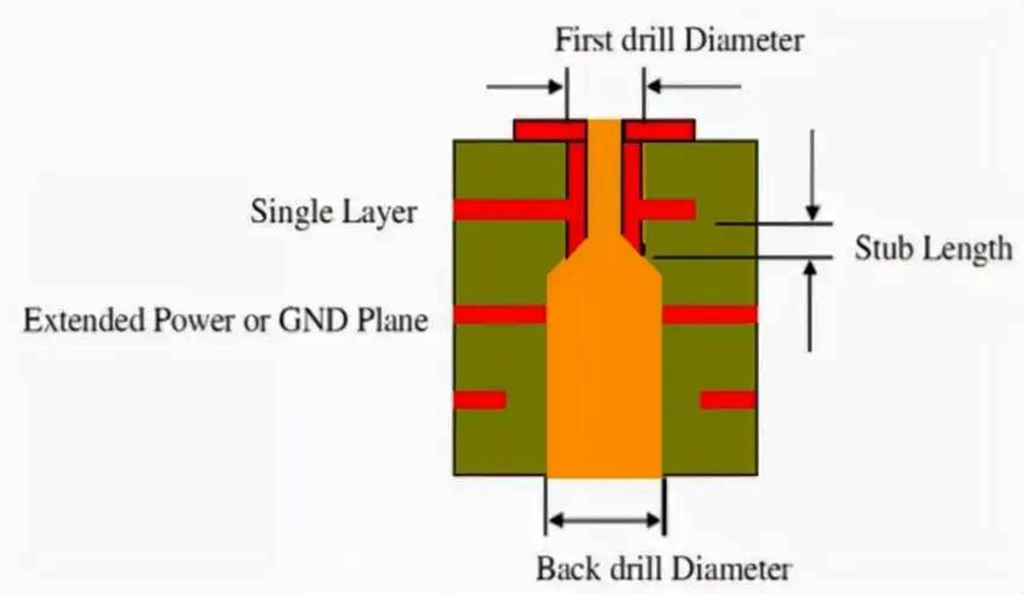
Ceramic circuit boards offer unique advantages in terms of wide temperature ranges, high thermal conductivity, high-frequency stability and resistance to harsh environments, enabling them to meet the stringent requirements of extreme military sensors for substrate materials.
Requirements of Extreme Military Sensors for Ceramic Circuit Boards
Wide Temperature Range and Extreme Temperature Resistance
Military sensors are frequently subjected to drastic temperature fluctuations: altitudes as low as -55°C, engine compartments reaching temperatures in excess of 350°C, and certain aircraft engine monitoring sensors requiring continuous operation at temperatures exceeding 600°C. Traditional FR-4 substrates tend to soften, deform, or even suffer from circuit oxidation and breakage at temperatures above 150°C.
Efficient thermal management and thermal expansion matching
High-power military sensors (such as radar T/R modules and laser rangefinders) operate at power densities exceeding 1000 W/cm². If heat cannot be rapidly dissipated, this leads to increased chip junction temperatures, performance degradation, or even burnout. Ceramic circuit boards exhibit thermal conductivity far exceeding that of traditional materials: aluminium nitride ceramics have a thermal conductivity of 170–220 W/(m·K), which is more than 500 times that of FR-4 (approximately 0.3 W/(m·K)); aluminium oxide ceramics can also reach 20–30 W/(m·K).
Furthermore, the coefficient of thermal expansion (CTE) of ceramic circuit boards is highly compatible with that of silicon chips and GaN devices: aluminium oxide has a CTE of approximately 6.5 ppm/K, whilst aluminium nitride is as low as 4.5 ppm/K, far lower than the 14–70 ppm/K of FR-4. This effectively reduces thermal stress during thermal cycling, preventing solder joint cracking and substrate delamination.
High-frequency electrical stability and interference resistance
Modern military sensors are evolving towards higher frequencies and speeds, with millimetre-wave radars and satellite communication sensors typically operating at frequencies exceeding 10 GHz. Ceramic circuit boards offer stable dielectric constants and extremely low loss: aluminium oxide has a dielectric constant of approximately 9.8 and a tangent of the loss angle ≤ 3×10⁻⁴; aluminium nitride has a dielectric constant of approximately 8.5, with signal loss ≤ 0.1 dB/cm in the 24–30 GHz millimetre-wave band, far superior to FR-4 (Df ≈ 0.02). Furthermore, ceramic circuit boards feature a dense structure and excellent airtightness, effectively shielding against electromagnetic interference. This meets the electromagnetic compatibility (EMC) requirements for military sensors, preventing signal crosstalk from affecting reconnaissance accuracy.
High Reliability and Environmental Adaptability
Military sensors must withstand multiple challenges, including random vibrations of 20–2000 Hz (with accelerations up to 50 g), high radiation (total radiation dose of 100 kRad(Si)), and corrosion from strong acids and alkalis. Ceramic circuit boards are formed using high-temperature sintering or metallisation processes, achieving a density of over 98% and an airtightness of up to 10⁻⁸ Pa·m³/s. They are resistant to corrosion from strong acids and alkalis and exhibit excellent radiation resistance; under a radiation dose of 100 kGy, the decline in insulation resistance is ≤20%, far superior to that of ordinary organic substrates.
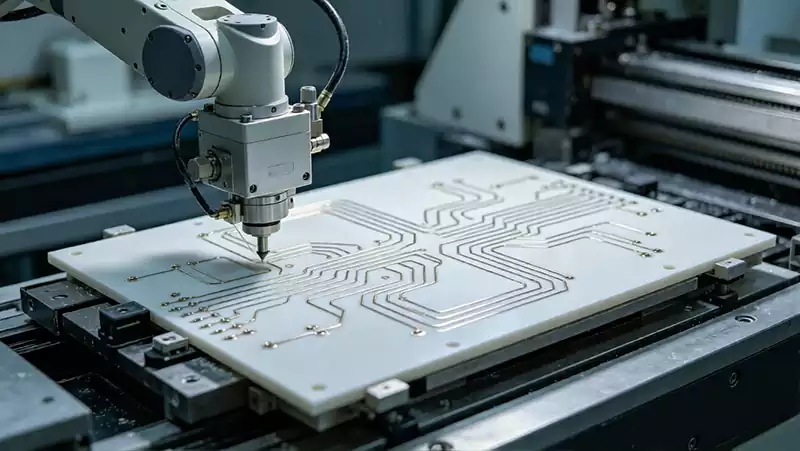
Applications of Ceramic Circuit Boards in Core Military Sensors
High-temperature monitoring sensors for aircraft engines: In aircraft engines operating at temperatures as high as 1500°C, the mainstream approach employs the HTCC (High-Temperature Co-fired Ceramic) process. This utilises 99.6% high-purity aluminium oxide as the substrate, combined with refractory metal pastes such as tungsten and molybdenum, and other refractory metal pastes. Formed through co-firing at temperatures exceeding 1600°C, these substrates can operate long-term in high-temperature areas such as combustion chambers and turbine blades, monitoring parameters including temperature, pressure and vibration.
Sensors for Military Radar T/R Modules: Operating frequencies range from the X-band to the Ka-band (8–40 GHz), primarily utilising LTCC (Low-Temperature Co-fired Ceramics) and DPC (Direct Copper Plating) processes. LTCC enables multi-layer three-dimensional integration with embedded passive components, reducing module volume by over 60% whilst minimising parasitic parameters and enhancing signal transmission efficiency.
Satellite and spacecraft attitude control sensors: These face challenges such as extreme temperature variations ranging from -180°C to 150°C, cosmic radiation and micrometeorite impacts. Ceramic circuit boards combine high rigidity, low density and radiation resistance; aluminium nitride ceramics have a density of just 3.26 g/cm³ (approximately 38% that of copper), thereby reducing satellite payload.
Underwater sonar and anti-submarine sensors: These must operate in environments characterised by high water pressure, severe corrosion and low signal-to-noise ratios. Ceramic circuit boards utilise a fully sealed encapsulation structure, combined with metallurgical bonding techniques between ceramic and metal, offering excellent resistance to seawater corrosion; simultaneously, their stable high-frequency performance enables the precise conversion and transmission of underwater acoustic signals, thereby enhancing sonar detection range and resolution.
Key Processes and Material Selection for Ceramic Circuit Boards
HTCC (High-Temperature Co-fired Ceramics): Aluminium oxide and silicon nitride substrates, tungsten and molybdenum pastes, sintered at temperatures above 1600°C. Suitable for high-temperature sensors operating at temperatures above 600°C, offering excellent airtightness and ideal for extreme high-temperature environments in aircraft engines and spacecraft.
LTCC (Low-Temperature Co-fired Ceramics): Low-temperature green ceramic substrates, co-fired at temperatures below 850°C. Capable of embedding passive components to achieve three-dimensional integration. Features a compact size and excellent high-frequency performance, making it suitable for highly integrated applications such as radar T/R modules and satellite communication sensors.
DBC (Direct Bonded Copper): Achieves a metallurgical bond between copper foil and ceramic at high temperatures of 1065°C. It offers high thermal conductivity and strong current-carrying capacity, making it suitable for heat-sensitive applications such as high-power radar modules and laser sensors.
DPC (Direct Plated Copper): Utilises a magnetron sputtering plus electroplating process. Suitable for micro-sensors such as high-precision gyroscopes and accelerometers, meeting micro- and nano-scale packaging requirements.
Material Selection
| Material type | Key features | Military sensor applications | Cost characteristics |
| Aluminium oxide (Al₂O₃) | Thermal conductivity: 20–30 W/(m·K); CTE: approx. 6.5 ppm/K; low cost; mature manufacturing process | Low-temperature monitoring in aeroengines, underwater sonar, conventional radar modules | Low, suitable for mass production |
| Aluminium nitride (AlN) | Thermal conductivity: 170–220 W/(m·K); CTE: approx. 4.5 ppm/K; excellent high-frequency performance | High-power radar T/R modules, satellite attitude sensors, laser rangefinders | Mid-to-high range, suitable for high-performance scenarios |
| Zirconia (ZrO₂) | Melting point > 2700 °C, flexural strength > 1000 MPa, wear-resistant | Extreme-temperature sensors, shock-resistant anti-submarine sensors | High, for specific scenarios only |
| Beryllium oxide (BeO) | Thermal conductivity: 240–330 W/(m·K); extremely low high-frequency loss | Ultra-high-frequency radar, deep-space exploration sensors | Extremely high; its use is restricted due to its toxicity |
Ceramic circuit boards, with their resistance to extreme temperatures, high thermal conductivity, high-frequency stability and high reliability, have become a key substrate for military sensors in applications such as aircraft engines, radar, aerospace and underwater sonar. Actual selection must be based on operating temperature, frequency and power density, requiring a judicious choice between processes such as HTCC, LTCC, DBC and DPC to balance performance and engineering feasibility.