The Physical Framework and Operating Limits of Relays Electronic components
As the progenitor of “weak current controlling strong current” in the electronics industry, the core value of relays lies in current isolation (Galvanic Isolation). Although modern semiconductor switches are constantly emerging, electromagnetic relays (EMRs) remain an irreplaceable industrial pillar in the face of requirements for high reliability, extreme voltage isolation, and physical disconnection.
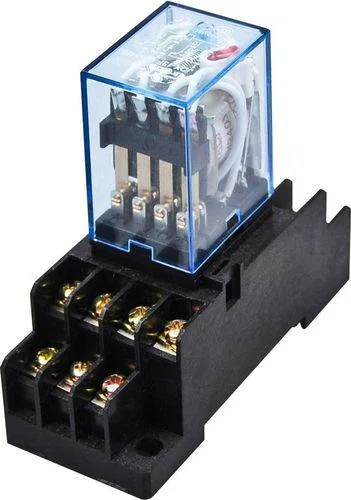
Dynamic Analysis of Electromagnetic Systems: The core of a standard relay is a magnetic circuit system composed of a coil, iron core, armature, and spring. The activation process: When the coil is energized, the magnetic flux(φ) generates an electromagnetic force in the air gap. This force must overcome the mechanical tension of the return spring and the inertia of the armature. Power Consumption Trade-off: The holding current is usually much smaller than the starting current. In advanced design, engineers often use a “pulse trigger + low current holding” strategy for energy saving.
Contact Metallurgy: Why does material determine lifespan? 90% of relay failures occur at the contacts. Different current loads require different metal coatings: Silver-nickel alloy (AgNi): General-purpose, with good conductivity and resistance to soldering. Silver-tin oxide (AgSnO2): The preferred choice in the automotive industry, particularly adept at handling the high surge currents generated during the startup of light bulbs, motors, etc. Gold film contacts: Specifically designed for “dry circuits” (low-current signal switching), the chemical stability of gold ensures that no oxide film will form on the contact surface even after years of inactivity.
Deeper Implications of Key Parameters: Dielectric Strength: This involves not only air gaps but also the creepage distance of the housing material. Actuation/Release Time: Mechanical inertia limits relays to switching frequencies in the kilohertz range, typically between 5ms and 20ms.
“Miniature Lightning” Between Contacts: Arcing and Protection Logic
When we disconnect a relay with an inductive load (such as a motor or transformer), the most dangerous phenomenon occurs: arcing.
Physical Hazards of Arcing: At the moment of disconnection, the contact gap is extremely small, and the electric field strength is sufficient to break down the air and generate plasma.
Ablation: Arc temperatures can reach thousands of degrees Celsius, causing contact metal migration and forming “pits” or “spikes.”
Welding: Severe arcing can cause localized melting of contacts, which, upon cooling, weld together, preventing the circuit from disconnecting and leading to major safety accidents.
Arc Extinguishing and Circuit Protection (SOP Level)
If relay control is involved, additional protective components are mandatory:
Flyback Diode: Protects the control transistor from being broken down by the reverse electromotive force when the inductive load is turned off.
RC Snubber Circuit: Absorbs arc energy between contacts, extending contact life.
Variant Motor Resistor (MOV): Absorbs high-energy surges in AC loads.
From Mechanical to Solid State: The Structural Evolution of SSRs
With the maturity of semiconductor technology, solid-state relays (SSRs) have begun to dominate in precision control fields.
The Principle of Opto-Isolation
SSRs have no internal mechanical armature. They use infrared LEDs to trigger photosensitive silicon controlled rectifiers (SCRs) or MOSFETs.
Advantages: Zero noise, extremely long lifespan (no mechanical wear), fast switching speed.
Disadvantages: Leakage current and heat dissipation issues. Semiconductors experience voltage drops under high current; without heat sinks, thermal runaway can instantly destroy the device.
High-Voltage Direct Current (HVDC) Cut-off: The Pinnacle Challenge of the New Energy Era
In traditional alternating current (AC) applications, the current crosses zero 100 times per second, making arcs easy to extinguish. However, in the battery management systems (BMS) of new energy vehicles (EVs), facing pure direct current of 400V or even 800V, once an arc occurs, it will not automatically extinguish; this is known as a “perpetual arc.”
Arc Extinguishing Chamber and Magnetic Blowout Technology
To extinguish DC arcs within milliseconds, high-end high-power relays have introduced magnetic blowout technology:
Principle: A powerful permanent magnet is placed near the contacts. According to the Lorentz force law, the magnetic field deflects the arc, elongating it and pressing it into the arc-extinguishing grid.
Physical Effects: As the electric arc is stretched, its increased surface area leads to faster cooling, and the arc voltage rises rapidly. When the arc voltage exceeds the circuit voltage, the current is forced to zero.
Ceramic Encapsulation and Gas Filling Process
To further suppress the arc, high-performance high-voltage DC relays (HVDC relays) typically employ ceramic vacuum encapsulation and are filled with hydrogen or nitrogen.
Advantages of Hydrogen: Hydrogen has extremely high thermal conductivity and insulating strength, which can quickly remove heat between the contacts, preventing metal evaporation and the formation of a continuous conductive path.
Safety Relays and Force-Guided Contacts
In industrial automation (such as robotic arms and stamping machines), ordinary relays are not permitted for use in safety circuits. This is because if “welding” occurs at the contacts, the system cannot be stopped.
Mechanical Linkage Logic
Safety relays comply with EN 50205 standards. Their core feature is that all contacts are mechanically linked via a rigid plastic rod.
Fault Lockout: If a normally open (NO) contact is welded together due to high current and cannot spring open, the normally closed (NC) contact linked to it will also be forced to remain in the open position with a gap of not less than 0.5mm.
Logic Diagnosis: By detecting the state of the NC contact, the control system can determine whether the NO contact has welded together, thereby locking the entire machine to prevent personal injury.
Electromagnetic Compatibility (EMC) and Transient Interference Suppression
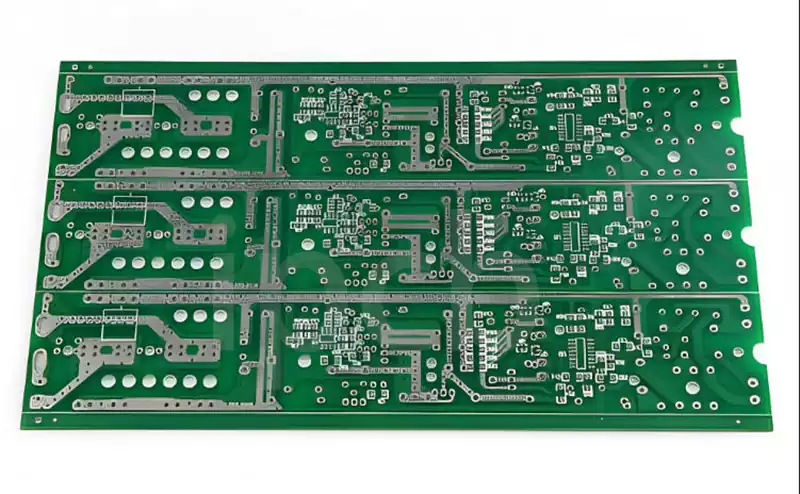
Relays are both victims and creators of interference. In PCB design, this is often a routing challenge.
Voltage Spikes Driven by the Coil: The negative pulse voltage(V = L· di/dt) generated by the coil at the moment of disconnection can reach several kilovolts.
Coupling Path: This high-voltage spike can couple to nearby signal lines through parasitic capacitance, causing MCU reset or data errors.
Suppression Strategies: In addition to commonly used diodes, TVS diodes or rheostats should be used in high-demand scenarios to speed up the discharge process and reduce the impact on the control circuitry.
Radio Frequency Interference (RFI) Caused by Contact Actuation: The “bouncing” process when contacts close is actually a high-frequency oscillation. Spectral Characteristics: This bouncing generates broad-spectrum radiation ranging from hundreds of kHz to hundreds of MHz. Protection: Design a complete ground plane around the signal relay and ground sensitive analog signal lines.
Failure Mode Analysis (FMEA) and Lifetime Prediction: Why do some relays last ten years while others fail within three months?
Physical Failure Types: Contact Corrosion: Sulfidic gases in the environment corrode the silver contacts.
Insulation Carbonization: Frequent arcing causes the plastic casing to decompose into carbon, forming conductive paths that lead to phase-to-phase short circuits.
Mechanical Fatigue: The spring contacts lose elasticity after millions of cycles, resulting in insufficient contact pressure.
Electrical Life Curve: Relay life is typically divided into “mechanical life” (no load, tens of millions of cycles) and “electrical life” (full load, tens of thousands of cycles). Mia, when recommending solutions to customers, must clearly define the load type:
Inductive loads (motors): Lifespan is only about 20% of the rated value.
Capacitive loads (LED drivers): Extremely high peak current can cause contacts to melt instantly.
Summary
The Standing Firm of Relays in the Highly Digital Age Despite the increasing encroachment of MOSFETs and IGBTs on the low- and medium-voltage market, relays, with their complete physical disconnection, high overload capacity, and excellent voltage isolation characteristics, still hold a firm foothold in power grids, aerospace, and high-end industrial control. For engineers, understanding relays is not just about choosing a 5V or 12V coil, but a comprehensive application of electrodynamics, metallurgical processes, and reliability engineering.