In high-voltage PCB design, the insulation performance of FR4 materials directly affects the safety and stability of circuits. Among the relevant parameters, tracking resistance indicators are an important reference for evaluating insulation reliability. However, many engineers tend to confuse the tracking index with the Comparative Tracking Index (CTI) when selecting materials. Therefore, it is important to understand the difference between the two and the practical significance of CTI in selecting FR4 for high-voltage circuits.
Difference Between CTI and Tracking Index
The tracking index is essentially a quantitative description of the tracking phenomenon. It refers to the minimum voltage at which leakage tracking appears on the surface of an insulating material and eventually leads to insulation failure under specified test conditions. In simple terms, it describes the critical condition at which tracking occurs. It mainly provides a direct indication of the failure threshold and only reflects a single critical point of a material’s resistance to tracking. As a result, it cannot fully represent the long-term tracking resistance of the material under different high-voltage environments or varying contamination levels.
The CTI value, or Comparative Tracking Index, is the key parameter defined in IEC 60112 for evaluating the tracking resistance of insulating materials. It is obtained through standardized testing and provides a more meaningful quantitative reference. Unlike the basic tracking index, the CTI value is not just a single threshold. Instead, it evaluates the material’s resistance to tracking by simulating the tracking process under different voltage levels. The higher the CTI value, the stronger the material’s ability to resist leakage tracking and maintain insulation performance in high-voltage environments, ensuring better long-term operational stability.
To illustrate with a simple analogy: the tracking index is similar to the maximum pressure a material can withstand before failure, while the CTI value reflects the material’s long-term tolerance under different pressure levels. The former only indicates whether the material will fail, while the latter helps determine whether the material will remain stable during prolonged use. For high-voltage circuit design, the CTI value of FR4 is the key parameter for material selection, rather than relying solely on the tracking index. This is also one of the factors most easily overlooked by engineers during material selection.
According to IEC 60112, the CTI value of FR4 can be divided into several classes, each corresponding to different application scenarios, providing a clear reference for high-voltage circuit design:
CTI ≥ 600 V (Class 0): Suitable for high-voltage and highly contaminated environments
400 V ≤ CTI < 600 V (Class 1): Suitable for applications requiring moderate reliability
250 V ≤ CTI < 400 V (Class 2): Suitable for general industrial equipment
175 V ≤ CTI < 249 V (Class 3): Suitable only for low-voltage applications in dry environments
Standard FR4 typically has a CTI value of 175–250 V, which is clearly insufficient for high-voltage circuits. This is why high-CTI FR4 materials are essential for high-voltage applications.
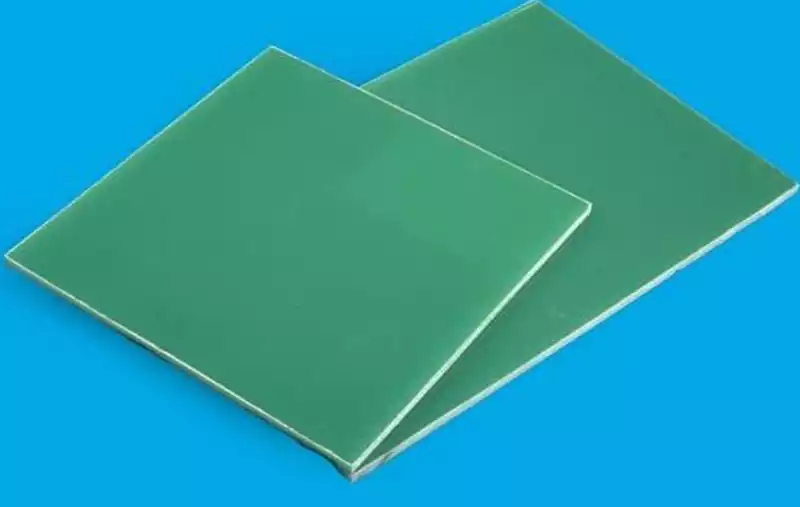
Key Considerations for Selecting FR4 in High-Voltage Circuits
Selecting the appropriate CTI value is the first and most critical step when choosing FR4 materials for high-voltage circuits. Different voltage levels require different CTI standards. Blindly pursuing an excessively high CTI value may lead to unnecessary costs, while an insufficient CTI rating may introduce safety risks. Based on industry experience, high-voltage circuits can generally be categorized into three voltage ranges with corresponding CTI recommendations:
1 kV – 3 kV (medium-high voltage circuits)
FR4 with CTI ≥ 400 V is recommended. This level meets basic insulation requirements while maintaining reasonable cost, making it suitable for equipment such as industrial power supplies and small EV charging units.
3 kV – 10 kV (high-voltage circuits)
FR4 with CTI ≥ 600 V and enhanced tracking resistance should be used. These materials typically feature improved resin formulations and stronger resistance to leakage tracking, making them suitable for industrial inverters and high-power charging stations.
Above 10 kV (ultra-high-voltage circuits)
Standard FR4 is generally insufficient. Special modified FR4 with CTI ≥ 600 V, often combined with additional insulation materials, is required to ensure long-term safe operation.
Another important factor is CTI consistency. When purchasing FR4 in large quantities, it is advisable to request test reports from suppliers to ensure that CTI variation between batches does not exceed 50 V. Otherwise, inconsistencies between batches could lead to reliability issues.
The CTI value is also closely related to the resin system used in FR4. Brominated flame-retardant FR4 usually has relatively lower CTI values, whereas halogen-free FR4, which uses phosphorus-nitrogen flame retardants, can achieve higher CTI values through optimized formulations. In addition, halogen-free FR4 complies with RoHS environmental standards, making it more suitable for high-end applications such as automotive electronics and high-voltage equipment.
Other Important Parameters in High-Voltage FR4 Selection
In addition to CTI, the following three parameters are also important when selecting FR4 for high-voltage circuits. Together with CTI, they determine the overall insulation reliability and long-term stability of the PCB.
1.Dielectric Properties (Dk and Df)
The dielectric constant (Dk) and dissipation factor (Df) influence both signal transmission efficiency and insulation stability. In general, a more stable Dk and a lower Df result in lower signal loss and more stable insulation performance.
For high-voltage and high-frequency circuits (such as inverter circuits), FR4 with Dk between 4.2 and 4.5 and Df between 0.015 and 0.03 is recommended. These values help ensure proper impedance matching while reducing signal reflection and energy loss.
For low-frequency high-voltage circuits, standard dielectric performance combined with a sufficiently high CTI value is usually sufficient to balance performance and cost.
2.Thermal Performance (Glass Transition Temperature, Tg)
High-voltage circuits often generate significant heat during operation. If the Tg value of FR4 is too low, the board may soften, deform, or even delaminate at high temperatures, which can reduce insulation performance and increase the risk of leakage.
For most circuits, FR4 with Tg ≥ 150 °C is recommended.
For applications operating in high-temperature environments (such as near automotive engines or industrial heating equipment), high-Tg FR4 with Tg ≥ 170 °C should be used to maintain stable insulation performance and mechanical strength under repeated thermal cycling.
3.Mechanical Properties and Manufacturing Compatibility
High-voltage PCBs are often multilayer boards, which require strong interlayer bonding, good impact resistance, and reliable drilling performance to prevent issues such as delamination or cracking.
At the same time, the material must be compatible with common surface finishing processes such as ENIG, HASL, and OSP, without affecting subsequent soldering or assembly.
The dielectric thickness should also match the CTI rating:
Below 1 kV: dielectric thickness ≥ 0.4 mm
1 kV – 5 kV: dielectric thickness ≥ 0.8 mm
Above 5 kV: multilayer stacked insulation structures are recommended, with each layer ≥ 0.4 mm, and no bubbles or impurities between layers to ensure reliable insulation.
The CTI value is an important parameter for evaluating the tracking resistance of FR4 materials, but it should not be used as the sole criterion for material selection. In high-voltage PCB design, engineers should also consider dielectric properties, thermal performance, and mechanical characteristics, while taking into account the specific voltage level, operating environment, and cost requirements. By evaluating these key parameters together, it is possible to ensure reliable insulation performance and stable long-term operation of high-voltage PCBs.