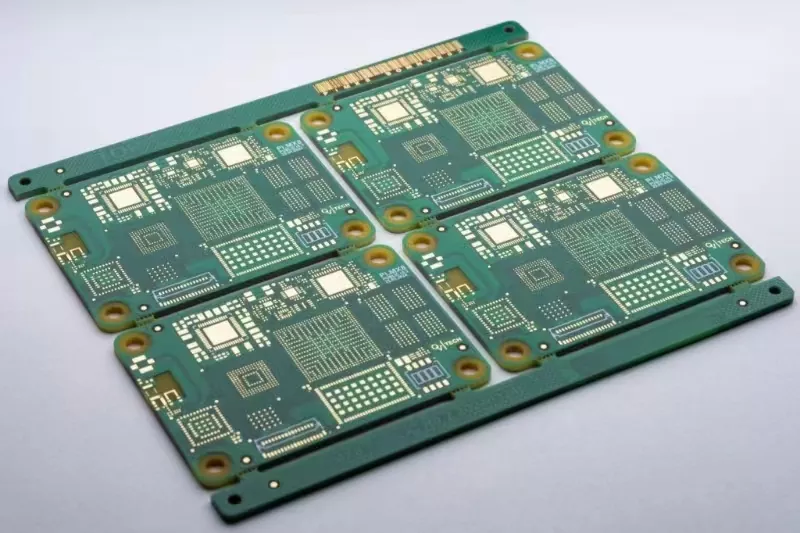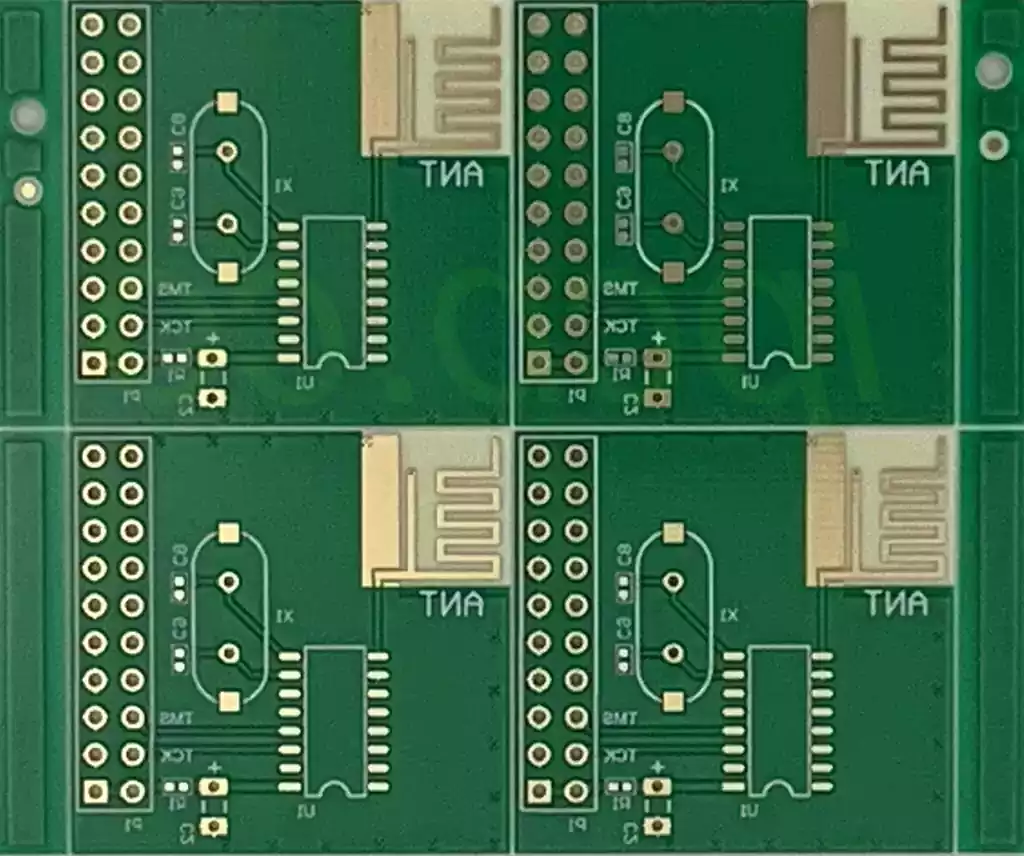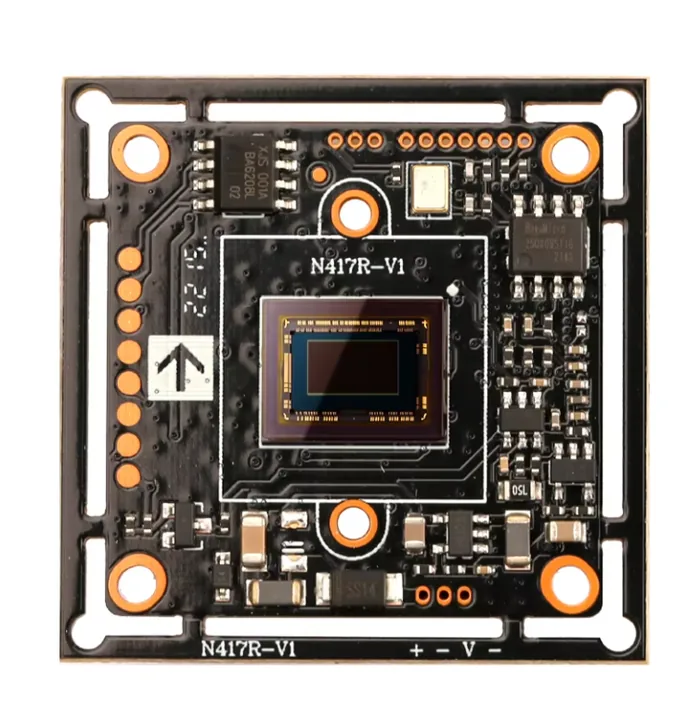
The SMT tombstoning effect is one of the most common structural soldering defects encountered in PCB surface mount assembly, particularly in the production of miniature chip resistors and capacitors. The defect occurs when one termination of a component is successfully soldered to its PCB pad while the opposite termination lifts away from the board, leaving the component standing upright like a gravestone.
Because of this distinctive appearance, the defect is commonly referred to in the electronics manufacturing industry as tombstoning.SMT Tombstoning not only causes open circuits and immediate functional failure of electronic assemblies but also significantly reduces production yield and increases rework costs. As a result, it is regarded as one of the most critical quality issues that must be carefully controlled during high-volume SMT manufacturing.
The primary cause of smt tombstoning is uneven heating during the reflow soldering process, which creates an imbalance in the surface tension acting on both ends of the component. As the PCB passes through the reflow oven, differences in heat absorption and thermal conductivity between the two pads can cause one solder joint to melt earlier than the other.
This situation commonly occurs when one pad is connected to a large copper pour, ground plane, or a nearby high-power component that dissipates heat efficiently, while the opposite pad is connected only to a narrow trace with limited thermal mass. Because the isolated pad reaches the solder melting temperature first, the molten solder generates surface tension that pulls the component upward before the solder on the opposite side has melted, ultimately causing the component to stand vertically.
Uneven solder paste deposition is another major contributor to tombstoning. Variations in stencil printing caused by clogged apertures, stencil wear, deformation, or printing misalignment often produce different solder paste volumes on the two pads. The pad receiving a larger amount of solder paste or solder paste with higher flux activity melts and wets earlier, generating an unbalanced pulling force during reflow. Furthermore, solder paste that has been improperly stored, oxidized, or used beyond its recommended shelf life loses flux activity and exhibits poorer wetting performance, increasing the likelihood of uneven solder joint formation and subsequent tombstoning.
The solderability of component terminations also plays an important role. Variations in plating thickness or tin coating uniformity introduced during component manufacturing can create differences in wetting behavior between the two terminals. In addition, prolonged storage without adequate moisture protection may lead to oxidation or contamination of the component leads by dust and other foreign particles. During reflow soldering, inconsistent wetting speeds and bonding strength at the two terminals can easily produce unequal surface tension, resulting in one side lifting from the PCB.
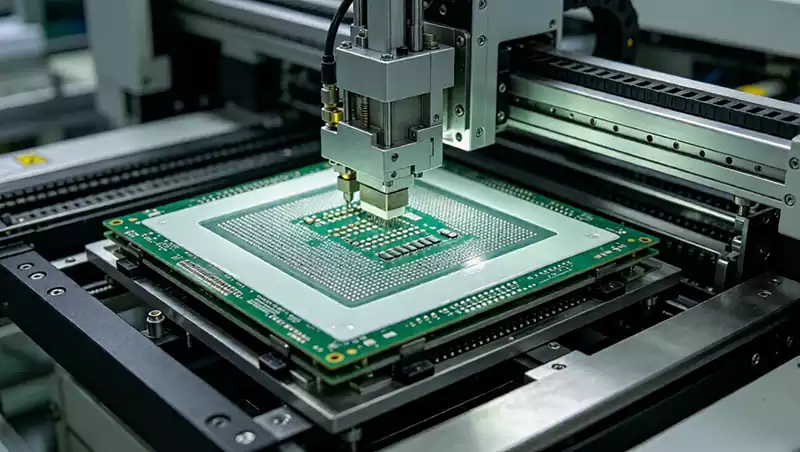
PCB layout and pad design are often the root causes of recurring smt tombstoning problems. Asymmetrical pad dimensions, different pad shapes, or unequal copper distribution naturally produce thermal imbalances during soldering. For example, one pad connected directly to a large copper area while the opposite pad remains isolated experiences significantly different heating characteristics. In addition, when miniature chip components are oriented with their long axis perpendicular to the conveyor direction of the reflow oven, the two ends pass through each heating zone at different times, creating a temperature difference between the terminals. Excessive pad spacing further magnifies the imbalance in soldering forces, substantially increasing the risk of tombstoning.
Improper process parameters during component placement and reflow soldering can further aggravate these conditions. A heating rate exceeding approximately 2°C per second enlarges the temperature difference between the two pads and intensifies thermal imbalance. Insufficient preheating prevents complete evaporation of solvents and adequate activation of the flux within the solder paste, reducing soldering stability. Meanwhile, inaccurate placement caused by poor machine calibration, component offset, or tilted placement may leave one terminal partially suspended above the pad, making tombstoning much more likely after reflow.
The most effective way to prevent smt tombstoning begins with optimized PCB design that ensures complete thermal symmetry between both ends of every chip component. Pad dimensions, copper thickness, and copper area should remain identical on both sides whenever possible, and direct connections to large copper planes should be avoided. Where large copper areas cannot be eliminated, thermal relief patterns should be introduced to reduce differences in heat dissipation and equalize heating rates across both pads.
For miniature components such as 0201 and 0402 packages, pad spacing should be carefully controlled, with the recommended distance typically maintained at approximately 70% to 80% of the component body length. Excessive spacing should be avoided because it increases the influence of uneven surface tension. Component orientation should also be standardized so that the long axis of chip components remains parallel to the conveyor direction of the reflow oven, minimizing temperature differences between the two terminals as the PCB travels through the heating zones.
Precise process control throughout production is equally important. The reflow soldering profile should be optimized according to both the PCB design and component characteristics, with the heating rate generally maintained between 1°C and 2°C per second. An adequate preheating period allows solvents within the solder paste to evaporate completely while ensuring uniform flux activation before solder melting begins. Regular calibration of the reflow oven is also essential to maintain consistent temperatures across all heating zones and minimize thermal variation across the PCB.
Stencil printing requires continuous monitoring to ensure consistent solder paste deposition. Stencils should be inspected regularly for clogged apertures, deformation, and wear, and replaced whenever necessary. Stencils with a thickness of approximately 0.10 mm to 0.15 mm are commonly selected to provide uniform solder paste volume on both pads. At the same time, pick-and-place equipment should be routinely calibrated so that component placement deviation remains within 25% of the pad width, preventing tilted components or partially unsupported terminals before soldering.
Consistent material quality is another essential factor in preventing smt tombstoning. Only components with uniform terminal plating and excellent solderability should be used, while batches exhibiting oxidation or plating inconsistencies should be rejected. High-activity RMA solder paste is generally recommended for assembling miniature chip components. Proper storage procedures, including refrigerated storage followed by sufficient temperature stabilization before use, help preserve flux activity and maintain stable wetting performance throughout production.
Production experience has shown that tombstoning occurs far more frequently in certain applications than in others. Ultra-miniature passive components such as 01005, 0201, and 0402 packages are particularly susceptible because of their extremely small size and low mass, making them highly sensitive to even slight differences in surface tension or temperature. Components with significantly different terminal structures or electrode sizes, including miniature aluminum electrolytic capacitors and wire-wound inductors, also present a higher risk because their solderability is inherently less symmetrical. Likewise, high-density PCB assemblies with extremely fine pad spacing are more vulnerable to tombstoning since even minor variations in solder paste printing or component placement can produce substantial differences in solder joint formation.
When tombstoning suddenly appears on an SMT production line, a systematic troubleshooting procedure should be followed. The first step is to verify the reflow oven temperature profile by checking the heating rate, preheating duration, peak temperature, and temperature uniformity across each heating zone, followed by recalibration if necessary.
Next, the solder paste printing quality should be inspected by measuring solder paste thickness and printing alignment on both pads while checking the stencil for clogged apertures or deformation. The placement machine should then be evaluated using glass board placement verification to identify positioning errors, nozzle pressure imbalance, or other mechanical issues that require recalibration. Finally, incoming components should undergo solderability testing to determine whether oxidation, plating defects, or other material-related problems are responsible, and defective component batches should be replaced immediately.
The SMT tombstoning effect is not caused by a single manufacturing issue but rather results from the combined influence of PCB design, production processes, and material quality. By systematically identifying and eliminating these contributing factors, manufacturers can significantly reduce rework costs, improve production yield, and achieve consistently reliable SMT assembly quality.