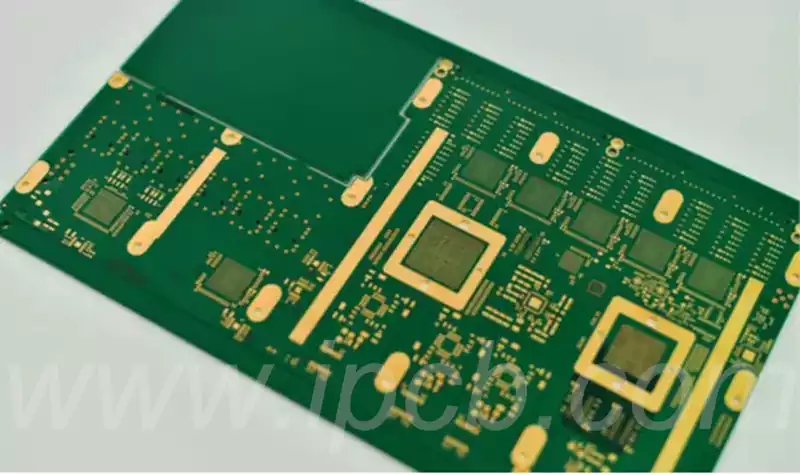
PCB boards serving as the core carriers of electronic devices, see their performance and cost directly influenced by the precision of their design and manufacture. Via holes, as the fundamental structures enabling electrical interconnection between PCB board layers, exhibit distinct forms—through-holes, blind vias, and buried vias—which not only differ in manufacturing processes but also present significant cost variations.
Via refers to the collective term for interlayer connections in PCB boards. Classified by their conductive configuration and position, they fall into three categories: through-holes, blind vias, and buried vias. Each type possesses distinct boundaries in appearance, connectivity scope, and manufacturing methods.
Through Via (Through Via) — The fundamental hole penetrating all layers
The through via is the most prevalent via type, penetrating directly from the PCB board’s top layer to the bottom layer, traversing all conductive layers. It functions as a ‘vertical channel’ spanning the entire board, enabling electrical connection between all layers via the copper plating on the via walls.
Appearance: Via openings visible on both sides of the board
Connectivity: Top layer → All inner layers → Bottom layer
Processing: Mechanical drilling → Resin removal → Copper plating
Characteristics: Mature process, highly versatile, layer-agnostic; standard via type for double-sided and standard multilayer boards
Blind Via — Surface-to-Inner ‘Semi-Through-Hole’
A blind via extends only from the PCB board surface layer (top or bottom) to a designated inner layer without penetrating the entire board. The via opening is exposed on one side only, while the opposite side remains sealed within the pcb board.
Appearance: Visible aperture on one side only, no trace on the opposite side
Connection: Surface layer → Adjacent/designated inner layer (does not penetrate the entire board)
Processing: Laser drilling/depth-controlled drilling → Plating → Laminating
Characteristics: Does not occupy space on the opposite surface layer, shortens signal paths, commonly used in high-density products such as HDI, mobile phone motherboards, and camera modules
Buried Via — The ‘Invisible Hole’ Concealed Within
Buried vias are fully enclosed within the PCB board, connecting only two or more inner layers without extending to either surface layer. Their positions are entirely invisible from the board’s exterior.
Appearance: No apertures visible on either side, completely concealed
Connectivity: Inner layer → Inner layer (does not contact surface layer)
Processing: Core layer drilling and plating → Multilayer lamination → Outer layer processing
Characteristics: Maximises surface routing area, suitable for ultra-high-density, high-layer-count, high-frequency/high-speed PCBs
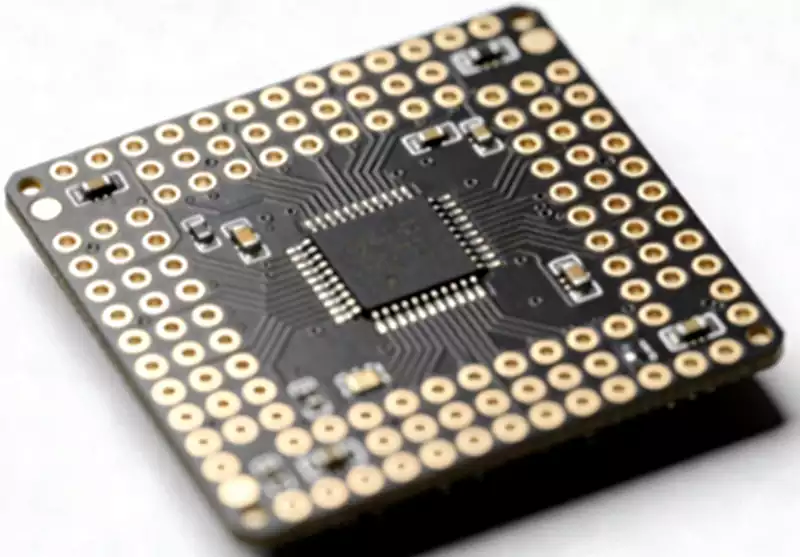
The cost variations in PCB boards fundamentally stem from differences in process steps, equipment precision, material specifications, and yield control. Blind and buried vias are not merely a matter of ‘changing the drill bit,’ but rather an upgrade of the entire production process.
Through-hole processing: Standardised assembly line operation
Through-holes represent the most simplified hole type in PCB board manufacturing, with a highly matured process:
Unified mechanical drilling after full board stacking
Resin residue removal, electroless copper plating, full-board electroplating
Simultaneous completion of circuit etching, solder mask application, and surface treatment
Entire process involves single drilling, single lamination, single plating – featuring universal equipment, low wastage, and stable yield rates, making it suitable for large-scale standardised production.
Blind Hole Processing: Precision Depth Control + Laser Technology
Blind holes demand strict drilling depth control to prevent penetration through the entire board, significantly raising the technical threshold:
Small-sized blind holes necessitate laser drilling machines, whose equipment costs far exceed conventional drills
Precise matching of board thickness and layer spacing is required, with depth tolerances typically controlled within ±0.02mm
Requires blind hole plating before lamination with other layers, adding process and inspection stages
Laser blind holes can achieve apertures as small as 0.1mm, enabling in-panel hole designs to enhance routing density, though process costs increase accordingly.
Buried Hole Processing: Multi-layer Stacking + Invisible Manufacturing
Buried holes represent the most complex solution among the three hole types, being a specialised process for high-end multilayer pcb boards:
First, drill and metallise the inner core layers separately
Align and laminate the completed core layers
Then process the outer layer traces and blind/through-holes
Each additional buried hole set may require an extra lamination and drilling cycle. Increased lamination frequency heightens challenges in layer alignment, bubble control, and adhesive residue removal, demanding exceptional thermal resistance and dimensional stability from materials.
Process complexity hierarchy: Through-holes < Blind holes < Buried holes. This sequence underpins the core logic of escalating costs.
Cost Breakdown: Why Are Blind/Buried Plates More Expensive?
1.Equipment and Process Costs
Through-holes: Standard mechanical drilling machines, single-step formation
Blind holes: Laser drilling + depth control process, high equipment depreciation
Buried holes: Multiple lamination cycles + repeated drilling + specialised inner layer inspection, exponentially increased processes
Each additional process step drives up labour, energy consumption, and man-hour costs.
2.Material Costs
Blind/buried-via boards require high Tg, low expansion, and high thermal resistance laminates to prevent warping and delamination during lamination and drilling. Such substrates cost 10%-30% more than standard FR-4. High-frequency/high-speed pcb boards further necessitate special low-loss materials, significantly increasing costs.
3.Yield Cost
Through-hole yields typically exceed 99%. Blind vias exhibit slightly lower yields due to depth control and hole-shape precision requirements. Buried vias involve multi-layer alignment and lamination, where minor deviations cause open circuits or shorts, resulting in even lower yields. These losses are reflected in the final quotation.
4.Design and Engineering Costs
Blind/buried vias demand specialised laminate design, via placement simulation, and impedance matching, with more time-consuming engineering documentation processing. Small-batch orders incur additional dedicated engineering fees and tooling costs, further elevating unit prices.
Intuitive Cost Comparison (Industry Standard Range)
Through-holes: Lowest cost with minimal per-via processing fees, suitable for most products
Blind vias: 30%–80% higher cost than through-holes, increasing with smaller diameters and higher precision requirements
Buried holes: 60%–150% higher than through-holes, with greater increases for high-layer HDI buried holes
Overall cost hierarchy: Through-holes < Blind holes < Buried holes.
Selecting hole types should not pursue ‘high-end’ status but align with product requirements, balancing density, performance, cost, and reliability.
Prefer through-holes in these scenarios:
Standard double-sided pcb boards, multilayer pcb boards up to 4 layers
Home appliances, industrial control, power supply products
Cost-sensitive, high-volume production with no strict dimensional constraints
Low-frequency signals, high-current power supply loops
Scenarios favouring blind vias
6–12 layer mid-to-high-end HDI pcb boards
Mobile phones, wearables, cameras, Bluetooth modules
Surface-mounted BGAs, high-density routing, through-hole-in-pad designs
High-frequency signals requiring shortened transmission paths and reduced crosstalk
Scenarios favouring buried vias
12+ layer high-density multilayer pcb boards, high-end HDI
Miniaturised, ultra-thin, extreme density products
Surface layers requiring full component coverage with no spare via space
High-frequency/high-speed, high-performance communications, automotive electronics, medical equipment
When properly designed, blind/buried vias can reduce layer count, shrink board size, and enhance performance, thereby achieving optimal system cost.
Via, blind via, and buried via represent the three fundamental forms of interconnect between PCB board layers. Through-holes serve general-purpose and low-cost applications, blind vias balance density and cost-effectiveness, while buried vias fulfil extreme high-density and high-performance requirements. During product development, first define dimensional, layer count, signal, and cost objectives, then match the corresponding via type. This approach ensures both electrical performance and reliability while effectively controlling BOM costs.