The choice of antenna directly impacts a device’s communication performance and structural design. This article compares the key differences between PCB antennas and FPC antennas across four dimensions—structure and materials, performance characteristics, manufacturing processes and costs, and application areas—to provide guidance for product development.
Structure and Materials
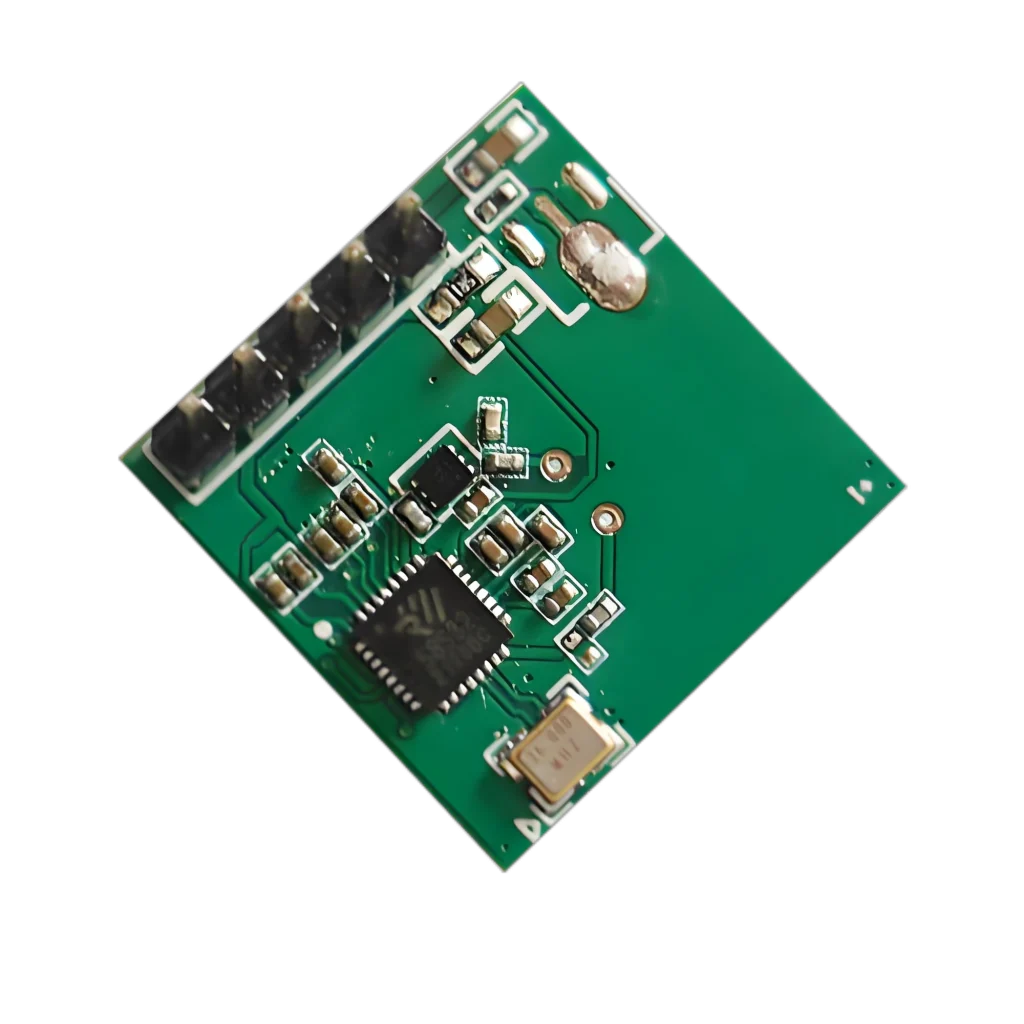
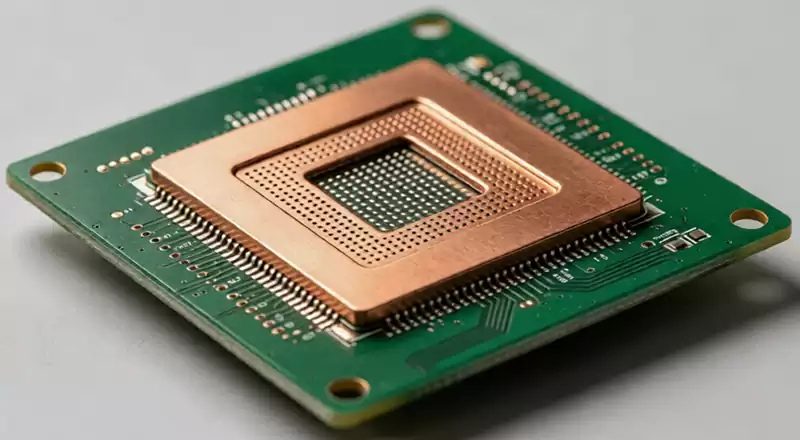
PCB antennas use FR4 fibreglass-reinforced epoxy resin as their core substrate. This substrate offers high strength and rigidity, enabling the antenna to maintain a stable shape and resist deformation or damage.The conductive layer is produced using a copper foil etching process, with a fixed circuit layout. It is typically integrated directly into the device’s main board, eliminating the need for additional mounting structures. This not only streamlines the assembly process but also ensures structural stability.
In actual production, the substrate thickness of rigid PCB antennas typically ranges from 0.8 to 1.6 mm, making them suitable for applications requiring stable structural support. Particularly in fixed installations such as industrial equipment and routers, their rigidity effectively withstands external impacts and environmental interference, thereby extending their service life.
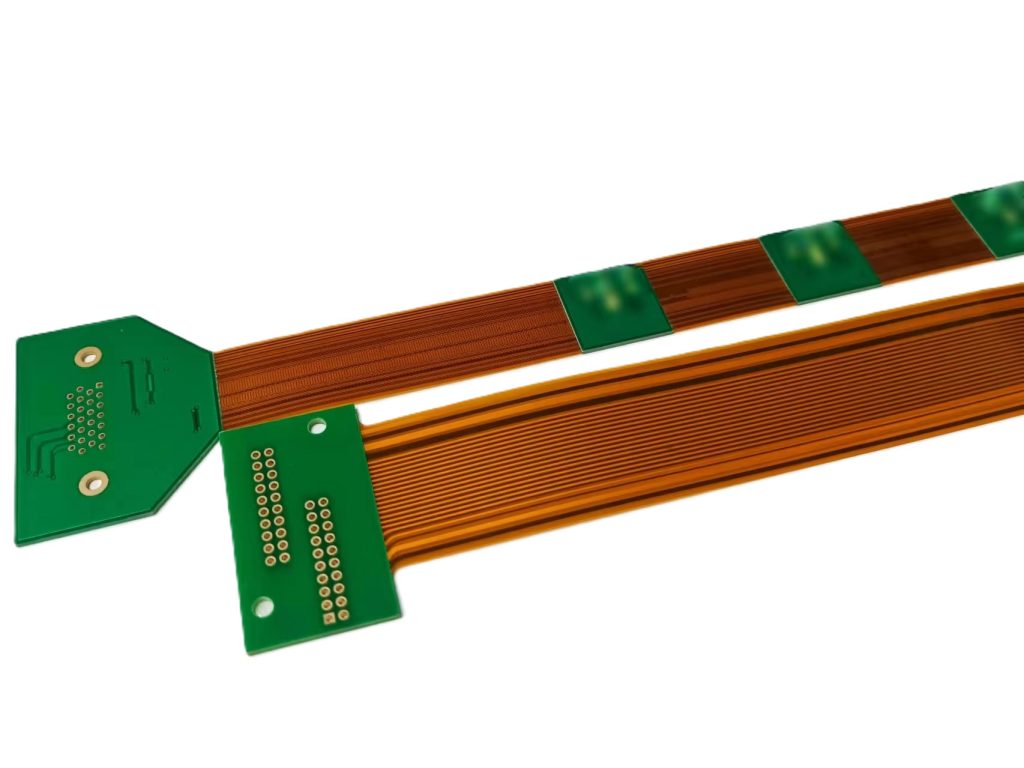
FPC antennas, on the other hand, utilise polyimide (PI) or liquid crystal polymer (LCP) as their flexible substrate. These substrates are lightweight, bendable and foldable, with a thickness of just 0.1–0.3 mm, and can even be made thinner. Their conductive layers also utilise copper foil; however, thanks to the properties of the flexible substrate, the circuit layout can be flexibly designed to suit the internal space of the device, allowing it to conform to curved surfaces or be embedded in narrow gaps, thereby overcoming the spatial limitations of PCB antennas.
It is worth noting that FPC antennas typically require the use of a stiffening plate to provide rigid support at critical points such as interfaces and solder joints. This prevents circuit breakage during bending and ensures the stability of signal transmission—a detail that many practitioners tend to overlook, yet one that directly impacts the service life of FPC antennas.
Performance Characteristics
The performance advantages of PCB antennas lie primarily in their stability and consistency. Due to the high rigidity of their substrate and fixed circuit layout, they are less susceptible to deformation during signal transmission, resulting in stable signal gain—typically around 2–3 dBi—making them suitable for scenarios requiring high signal stability. In industrial IoT devices, routers, base stations and similar equipment, rigid PCB antennas demonstrate superior bandwidth performance.
They are capable of supporting multi-band signal transmission and possess strong interference resistance. Even in harsh environments such as high temperatures, humidity and vibration, performance fluctuations can be kept within 3 dB, meeting the requirements for industrial-grade equipment. Furthermore, rigid PCB antennas offer excellent batch consistency and tight manufacturing tolerances; performance variations between different batches can be controlled within ±0.5 dB, making them suitable for large-scale mass production and helping to reduce product failure rates.
The performance advantages of FPC antennas lie in their high-frequency compatibility and spatial adaptability. The low dielectric constant of their substrate enables superior performance in high-frequency bands (such as 5G millimetre-wave frequencies above 28 GHz), with lower signal transmission loss and a radiation efficiency of over 87%, far exceeding that of comparable PCB antennas (typically around 75%).
In the consumer electronics sector—including foldable smartphones, smartwatches and wearable devices—FPC antennas can conform to the curved designs of devices, maximising the utilisation of internal space whilst ensuring uniform signal coverage. For instance, in the hinge area of a foldable smartphone, a flexible FPC antenna can achieve 160° signal coverage without dead zones, whereas PCB antennas cannot adapt to such curved scenarios. However, it should be noted that the performance of flexible FPC antennas is significantly affected by bending; signal gain may decrease by 1–2 dB after repeated bending, and attention should be paid to performance degradation following long-term use.
Manufacturing Process and Costs
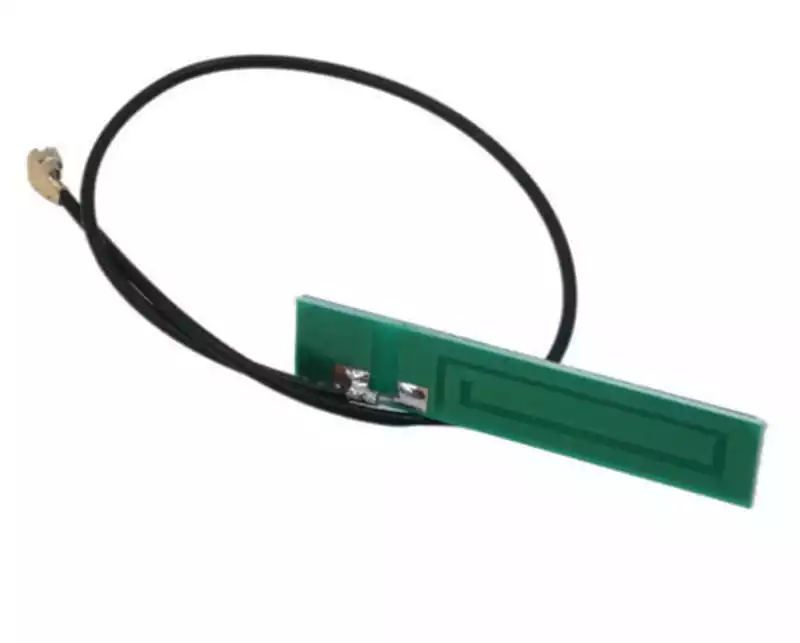
The manufacturing process for rigid PCB antennas is essentially the same as that for conventional PCB boards, utilising established etching, solder mask application and screen printing techniques. The process is straightforward, with a low technical barrier to entry and high mass production efficiency. The core processes involve optimising circuit layout and tuning impedance matching; a vector network analyser (VNA) is used to tune the system to a standing wave ratio (SWR) of less than 1.5, thereby ensuring efficient signal transmission.
Due to the maturity of the processes, the production costs of rigid PCB antennas are relatively low, making them suitable for large-scale mass production. This is particularly advantageous in devices produced in batches, such as IoT sensors and routers, as it effectively controls product costs and enhances market competitiveness. Furthermore, rigid PCB antennas have a high yield rate, typically exceeding 98%, which significantly reduces wastage during the production process.
The manufacturing process for FPC antennas is relatively complex. In addition to conventional etching and screen-printing processes, it requires special steps such as laminating flexible substrates, bonding reinforcement boards, and bending and forming, placing higher demands on production equipment and technical expertise.
For example, FPC antennas using LCP substrates require high-precision etching processes, with line width accuracy controlled within ±15 μm to ensure the stability of high-frequency signal transmission; simultaneously, the bending and forming process requires strict control of the bending angle and force to prevent circuit breakage. These complex processes result in higher production costs for FPC antennas, typically 1.5 to 2 times that of PCB antennas, and lower mass production efficiency, with a yield rate of approximately 92% to 95%.
However, FPC antennas offer greater customisation capabilities, allowing for flexible design of circuit layouts and dimensions according to the specific shape and spatial requirements of the device.This makes them suitable for the development of personalised and miniaturised devices, such as smart wearables and foldable screen devices.
Applications
The core applications of PCB antennas are concentrated in fixed installations, equipment requiring high stability, and large-scale mass production. For example, industrial IoT devices (such as smart sensors and industrial controllers), which need to operate continuously in harsh environments, benefit from the rigidity and stability of rigid PCB antennas, which effectively withstand interference from vibrations and high temperatures, ensuring stable signal transmission; network equipment such as routers and switches, which require stable multi-band signal coverage, can meet the demands of large-scale mass production thanks to the bandwidth advantages and consistency of PCB antennas.
Furthermore, fixed modules in automotive electronics (such as GPS navigation modules) and auxiliary antennas in communication base stations also frequently utilise rigid PCB antennas, relying on their stable performance to ensure the long-term reliable operation of the equipment.
FPC antennas, on the other hand, are better suited to compact, customised devices with limited space, particularly in scenarios requiring bending or curved surface mounting. The consumer electronics sector is their core application area; for example, in foldable smartphones, smartwatches and TWS earphones, FPC antennas can conform to the device’s curved surfaces, maximising the use of internal space whilst meeting high-frequency signal transmission requirements—for instance, a single foldable smartphone requires 6–8 sets of FPC antennas to accommodate signal transmission across different frequency bands.
FPC antennas can be embedded within the straps of smartwatches to achieve seamless signal coverage. Furthermore, medical wearables (such as ECG patches), livestock tracking collars in smart agriculture, and AGV navigation modules in Industry 4.0 frequently utilise FPC antennas. Leveraging their flexibility, these antennas adapt to complex installation environments whilst ensuring stable signal transmission.
There is no absolute superiority between PCB antennas and FPC antennas; the distinction lies solely in their suitability for specific product requirements. In the future, with the advancement of high-frequency and integrated technologies, the application scenarios for both types of antennas will expand further.