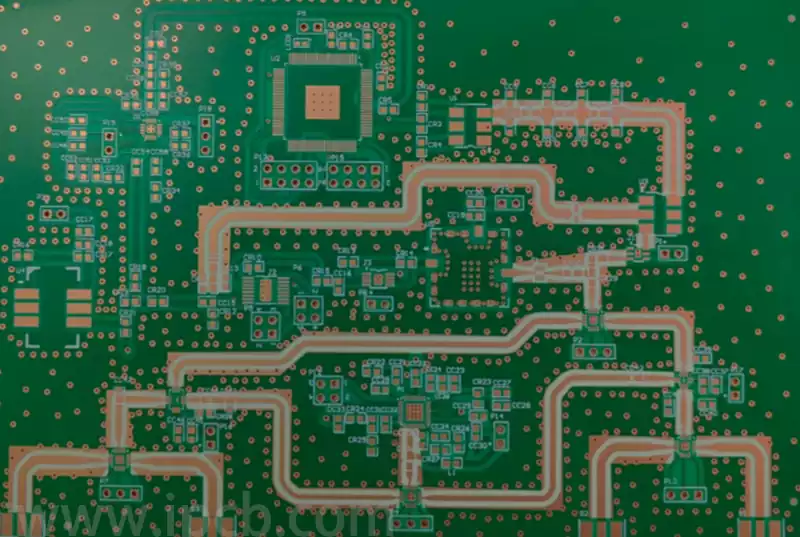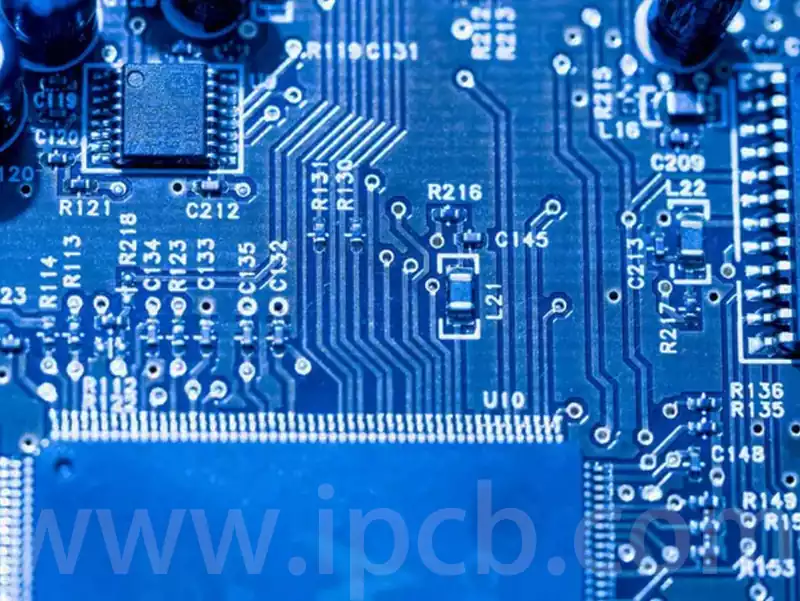
The coverlay serves as the core flexible insulating protective layer for FPCs. Consisting of a PI film substrate combined with a specialised adhesive layer, it provides insulation, reinforcement and coverlay protection for flexible printed circuits through a thermal lamination process.
The Core Functions of FPC Coverlay
Electrical insulation protection is the most fundamental and core function of Coverlay. The spacing between copper foil circuits on FPCs is becoming increasingly fine, particularly in precision components such as 5G modules and camera modules, where circuit spacing can be reduced to less than 0.1 mm. Without effective insulation protection, issues such as short circuits and electrical leakage between circuits are highly likely to occur, directly leading to equipment failure.
Through its composite structure of a PI substrate and an adhesive layer, the coverlay forms a dense insulating barrier that completely encapsulates the exposed copper foil circuits. This effectively isolates the circuits from air, moisture and external electromagnetic interference, ensuring signal stability during high-frequency signal transmission and preventing circuit damage caused by insulation failure. Experimental data shows that FPCs equipped with qualified coverlay can achieve an insulation resistance of over 10¹² Ω, effectively mitigating the risk of insulation breakdown in complex electrical environments.
Mechanical protection and flexibility reinforcement enable FPCs to adapt to a wider range of complex application scenarios. The core advantage of FPCs lies in their flexibility and bendability, making them widely used in foldable smartphones, smart wearable devices, automotive wiring harnesses and other scenarios requiring repeated bending or installation in confined spaces. This places extremely high demands on the toughness and adhesion of the surface protective layer.
The PI substrate of the coverlay possesses excellent tensile strength and bending performance. When combined with a specialised adhesive layer and thermally laminated, it forms a robust, integrated structure with the FPC substrate and copper foil circuits, capable of withstanding repeated bending with a radius of 3 mm and over 100,000 cycles without peeling or cracking. At the same time, it effectively withstands friction, scratches and impacts during assembly, reducing wear and detachment of copper foil circuits and lowering the damage rate of FPCs during production, transport and assembly. Data shows that FPCs using solder mask film (Coverlay) can reduce assembly damage rates by over 70%.
Its solder mask and anti-contamination functions ensure the reliability and long-term stability of FPC soldering. During the FPC soldering process, the coverlay, through its pre-cut window design, precisely exposes the pads requiring soldering, preventing solder from spilling onto the circuits and causing short circuits. It also prevents contaminants such as solder slag and flux from adhering to the circuit surface during soldering, which could affect circuit performance.
Furthermore, the coverlay effectively isolates the FPC from environmental contaminants such as dust, moisture and chemical agents, preventing oxidation and corrosion of the copper foil circuits and extending the FPC’s service life. In demanding applications such as automotive and medical electronics, the solder mask’s (Coverlay) corrosion-resistant properties are particularly crucial, ensuring the FPC operates reliably over the long term in high- and low-temperature, humid and corrosive environments.
Helping to enhance the overall performance of FPCs and meeting high-end manufacturing requirements. High-quality coverlay not only provides basic protection but also helps to optimise the mechanical and electrical properties of FPCs. For example, by appropriately selecting the thickness and material of the coverlay, the rigidity of the FPC can be improved, facilitating subsequent assembly.
Certain specialised coverlays also exhibit excellent high-temperature resistance, making them suitable for SMT reflow soldering processes; they can withstand temperatures exceeding 260°C without ageing or peeling. Furthermore, the surface flatness of the coverlay reduces signal loss during transmission, enhancing the FPC’s signal integrity and meeting the demands of high-end applications such as 5G and high-frequency communications.
Core Processes for FPC Coverlay
Material selection forms the foundation of the coverlay process and directly determines its upper performance limit. The core materials of a coverlay consist of a PI substrate and an adhesive layer; in certain special applications, a release liner may be added to facilitate subsequent processing. As the core insulating layer, the PI substrate must possess excellent flexibility, high-temperature resistance and insulating properties. Common thicknesses are 12.5μm, 25μm and 50μm, and the choice depends on the FPC’s application scenario—for example, FPCs for foldable smartphones require thinner, more flexible PI substrates to ensure they remain undamaged despite repeated bending.
FPCs for automotive electronics, on the other hand, require PI substrates that are resistant to high temperatures and ageing, suitable for high-temperature environments such as the engine compartment. The adhesive layer must possess good adhesion and compatibility, enabling it to bond firmly to the PI substrate whilst also adhering closely to the FPC copper foil and substrate. It must also have a certain degree of fluidity to fill gaps between circuits during the hot-pressing process, thereby preventing issues such as bubbles and delamination. Common adhesive layers are epoxy or acrylic-based, with thicknesses typically controlled between 12.5 μm and 25 μm.
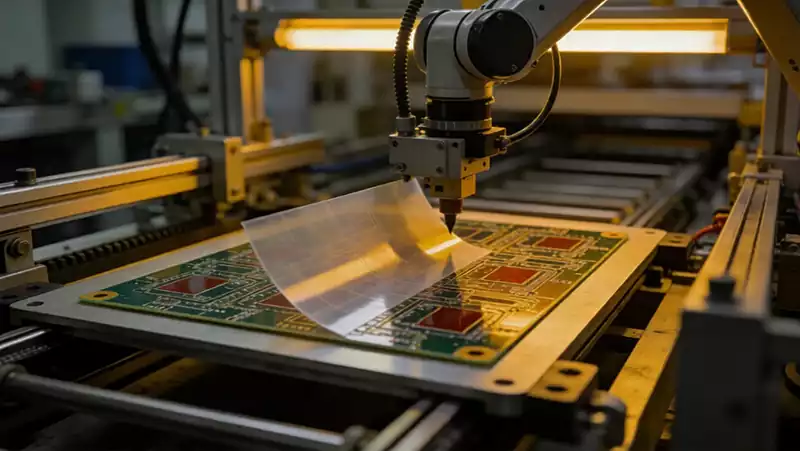
Precise windowing is the key to the coverlay process and directly affects the soldering accuracy of the FPC. The core objective of windowing is to expose the pads requiring soldering whilst completely covering the excess circuit lines; the precision of the windowing directly determines the exposed area of the pads and the reliability of the soldering. The current industry-standard method for windowing is laser cutting, utilising an ultraviolet laser drilling machine with a wavelength of 355 nm and an energy density adjusted to 2–5 J/cm².
This method enables precise cutting of both the PI substrate and the adhesive layer whilst preventing carbonisation of the PI substrate, ensuring that the edges of the cut-out are smooth and burr-free. The precision of the windowing must be controlled within ±25 μm to ensure precise alignment with the pads, whilst also allowing for a certain margin of clearance to prevent solder overflow. For complex FPC circuits, a CCD positioning system must also be employed to assist with windowing, ensuring consistency and precision across multiple pads and avoiding issues such as misalignment, missed cuts or incorrect positioning, which could affect subsequent soldering processes.
Hot-press lamination is the core process for bonding the coverlay to the FPC substrate, determining the strength of the bond between the two. Prior to lamination, the surface of the FPC substrate must be cleaned to remove contaminants such as oil and dust, ensuring the surface is clean to prevent any adverse effect on the adhesive layer’s tackiness. Subsequently, the windowed coverlay is precisely aligned with the FPC substrate and placed in a vacuum laminator for thermal lamination. The control of thermal lamination parameters is particularly critical.
The temperature must be maintained between 180°C and 200°C, with a pressure of 15–30 kg/cm² and a duration of 30–60 seconds. Under these conditions, the adhesive layer melts and flows, filling the gaps between the circuits and forming a strong bond with the FPC substrate and copper foil circuits. A vacuum environment must be maintained throughout the hot-pressing process to prevent the formation of bubbles, ensuring that the laminate is free from delamination, bubbles and wrinkles after bonding. The bond strength must reach 1.0 N/mm or higher to ensure that the coverlay does not peel off during repeated bending.
Post-processing and inspection serve as the final safeguard in the coverlay process. Once hot-press lamination is complete, the FPC must undergo contour die-cutting to the design dimensions, with tolerances controlled within ±0.05 mm, ensuring the FPC’s precise shape and suitability for subsequent assembly. This is followed by a curing process, during which the FPC is placed in an oven and baked at 150°C–180°C for 60–90 minutes to further enhance the curing of the adhesive layer, thereby improving the adhesion and stability of the coverlay.
The inspection phase focuses on key indicators such as windowing accuracy, lamination quality, insulation performance and bond strength. AOI inspection equipment is used to verify that windowing offset is less than 50 μm and to check for issues such as delamination or bubbles in the lamination. Additionally, insulation resistance tests and flex tests are conducted to ensure that the performance of the coverlay meets industry standards and customer requirements. Non-conforming products must be promptly reworked to ensure that the coverlay on every FPC meets high-quality requirements.
In terms of application scenarios, coverlay has become an indispensable component of high-end FPCs. In the consumer electronics sector, FPCs used in devices such as foldable smartphones, smartwatches and tablets all require high-performance coverlays to ensure stable operation during repeated bending; in the automotive electronics sector, FPCs for battery management systems, in-car entertainment systems and sensors in new energy vehicles require coverlays that are heat-resistant, age-resistant and corrosion-resistant to withstand the complex operating environment of vehicles.
In the medical electronics sector, FPCs for portable medical devices require coverlay with excellent biocompatibility and superior insulation properties to ensure the safety and reliability of the equipment; in the communications sector, FPCs for 5G base stations and satellite communication equipment require coverlay with low signal loss to enhance signal transmission efficiency.
Although the coverlay is merely a thin layer, it is a key factor in ensuring the reliability of FPCs. At a time when electronic devices are constantly pushing the boundaries of form and performance, this flexible protective layer is building a solid barrier for the safe operation of precision circuits with ever-greater precision and stability.