FPC quotations are influenced by a combination of four key factors: materials, structural design, manufacturing requirements and order volume. Any variation in the selection or specifications of these elements will be directly reflected in the final price.
Materials
Material costs form the core component of FPC quotations, accounting for 30% to 50% of the total. Differences in material selection directly result in variations in pricing. Key FPC materials include the substrate, copper foil, solder mask and reinforcement sheets. The specifications, brand and performance of each material influence the final cost calculation; this is a detail that is often overlooked in custom FPC quotations.
As the ‘carrier’ of the FPC, the substrate is the primary material factor determining the quotation. Currently, the mainstream substrate in the industry is polyimide (PI), but there are significant price differences between PI substrates of different specifications—the unit price of standard PI film is approximately 50 yuan/m², whilst specialised PI films or LCP substrates suitable for high-frequency or high-temperature applications can exceed 500 yuan/m², representing a tenfold difference.
If the purchaser has specific application requirements—such as FPCs for new energy vehicle power batteries needing to withstand temperatures above 150°C, or FPCs for medical devices requiring biocompatibility—high-end substrates must be selected, resulting in a substantial increase in the quotation. Furthermore, substrate thickness also affects the quotation; among the commonly used thicknesses of 12.5μm, 25μm and 50μm, the thicker the substrate, the greater the material consumption, the higher the cost, and consequently, the higher the quotation.
The specifications and thickness of the copper foil are another key factor influencing material costs. As the conductive core of the FPC, copper foil thickness is typically measured in ounces (oz), with common specifications being 0.5 oz, 1 oz and 2 oz. Thicker foil offers better conductivity but also incurs higher material costs – the unit price difference between 1 oz and 2 oz copper foil can reach approximately 30%.
At the same time, the purity of the copper foil also affects the quotation. High-purity copper foil (such as 99.99% or higher) is suitable for high-frequency and high-precision applications, and its price is significantly higher than that of standard copper foil; this is one of the reasons why quotations for high-precision FPCs tend to be higher.
Auxiliary materials such as solder mask and reinforcement plates, whilst accounting for a smaller proportion than the base material and copper foil, also influence the quotation. Regarding solder mask, the unit price difference between standard PI solder mask and specialised types—which are heat-resistant and offer low signal loss—can exceed 50%; The choice of material for the reinforcement plate is also crucial.
FR4 rigid board reinforcement is relatively low-cost, whereas stainless steel or aluminium sheet reinforcement, due to the high processing difficulty and material costs, can increase the quotation by 10%–20%. In actual quotations, the selection of auxiliary materials should be tailored to the FPC’s application scenario to avoid unnecessary cost wastage from an excessive pursuit of high-end materials, whilst also ensuring that inferior materials do not compromise product performance.
Structural Design
The number of layers is a key structural factor affecting FPC pricing; the more layers there are, the higher the price, with costs tending to double with each additional layer. Single-layer FPCs have a simple structure and are easy to manufacture, with unit prices typically ranging from 5 to 30 yuan; they are suitable for simple applications such as mobile phone flex cables and sensor connection cables.
Double-layer FPCs require the addition of blind and buried via processes, increasing the number of manufacturing steps and raising the unit price to between 15 and 60 yuan. Multi-layer HDI FPCs (8 layers or more), due to their high circuit density, require complex processes such as laser drilling and electroplating, with unit prices reaching 50–200 yuan or more; for high-end 5G base station RF modules, the price of multi-layer FPCs can even exceed 500 yuan. An increase in the number of layers not only increases material consumption but also raises processing difficulty and scrap rates, which is the primary reason why the price rises more significantly as the number of layers increases.
Circuit density and hole diameter are directly linked to manufacturing complexity, which in turn affects pricing. As electronic devices become increasingly miniaturised and sophisticated, the line spacing of FPCs continues to decrease, and hole diameters are becoming smaller—standard FPCs have line spacing of ≥0.1 mm and hole diameters of ≥0.2 mm, whilst high-precision FPCs can have line spacing reduced to within 0.05 mm and hole diameters of ≤0.1 mm.
The denser the circuit patterns and the smaller the hole diameters, the higher the precision requirements for manufacturing equipment, and the higher the scrap rate, naturally leading to an increase in the quotation. For example, reducing the circuit spacing from 0.1 mm to 0.05 mm may result in a price increase of 40%–60%; this is the core rationale behind the higher quotations for high-precision FPCs.
The complexity of the outline and panelisation efficiency also indirectly influence the quotation. FPCs with irregular outlines, special cut-outs or non-standard shapes require custom moulds and precise cutting during processing, which reduces processing efficiency and increases the scrap rate; quotations for these are typically 15%–30% higher than for standard rectangular FPCs. Meanwhile, panelisation efficiency directly affects material wastage. If the FPC’s design dimensions are suboptimal, preventing full utilisation of standard-sized substrate, and material wastage exceeds 10%, the quotation will increase accordingly. This is a pricing detail that purchasers often overlook.
Process Requirements
Surface treatment processes are the fundamental factors influencing quotations. Common surface treatment methods include electroless gold plating, tin plating and silver plating. There are significant cost differences between these processes—electroless gold plating, due to its strong resistance to oxidation and excellent contact performance, has the highest unit price, being 30%–50% higher than standard tin plating, and is suitable for high-end consumer electronics, medical equipment and similar applications.
Although silver plating offers excellent electrical conductivity, it is costly and prone to oxidation, making it suitable only for specific high-frequency applications; tin plating is the most cost-effective option and is suitable for standard consumer electronics. Furthermore, the required thickness of the surface treatment also affects the quotation; increasing the gold plating thickness from 0.1 μm to 0.3 μm will result in a price increase of approximately 20%.
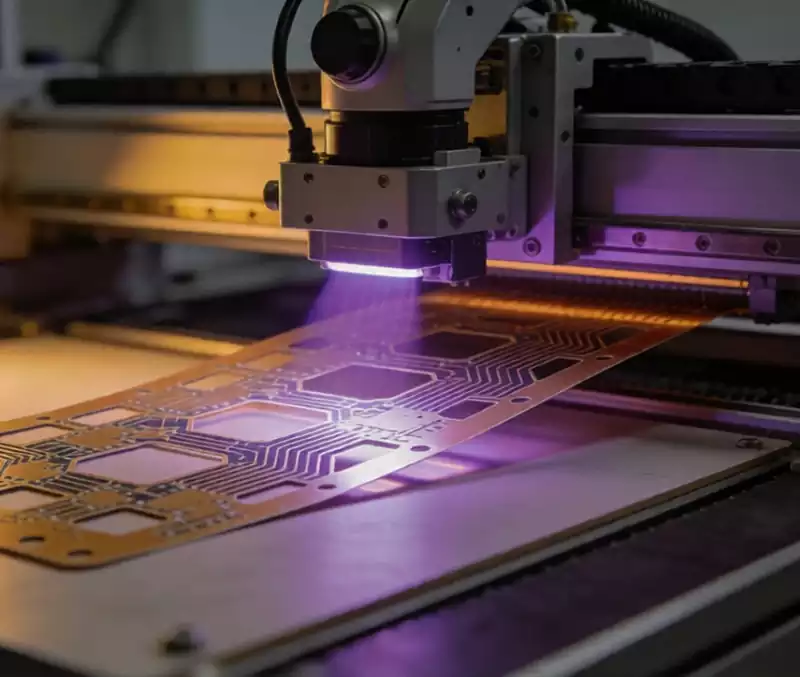
Specialised processing techniques can significantly increase the cost of FPCs. For example, impedance control processes require specialised testing equipment, adding a testing cost of 5–15 yuan per FPC, and are suitable for applications such as 5G and high-frequency communications; Laser cutting processes are 10% more expensive than traditional die-cutting processes, but offer higher cutting precision and are suitable for FPCs with complex shapes and high precision requirements; rigid-flex boards, which require the integration of rigid PCBs and flexible FPCs into a single unit, involve complex manufacturing processes and are priced 2–5 times higher than standard FPCs; they are commonly used in high-end applications such as military and medical equipment.
Quality control requirements also influence pricing. If the purchaser requires an FPC yield rate of over 99%, the manufacturer must add inspection processes and invest in additional testing equipment and manpower, resulting in increased costs and a 10–15% rise in the quoted price; whereas for standard consumer-grade FPCs, a yield rate of around 95% is typically required, leading to a relatively lower quoted price. In actual production, quality control requirements should be set reasonably in accordance with the application scenario to avoid unnecessary cost wastage resulting from an excessive pursuit of high yield rates.
Order Size
Order size is a key indirect factor influencing pricing; the larger the batch, the lower the unit price, with a clear tiered pricing trend. During the sample production stage, due to costs such as tooling fees and equipment debugging, quotations typically start from 500–2,000 yuan, with unit prices significantly higher than those for mass production.
For small-batch orders (100–500 pieces), due to low production efficiency and high material wastage, the unit price is 40%–80% higher than for mass-production orders; for large-volume orders (10,000 pieces or more), manufacturers can reduce costs by optimising production processes and improving material utilisation, bringing the unit price down to 5 yuan per piece or even lower. For example, for a particular FPC model, a unit price of 30 yuan per piece applies to an order of 100 pieces, whereas an order of 5,000 pieces can be priced at 22 yuan per piece, representing a significant difference.
Special certifications and additional services will further increase the quotation. If the FPC is to be used in sectors such as medical or aerospace, it must pass relevant certifications such as ISO 13485 or NASA standards; certification costs will be directly included in the quotation—medical-grade FPCs incur an additional certification cost of 10–30 yuan per piece, whilst aerospace-grade FPCs may incur certification costs exceeding 2,000 yuan per batch; Regarding additional services, SMT assembly will incur an assembly fee of 20–100 yuan per piece, whilst the development of test fixtures requires a one-off investment of 5,000–20,000 yuan; these factors will all lead to an increase in the quotation.
Delivery lead times also affect quotations. Quotations for FPCs with standard lead times (7–10 days) remain relatively stable; however, if the purchaser requests expedited delivery (3–5 days), the manufacturer must work overtime and prioritise scheduling, incurring additional labour and equipment wear-and-tear costs, which will increase the quotation by 20–30%. Therefore, when specifying delivery requirements, purchasers should plan reasonably in line with their own production schedules to avoid incurring unnecessary costs due to expedited delivery.
Variations in FPC quotations stem from the combined effects of material grade, layer complexity, manufacturing precision and order volume. High-end applications require high-quality materials and stringent manufacturing processes, whilst standard applications can achieve cost control through appropriate material selection.