In millimetre wave radar systems, the antenna is the core component that determines system performance; its design and manufacturing process directly influence detection range, angular resolution, sensitivity and interference resistance, and form the foundation for achieving precise sensing and efficient response. From in-vehicle ADAS to industrial IoT and aerospace, the continuous expansion of millimetre wave radar applications has always been accompanied by the ongoing evolution of antenna technology.
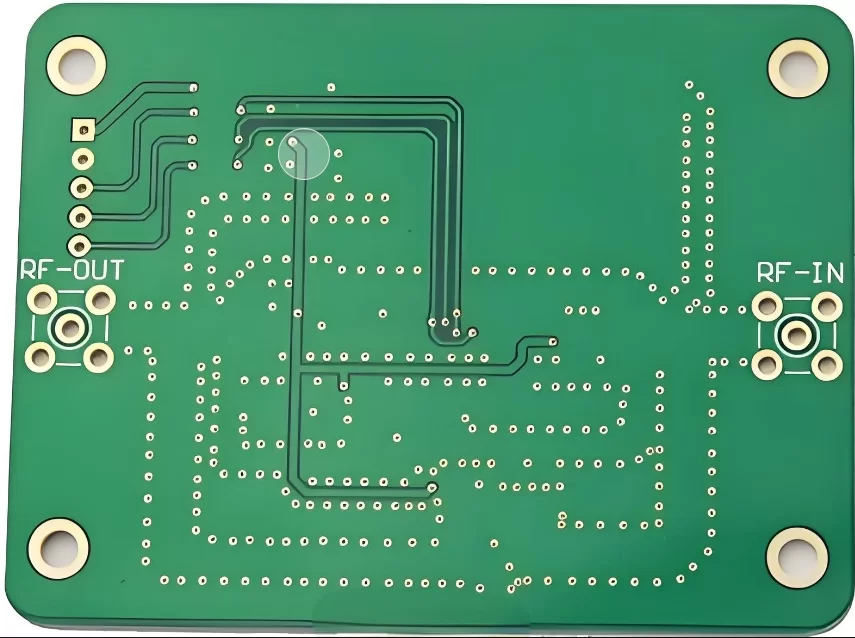
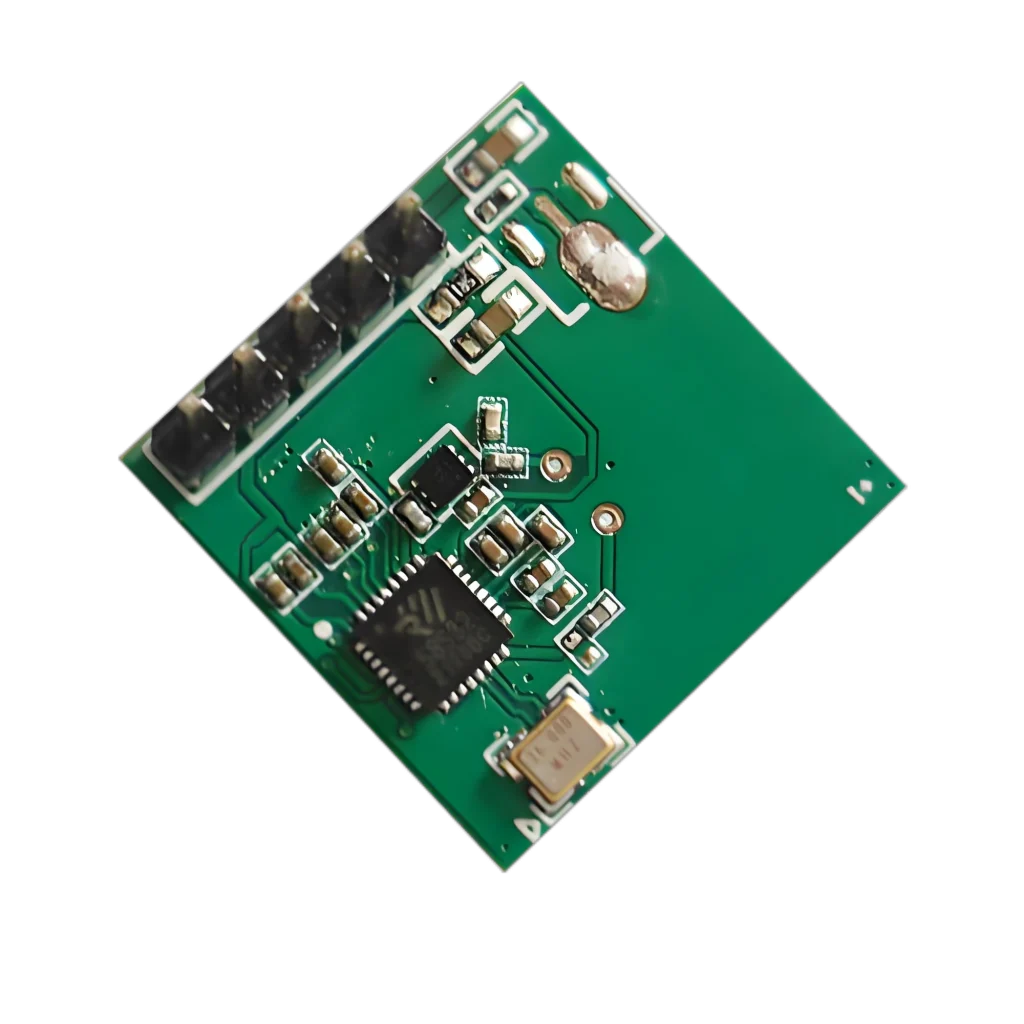
In the early stages of millimetre wave radar commercialisation, PCB microstrip antennas became the market mainstream due to their unique technical advantages. Based on printed circuit board (PCB) processes, these antennas can be integrated directly onto the radar’s main control board without the need for additional independent manufacturing processes. They are characterised by a simple structure, compact size, low cost, high consistency, and suitability for large-scale mass production.
Early in-vehicle ADAS radars (such as 24 GHz short-range radars) widely adopted PCB microstrip antennas for applications such as reversing radars and side-impact warning systems. Their performance was sufficient to meet the requirements of short-to-medium range detection and lower-precision identification at the time, laying the technological foundation for the widespread adoption of millimetre wave radar.
As automotive intelligence levels have increased, ADAS systems have placed ever-higher demands on the performance of millimetre wave radars: detection ranges must extend from tens of metres to over a hundred metres, whilst angular resolution must also be significantly improved to distinguish between adjacent targets (such as pedestrians and non-motorised vehicles).
This has driven the evolution of radar operating frequencies towards higher bands, with the 77 GHz band gradually becoming the mainstream for in-vehicle millimetre wave radars, and some high-end applications even beginning to adopt the 81 GHz to 86 GHz bands. However, as frequencies rise to 77 GHz and above, the inherent limitations of PCB microstrip antennas gradually become apparent, acting as a bottleneck that constrains the upgrading of radar performance.
The core limitation of PCB microstrip antennas stems from the characteristics of their dielectric materials. PCB substrates (such as FR-4) are dielectric materials that exhibit significant dielectric loss in the millimetre-wave high-frequency bands, leading to substantial attenuation of electromagnetic signal energy during propagation and directly reducing the radar’s detection range. Furthermore, the radiation efficiency of microstrip antennas is constrained by factors such as the substrate’s dielectric constant and thickness, making it difficult to improve further.
Additionally, their beam control capabilities are limited, preventing high-precision beam scanning and pointing, and thus failing to meet the high-angle resolution requirements of high-end radar systems. Furthermore, at high frequencies, the dimensions of PCB microstrip antennas shrink further, making it difficult to control manufacturing precision. This leads to issues such as signal interference and poor performance consistency, rendering them increasingly unsuitable for the application requirements of high-end millimetre wave radars.
Against this backdrop, waveguide antennas, owing to their superior electromagnetic performance, have gradually emerged as the core technological approach for high-end millimetre wave radar applications. Unlike PCB microstrip antennas, waveguide antennas employ an all-metal structure, guiding the propagation of electromagnetic waves through a metal cavity. Their core advantage lies in their ability to minimise propagation losses in electromagnetic waves—the metal cavity effectively reduces signal leakage and attenuation, resulting in a radiation efficiency far superior to that of PCB microstrip antennas.
At the same time, they offer superior beam control capabilities, enabling narrower beamwidths and higher angular resolution, making them perfectly suited to the long-range, high-precision detection requirements of radars operating at 77 GHz and above. In high-end applications such as long-range automotive radar and aerospace detection radar, the advantages of waveguide antennas are particularly pronounced, significantly enhancing the radar’s target recognition accuracy and environmental adaptability.
However, as the industry begins to widely adopt waveguide antennas, the difficulty of their manufacture has become a key bottleneck for large-scale application. A waveguide antenna is, by its very nature, a precision metal electromagnetic structure; the propagation characteristics of electromagnetic waves within the waveguide impose extremely high demands on the dimensional accuracy of the cavity, internal electrical conductivity and surface roughness:
Dimensional deviations in the waveguide cavity must be controlled to within tens of micrometres (representing a tolerance of a few thousandths of a millimetre relative to the overall dimensions of several millimetres), whilst the internal metal surface roughness must be controlled to the nanometre level; otherwise, electromagnetic wave reflection and scattering will occur, affecting the stability of signal propagation.
Taking the waveguide antenna of an automotive millimetre wave radar as an example, even minor deviations in cavity dimensions or excessive internal metal surface roughness will directly result in reduced antenna gain, beam direction deviation and increased signal loss. This, in turn, affects the radar’s ability to detect distant targets and may even lead to misidentification or failure to detect targets, posing a serious threat to the safety of the vehicle’s ADAS system. Consequently, traditional waveguide antennas must employ high-precision manufacturing processes, with CNC precision machining and metal milling being the most prevalent methods.
By utilising high-precision CNC machine tools to perform multiple processes—such as milling, drilling and polishing—on solid metal blocks (e.g. aluminium alloys, copper alloys), it is possible to precisely control cavity dimensions and surface finish, thereby ensuring the electromagnetic performance of the waveguide antenna. This manufacturing method has long been widely used in high-end radar and communication equipment for aerospace, defence and military applications.
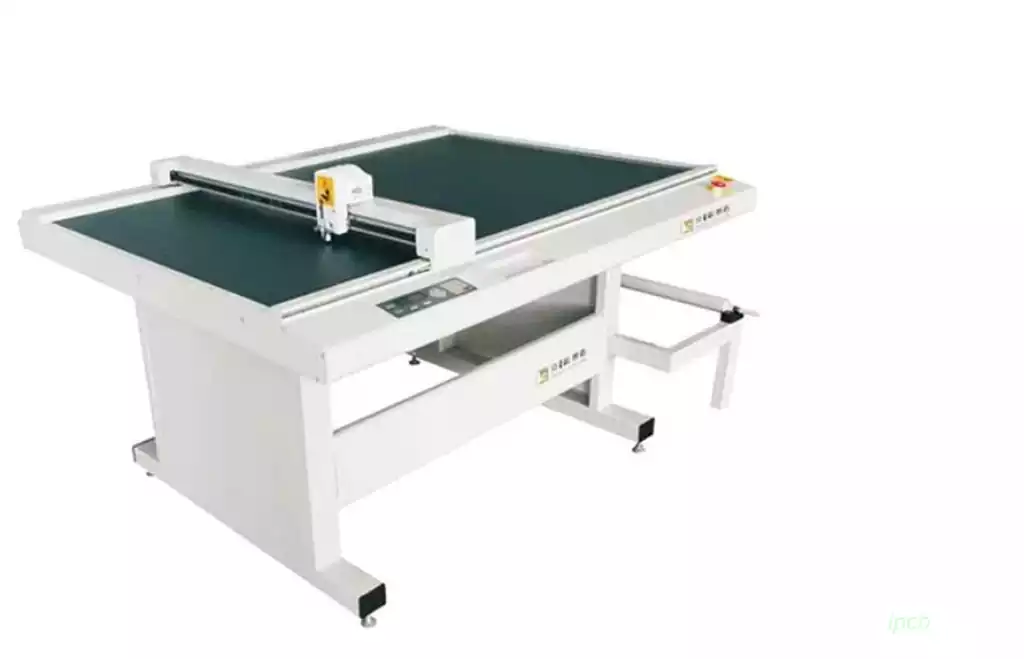
However, as millimetre wave radar gradually moves from high-end specialised applications into large-scale sectors such as automotive and consumer electronics, the limitations of traditional metalworking methods are becoming increasingly apparent. On the one hand, high-precision CNC machining and metal milling place extremely high demands on equipment, requiring high-end precision machine tools and specialist technical personnel, resulting in persistently high processing costs.
On the other hand, mechanical machining is relatively inefficient and is better suited to small-batch, customised production. To meet the mass production demands of automotive radar (with each vehicle requiring 2–5 radar units) or consumer-grade sensors, production efficiency is difficult to improve and manufacturing costs cannot be effectively reduced, severely limiting the widespread adoption of waveguide antennas.
Consequently, the industry urgently requires a solution that retains the superior electromagnetic performance of waveguide antennas whilst enabling mass production and reducing manufacturing costs—hence the emergence of waveguide antenna metallisation technology.
The core innovation of waveguide antenna metallisation technology lies in shifting away from the traditional approach of ‘integral metal machining’ to a two-step manufacturing process comprising ‘structural forming + surface metal deposition’, thereby achieving a balance between performance, cost and efficiency.
The basic logic is as follows: first, the main structure of the waveguide cavity is manufactured using low-cost, high-efficiency processes; then, metal deposition is applied to impart electrical conductivity, thereby forming a complete waveguide structure. This approach retains the advantages of metal waveguides—low loss and high gain—whilst addressing the cost and efficiency challenges associated with traditional machining.
Advantages of metallised waveguide antennas:
Significantly reduced manufacturing costs, suitable for large-scale mass production.
Structural forming processes such as injection moulding and 3D printing are far more efficient than traditional CNC machining, and non-metallic materials are less expensive than metallic ones. This effectively lowers the manufacturing cost per unit whilst improving production efficiency, meeting the demands of large-scale mass production scenarios such as automotive and consumer electronics.
Enables lightweight design, suitable for weight-sensitive applications such as automotive use.
The weight of a non-metallic main structure is significantly lighter than that of an all-metal waveguide, effectively reducing the overall weight of radar equipment. This aligns with the trend towards lightweight automotive equipment whilst reducing vehicle energy consumption.
More flexible structural design, supporting the development of high-end antenna arrays.
Through processes such as injection moulding and 3D printing, complex three-dimensional waveguide structures and large-scale antenna arrays can be easily realised, breaking through the structural limitations of traditional machining and providing greater design flexibility for the performance upgrade of millimetre wave radar.
Stable and reliable performance, capable of meeting high-frequency band requirements.
Through precise metal deposition processes, the radiation efficiency and signal loss of metallised waveguide antennas can match those of traditional metal waveguides, and in some scenarios even outperform them, making them perfectly suited to the application requirements of high-frequency bands of 77 GHz and above.
As the application of millimetre wave radar continues to deepen in fields such as in-vehicle ADAS, autonomous driving, industrial IoT and smart security, higher demands are being placed on antenna performance, cost and efficiency. As an innovative technology that balances performance with mass production requirements, metallised waveguide antennas are gradually replacing traditional PCB microstrip antennas and monolithic metal waveguide antennas, becoming the mainstream choice in the industry.