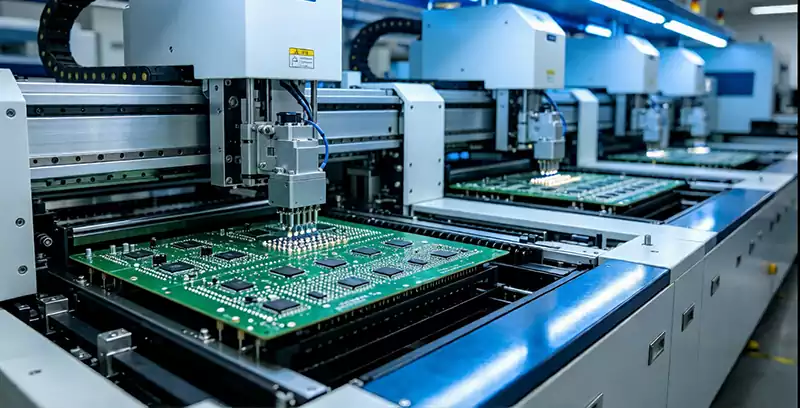
PCBA manufacturing is a highly precise and integrated process that involves far more than component procurement and SMT assembly. Even minor defects in electronic components, incoming materials, or manufacturing processes can affect the overall performance and reliability of the finished product. For this reason, professional PCBA manufacturers establish comprehensive quality control systems that include incoming material inspection, supplier management, process control, engineering evaluation, and reliability testing to ensure consistent product quality.
Many PCBA manufacturers, however, perform only basic functional testing and overlook reliability verification. Although a circuit board may pass initial electrical and functional tests, hidden defects can still lead to unstable performance, premature failure, or reduced service life after prolonged use in the field. As a result, reliability testing has become a critical step in evaluating the long-term stability of PCBAs and minimizing after-sales failures.
Unlike conventional functional testing, which focuses on verifying whether a product operates correctly, reliability testing simulates real-world conditions such as transportation vibration, harsh operating environments, and continuous loading. These tests can reveal latent manufacturing defects and performance limitations that are difficult to identify during standard electrical inspections, allowing defective products to be eliminated before mass shipment. The most commonly used PCBA reliability tests generally include four key categories that evaluate product performance throughout manufacturing, shipping, transportation, and end-use applications.
Burn-In Test
A burn-in test is one of the most effective methods for verifying the long-term operational stability of a PCBA and identifying latent defects. Circuit boards that have passed functional testing are placed in a controlled temperature and humidity environment, where they undergo repeated power cycling, continuous full-load operation, and repeated functional switching over an extended period. The standard burn-in duration typically ranges from 24 to 72 hours. Prolonged operation under controlled conditions helps expose hidden issues such as component degradation, abnormal heat generation, and performance drift that may not appear during short functional tests.
Because burn-in testing requires significant time and equipment resources, it is generally performed on a sampling basis rather than on every production unit. Representative samples are randomly selected from each production lot and subjected to the burn-in process. The test results, including the pass rate, failure modes, and performance changes, are then used to evaluate the overall quality and reliability of the entire production batch, providing an important reference for shipment approval.
Vibration Test
During transportation, handling, and loading operations, PCBAs are continuously exposed to vibration and mechanical shock. Although a circuit board may function normally when leaving the factory, minor manufacturing defects such as weak solder joints or microscopic cracks can become critical after prolonged vibration, resulting in component detachment, solder joint cracking, or pad lifting during transportation.
A vibration test reproduces transportation conditions under controlled laboratory settings by applying standardized vibration profiles to the assembled PCBA. These controlled mechanical stresses amplify small assembly defects that are otherwise difficult to detect. After vibration testing, the boards undergo both functional verification and visual inspection to identify soldering defects, poor component attachment, or structural weaknesses. This process significantly reduces the risk of transportation-related failures and improves product reliability upon delivery.

Surge Immunity Test
Some PCBAs perform normally under stable rated voltage but may encounter abnormal operating conditions in actual applications due to power fluctuations, transient voltage spikes, or current surges. If sufficient surge protection has not been incorporated into the circuit design, these transient events can cause intermittent malfunctions, circuit damage, or complete functional failure. Such problems are difficult to detect through standard functional testing alone.
A surge immunity test evaluates the ability of a PCBA to withstand transient electrical disturbances. During product qualification, sampled boards are subjected to short-duration high-voltage or high-current surge pulses that simulate real-world power disturbances. This testing method helps identify weaknesses in circuit design, inadequate component voltage ratings, and insufficient electromagnetic immunity, providing valuable data for optimizing circuit protection and improving overall product reliability before mass production.
Packaging Drop Test
Quality control in PCBA manufacturing often focuses on assembly, soldering, and functional verification, while the protective performance of product packaging may receive less attention. Even a fully qualified circuit board can be damaged during transportation if the packaging does not provide adequate mechanical protection, resulting in cosmetic damage, cracked solder joints, or functional failure.
A packaging drop test is performed to verify the protective capability of the packaging design. Finished products are packaged according to standard shipping procedures and subjected to multiple drop tests from different heights and orientations to simulate handling, stacking, and accidental drops during logistics and transportation. After testing, the PCBAs are carefully inspected for physical damage, solder joint integrity, and functional performance. The results are used to evaluate the cushioning and impact resistance of the packaging and to optimize packaging materials, internal cushioning structures, and packing methods where necessary.
Reliability testing is the final and one of the most critical stages of PCBA quality assurance. By complementing conventional functional testing, it provides a comprehensive evaluation of a product’s ability to withstand continuous operation, mechanical vibration, electrical surges, and transportation impacts. Implementing a well-designed reliability testing program enables manufacturers to identify potential quality issues before shipment, improve product durability, reduce field failures, and deliver PCBAs that meet the long-term reliability requirements of modern electronic applications.