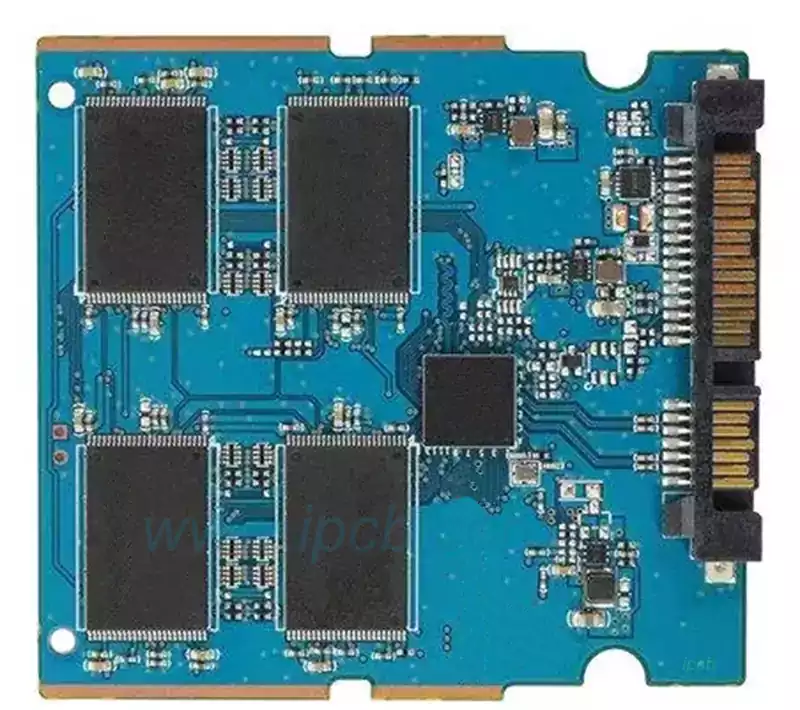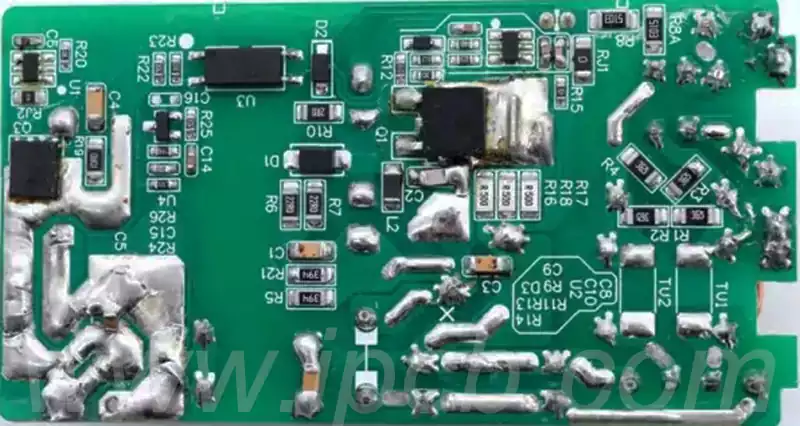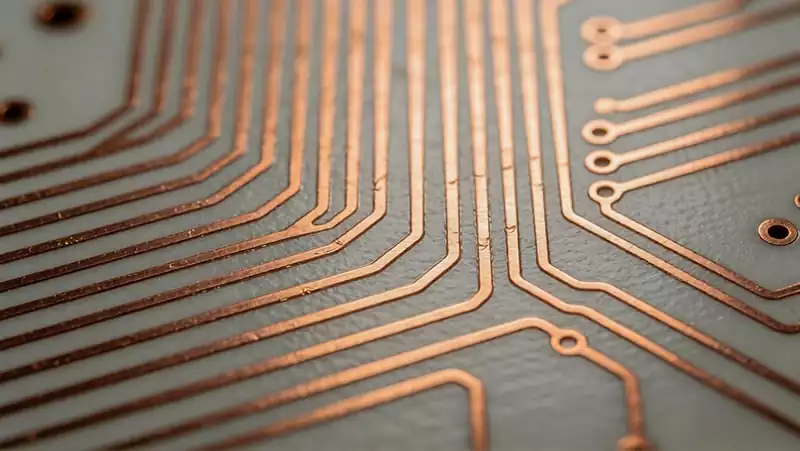
A fiberglass pcb board is one of the most widely used types of printed circuit boards in modern electronics. It typically uses glass fiber cloth reinforced with epoxy resin to create a rigid, electrically insulating substrate. Copper layers are then laminated onto the substrate to form the conductive circuits that connect electronic components.
This material structure offers a practical balance of mechanical strength, electrical insulation, dimensional stability, and manufacturing cost. As a result, fiberglass-based PCBs are commonly found in computers, communication equipment, industrial controls, automotive electronics, and consumer devices.
FR-4 is the most familiar material in this category. However, not all fiberglass PCBs have identical properties. Differences in resin systems, glass fabric construction, laminate thickness, and thermal performance can affect the reliability and suitability of a board for a particular application.
What Is a Fiberglass PCB Board
A fiberglass PCB board is a printed circuit board that uses glass fiber reinforced material as its insulating base. In conventional rigid PCB manufacturing, this material is commonly made by impregnating woven fiberglass cloth with epoxy resin and curing it under heat and pressure.
The resulting laminate provides a strong and stable foundation for copper circuitry.
FR-4 is the most widely recognized fiberglass-based PCB material. The designation refers to a flame-retardant grade of glass-reinforced epoxy laminate. It is commonly used in single-sided, double-sided, and multilayer printed circuit boards.
It is important to distinguish a fiberglass PCB from a PCB made using a solid glass substrate. In a conventional FR-4 board, glass fibers are embedded in an epoxy resin matrix. A glass-substrate PCB, by contrast, uses a continuous glass sheet as its structural base and involves a different manufacturing technology.
For most standard rigid PCB applications, the term fiberglass PCB refers to the glass fiber and epoxy construction used in FR-4 laminates.
What Is a Fiberglass PCB Made Of
A typical fiberglass PCB consists of several materials that work together to provide mechanical support, electrical insulation, and circuit connectivity.
Glass Fiber Cloth
Glass fiber cloth is the reinforcing material in a conventional fiberglass PCB. It is produced by weaving fine glass filaments into a fabric with a controlled structure.
The woven fabric improves the mechanical strength and dimensional stability of the laminate. It also helps the finished board maintain its shape during drilling, lamination, soldering, and normal operation.
Different glass fabric styles can be used depending on the required laminate thickness and electrical performance.
Epoxy Resin
Epoxy resin binds the glass fibers together and fills the spaces within the woven fabric. During the lamination process, the resin is cured to form a rigid composite material.
The resin system affects several important PCB characteristics, including moisture resistance, thermal behavior, dielectric properties, and adhesion between layers.
Different FR-4 formulations may use different resin systems to meet specific manufacturing and performance requirements.
Copper Foil
Copper foil is bonded to one or both sides of the fiberglass laminate. It is then patterned to create conductive traces, pads, and other electrical features.
For multilayer PCBs, additional copper layers and insulating prepreg materials are laminated together to form the required circuit structure.
Copper thickness is selected according to current requirements, trace dimensions, and the electrical characteristics of the design.
Solder Mask and Surface Finish
A finished fiberglass PCB usually includes a solder mask that protects exposed copper and helps prevent solder bridges during component assembly.
An appropriate surface finish is applied to exposed copper pads to protect them from oxidation and support reliable soldering. Common finishes include HASL, ENIG, and immersion silver.
How a Fiberglass PCB Board Is Manufactured
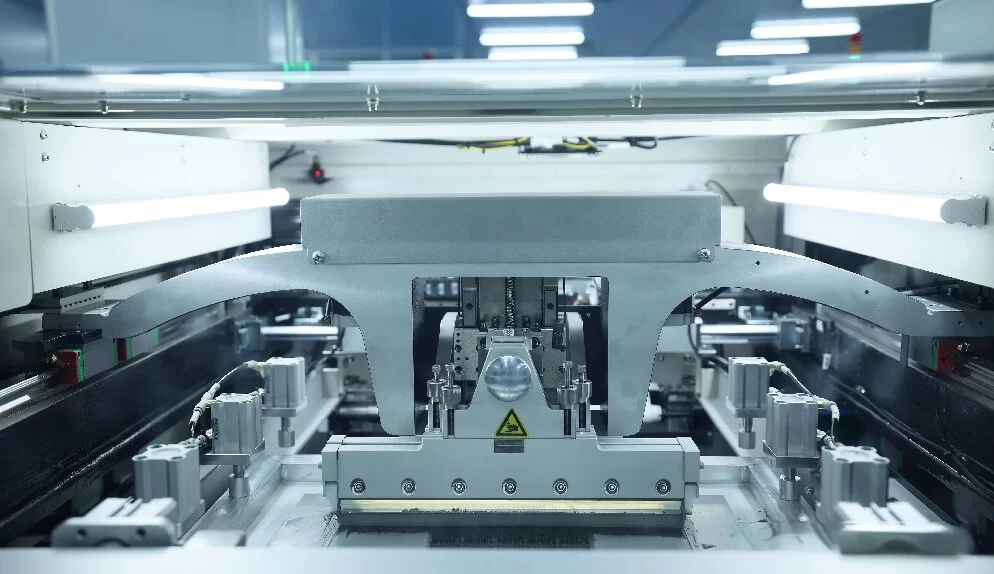
The manufacturing process for a fiberglass PCB involves preparing the laminate, forming the circuit pattern, creating electrical interconnections, and applying protective finishes.
The exact process depends on whether the board is single-sided, double-sided, or multilayer.
Preparing the Fiberglass Laminate
The process begins with fiberglass cloth impregnated with epoxy resin. The material is processed into prepreg or cured laminate sheets, which are used to build the PCB structure.
Copper-clad laminate is produced by bonding copper foil to the insulating fiberglass material under controlled heat and pressure.
Material selection at this stage affects the board’s thickness, thermal performance, dielectric properties, and mechanical strength.
Inner Layer Circuit Formation
For multilayer PCBs, the inner copper layers are processed first.
The copper surface is cleaned, coated with photoresist, exposed to the required circuit pattern, and developed. Unwanted copper is removed through etching, leaving the designed conductive traces.
The inner layers are then inspected to identify possible defects such as open circuits, short circuits, and pattern inconsistencies.
Lamination
The prepared inner layers are stacked with insulating prepreg and copper foil according to the PCB layer structure.
The stack is laminated under controlled temperature and pressure. The resin in the prepreg flows and cures, bonding the layers into a single rigid panel.
Accurate layer alignment and consistent lamination conditions are essential for maintaining board quality and electrical reliability.
Drilling and Copper Plating
Holes are drilled to create connections between different copper layers and to accommodate through-hole components when required.
For plated through-holes, the hole walls are prepared and coated with a conductive layer before copper electroplating. This creates electrical connections between the relevant circuit layers.
Drilling quality and plating thickness are important factors in the reliability of multilayer PCBs.
Solder Mask and Surface Finishing
After the circuit pattern and electrical connections are completed, solder mask is applied to protect the board surface.
The exposed pads receive a suitable surface finish based on the component assembly process, storage requirements, and product specifications.
Final Inspection and Testing
The completed boards undergo inspection and testing before delivery.
Common quality checks include visual inspection, dimensional verification, electrical continuity testing, insulation testing, and automated optical inspection.
For more demanding applications, additional testing may be required to verify thermal reliability, impedance control, or compliance with specific industry standards.
Key Properties of Fiberglass PCB Boards
The performance of a fiberglass PCB board depends on the properties of its glass fiber reinforcement, resin system, copper layers, and overall laminate construction.
Mechanical Strength
Glass fiber reinforcement gives the PCB substrate good mechanical strength and rigidity. This helps the board support electronic components and maintain dimensional stability during manufacturing and operation.
It is particularly useful in applications where the circuit board must withstand normal handling, mounting, and mechanical stress.
Electrical Insulation
The fiberglass and epoxy composite provides electrical insulation between conductive copper layers.
This makes it suitable for a wide range of electronic circuits, from basic control boards to more complex multilayer designs.
However, insulation performance depends on material specifications, board thickness, moisture exposure, and manufacturing quality.
Thermal Performance
Fiberglass PCB materials can withstand the temperatures associated with many conventional electronic assembly processes when the appropriate laminate grade is selected.
However, standard FR-4 has relatively low thermal conductivity compared with metal-core PCB materials. It is therefore less effective at spreading heat from high-power components.
For applications with significant heat generation, designers may need to consider high-Tg materials, thermal vias, copper planes, heat sinks, or alternative substrate technologies.
Dimensional Stability
The glass fiber structure helps limit changes in board dimensions during normal operating conditions and manufacturing processes.
Dimensional stability is important for multilayer PCBs because the copper layers must remain accurately aligned during lamination, drilling, and component assembly.
Flame Retardancy
FR-4 is a flame-retardant grade of epoxy glass laminate. Its designation is associated with a material classification rather than a guarantee that every finished PCB automatically meets every fire-safety requirement.
The exact flammability rating should be confirmed from the selected laminate manufacturer’s specifications and relevant certification documents.
Advantages of Fiberglass PCB Boards
Fiberglass-based PCBs remain popular because they provide a useful combination of performance, manufacturing flexibility, and cost efficiency.
Good Balance of Performance and Cost
FR-4 offers reliable mechanical and electrical properties at a competitive cost. This makes it suitable for both small electronic products and large-scale commercial production.
Compared with many specialized PCB materials, standard fiberglass laminates are widely available and supported by established manufacturing processes.
Suitable for Multilayer PCB Designs
Fiberglass laminates can be used to manufacture single-sided, double-sided, and multilayer circuit boards.
This flexibility allows designers to create compact circuits with multiple signal layers, power planes, and ground planes.
It also supports a broad range of applications, from simple electronic controllers to complex computing and communication systems.
Broad Manufacturing Compatibility
FR-4 is supported by widely established PCB fabrication processes, including drilling, copper plating, etching, lamination, solder mask application, and surface finishing.
Its widespread use makes it easier to source materials and work with manufacturers that have experience in conventional rigid PCB production.
Reliable Electrical Performance
Fiberglass and epoxy laminates provide good electrical insulation for many standard electronic applications.
With appropriate material selection and circuit design, they can support reliable signal transmission and power distribution across a wide range of operating conditions.
Design Flexibility
Fiberglass PCB materials are available in different thicknesses and laminate grades. Designers can select suitable options according to the required layer count, electrical performance, mechanical strength, and thermal requirements.
Specialized FR-4 grades can also provide improved thermal or electrical characteristics compared with standard formulations.
Common Applications of Fiberglass PCB Boards
Because of their versatility, fiberglass PCBs are used across many electronics industries.
Consumer Electronics
Fiberglass PCBs are widely used in televisions, computers, home appliances, gaming devices, and other consumer products.
Their affordability and compatibility with multilayer circuit designs make them suitable for high-volume electronic manufacturing.
Industrial Control Systems
Industrial control boards often require stable electrical performance and sufficient mechanical strength for long-term operation.
FR-4 PCBs are commonly used in programmable logic controllers, motor control systems, power management circuits, monitoring equipment, and automation devices.
For applications exposed to higher temperatures or demanding operating conditions, manufacturers may recommend specialized laminate grades.
Automotive Electronics
Modern vehicles contain numerous electronic systems for power management, lighting, safety, communication, and control.
Fiberglass PCBs are used in many automotive electronic modules. Depending on the operating environment, designers may select high-Tg or other enhanced FR-4 materials to improve thermal reliability.
Material selection should also consider vibration, temperature cycling, moisture exposure, and applicable automotive qualification requirements.
Telecommunications Equipment
Communication equipment relies on printed circuit boards to connect processors, memory, power components, and signal-processing circuits.
FR-4 is commonly used in routers, network devices, communication controllers, and other electronic assemblies.
For high-frequency or high-speed applications, standard FR-4 may not provide the required dielectric performance. Specialized low-loss laminates may be more appropriate.
Medical Electronics
Medical monitoring equipment, diagnostic instruments, and electronic control devices use PCBs to support signal processing and power management.
Fiberglass substrates are suitable for many conventional medical electronic designs, provided the finished product meets the required electrical safety, reliability, and regulatory specifications.
Fiberglass PCB vs Other PCB Materials
Choosing the right PCB material depends on the electrical, thermal, mechanical, and environmental requirements of the application.
Fiberglass PCB vs Aluminum PCB
The main difference between fiberglass and aluminum PCBs is their approach to thermal management.
A fiberglass PCB typically uses FR-4 as its insulating substrate. It provides good electrical insulation and supports complex multilayer circuit designs.
An aluminum PCB uses a metal base separated from the copper circuitry by a dielectric insulation layer. The aluminum core helps transfer and spread heat, making it suitable for high-power LED lighting and other heat-generating applications.
For general-purpose electronics, FR-4 is often a cost-effective choice. When heat dissipation is a major design requirement, an aluminum PCB may be more suitable.
Fiberglass PCB vs Polyimide PCB
Polyimide is commonly used in flexible and rigid-flex printed circuit boards. It offers flexibility and can withstand higher operating temperatures than many standard epoxy-based materials.
Fiberglass FR-4 is generally rigid and is suitable for conventional circuit board designs.
Polyimide is often selected for flexible electronics, compact assemblies, and products that require bending or movement. FR-4 remains a practical option for rigid PCB applications.
Fiberglass PCB vs Ceramic PCB
Ceramic PCBs use materials such as aluminum oxide or aluminum nitride as their substrate.
Compared with standard FR-4, ceramic substrates can offer higher thermal conductivity and better performance in certain high-temperature or high-power applications.
However, ceramic PCBs generally involve different manufacturing processes and higher material costs.
They are often used in power electronics, high-temperature equipment, LED modules, and specialized electronic systems.
How to Choose the Right Fiberglass PCB Material
Not every fiberglass PCB is made from the same laminate formulation. Before selecting a material, engineers should evaluate the requirements of the finished electronic product.
Consider the Glass Transition Temperature
Glass transition temperature, commonly abbreviated as Tg, indicates the temperature range at which the cured resin system changes from a rigid state to a softer state.
A higher-Tg laminate may be appropriate for products exposed to elevated operating temperatures or repeated high-temperature assembly processes.
However, Tg alone does not determine the overall thermal reliability of a PCB. Decomposition temperature, coefficient of thermal expansion, and other material properties should also be considered.
Check Dielectric Properties
The dielectric constant and dissipation factor affect how electrical signals travel through the PCB substrate.
For standard low-frequency circuits, conventional FR-4 is often sufficient. High-speed digital and high-frequency RF designs may require more tightly controlled dielectric properties or specialized low-loss materials.
Designers should use material data from the actual laminate manufacturer when calculating controlled impedance.
Select the Appropriate Board Thickness
PCB thickness affects mechanical strength, component mounting, enclosure compatibility, and electrical design.
Common nominal thicknesses are available for standard fiberglass PCBs, but the final specification should be based on the product’s mechanical and electrical requirements.
For multilayer boards, designers should also consider individual copper and dielectric layer thicknesses.
Evaluate the Operating Environment
Temperature, humidity, vibration, and chemical exposure can affect PCB reliability.
Products intended for harsh industrial or automotive environments may require enhanced laminate materials, protective coatings, or additional qualification testing.
The material should be selected according to the actual conditions in which the finished board will operate.
Work With an Experienced PCB Manufacturer
A qualified PCB manufacturer can help evaluate laminate options, layer stack-up, copper thickness, drilling requirements, and manufacturing tolerances.
Providing complete design information at the quotation stage can reduce material selection errors and help avoid unnecessary manufacturing changes.
A fiberglass pcb board is a widely used PCB solution because its glass fiber reinforced substrate provides a practical combination of mechanical strength, electrical insulation, dimensional stability, and manufacturing flexibility.
FR-4 remains the most common fiberglass-based material for rigid printed circuit boards. It supports a wide range of applications, including consumer electronics, industrial controls, automotive systems, and telecommunications equipment.
However, selecting the right fiberglass laminate requires more than choosing a standard FR-4 designation. Engineers should consider Tg, dielectric properties, board thickness, thermal requirements, and the product’s operating environment.
By understanding these material characteristics and working with an experienced PCB manufacturer, designers can select a fiberglass PCB that meets their performance, reliability, and production requirements.
Frequently Asked Questions
What is a fiberglass PCB board made of?
A conventional fiberglass PCB is made from woven glass fiber cloth impregnated with epoxy resin. Copper foil is laminated onto the insulating material to form the conductive circuit layers. FR-4 is the most widely used material in this category.
Is FR-4 the same as fiberglass?
No. Fiberglass refers to the glass fiber reinforcement used in the laminate, while FR-4 refers to a flame-retardant grade of glass-reinforced epoxy laminate. FR-4 combines fiberglass cloth, epoxy resin, and specific material performance requirements.
Are fiberglass PCBs heat resistant?
Fiberglass PCBs can withstand the temperatures associated with many standard electronic manufacturing processes, depending on the laminate grade. High-Tg FR-4 materials provide a higher glass transition temperature than standard grades. However, conventional FR-4 has relatively low thermal conductivity and is not ideal for applications requiring efficient heat spreading.
What is the difference between FR-4 and G10?
Both G10 and FR-4 are glass-reinforced epoxy laminates. The main distinction is that FR-4 is a flame-retardant grade, while standard G10 does not carry the same flame-retardant designation. Their exact properties depend on the specific material formulation and applicable standards.
Can fiberglass PCB boards be used for multilayer circuits?
Yes. Fiberglass-based FR-4 laminates are widely used in multilayer PCB manufacturing. Multiple copper layers can be separated by fiberglass-reinforced insulating materials and bonded together through a controlled lamination process.
Is a fiberglass PCB board better than an aluminum PCB?
It depends on the application. Fiberglass PCBs offer greater flexibility for conventional multilayer circuit designs and are suitable for many general-purpose electronics. Aluminum PCBs are typically more appropriate when heat dissipation is a major concern, such as in high-power LED lighting and certain power electronic applications.