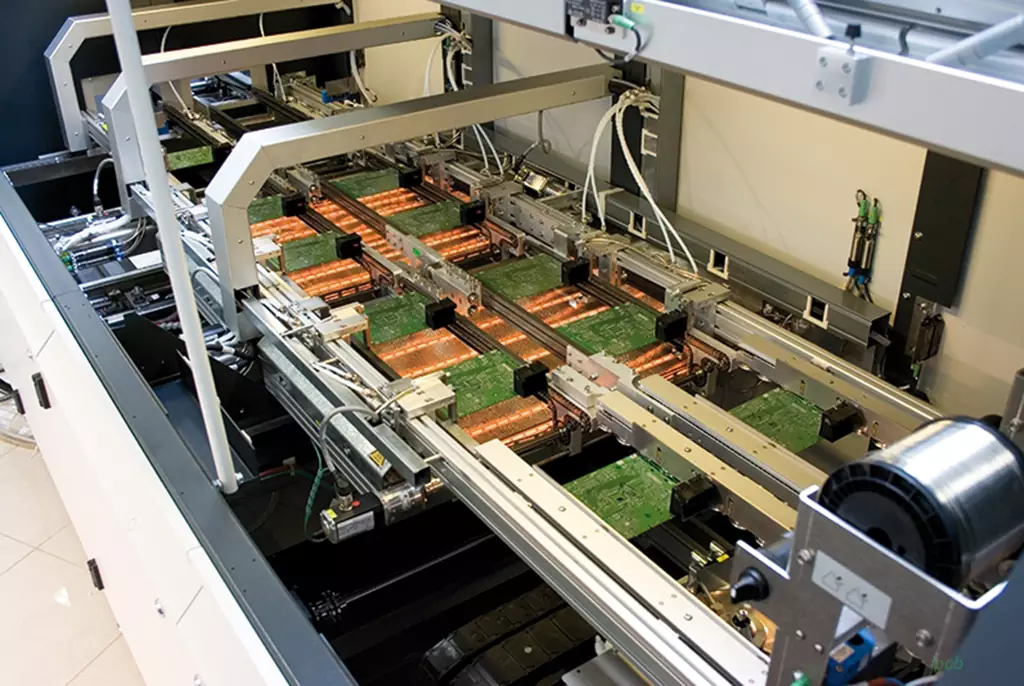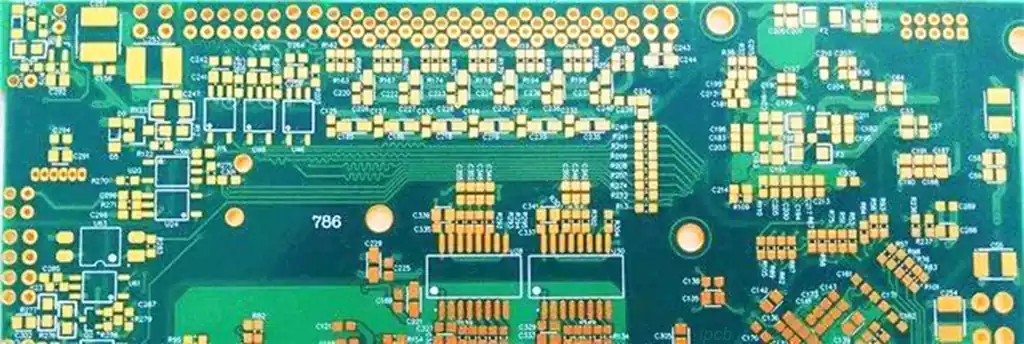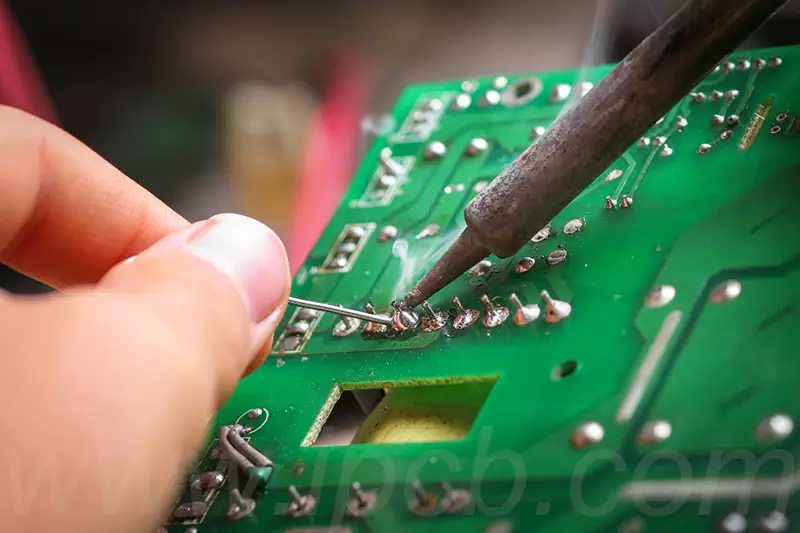
In the grand and intricate landscape of modern electronics manufacturing, printed circuit board assembly (PCBA) is the core hub integrating countless tiny electronic components and complex conductive networks. When examining a perfectly functioning circuit board, our attention is often drawn to the high density of integrated chips, the intricate network of fine traces, and the glossy solder joints. However, in this symphony of metal connections, orchestrated by thermodynamics, fluid mechanics, and micro-metallurgy, there is a crucial substance, often “invisible” after assembly, that plays a pivotal role in determining the success or failure of the entire process—this is flux for circuit boards.
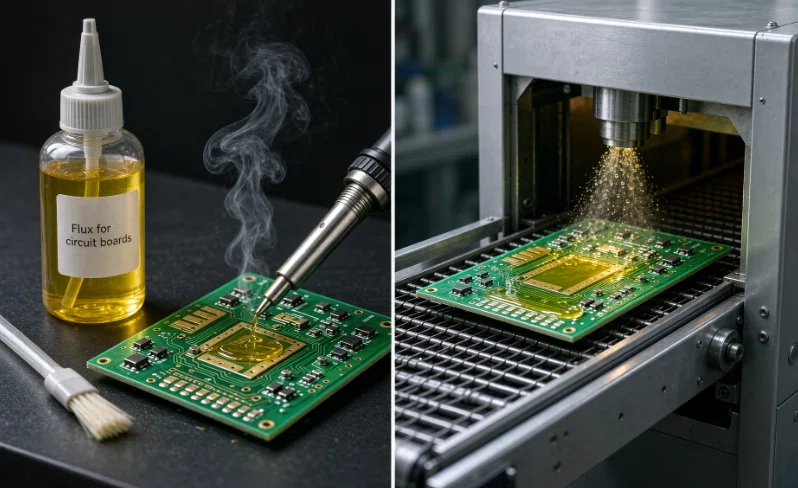
Without the silent protection and chemical intervention of flux, humanity would not have been able to achieve reliable large-scale electronic hardware manufacturing. It is far more than a simple “soldering aid”; it is a highly complex and precisely formulated composite system of polymers and organic chemicals.
Metal passivation and microscopic contact barriers: Why can’t solder directly bond to bare copper?
To fully understand the absolute necessity of flux, we must first narrow our focus to the nanoscale metal lattice level, confronting the most primal physical enemy in electronic assembly: oxides and passivation barriers.
Whether it’s the intricate electroplated copper layer on circuit board pads or the tin-lead or lead-free alloy plating on electronic component leads, they cannot maintain absolute purity for long when exposed to the atmosphere. Oxygen, moisture, and trace industrial pollutants in the air react chemically with the atoms on the metal surface at an extremely rapid rate. Copper atoms combine with oxygen, quickly forming a dense but insulating cuprous oxide or copper oxide passivation film on the surface; tin and lead surfaces also form corresponding metal oxides.
This invisible oxide film is the physical wall that hinders soldering.
In the macroscopic world, pressing two metals together and heating them fuses them. But in microscopic physics, the true connection between metals depends on the metallic bonding forces generated when the interatomic distance reaches the nanometer scale. If a metal surface is covered with a thick layer of metal oxide, the atomic lattices of the two metals are separated by this non-conductive insulating oxide layer. No matter how high the temperature is heated, molten solder (such as a tin-silver-copper alloy) cannot undergo atomic-level interdiffusion with the underlying substrate metal. The molten solder exhibits extremely high surface tension, shrinking into isolated liquid beads on the oxide layer surface, much like water droplets falling on an oil-coated lotus leaf—absolutely unable to wet or spread.
The primary mission of flux is to act as an efficient “microscopic chemical cleaner,” thoroughly stripping and removing these stubborn metal surface oxides within the brief time window before the solder melts, exposing the neatly arranged, chemically active pure metal atoms beneath.
Surface Energy and Wetting Physics: Reconstructing the Macroscopic Fluid Dynamics of Flux
Removing oxides is merely the starting point of the flux’s physical mission. The moment the pure metal surface is exposed, the flux must immediately undertake the crucial task of reconstructing the surface fluid dynamics.
The essence of soldering is the wetting and spreading of liquid metal on a solid metal surface. According to the principles of fluid mechanics and interface physics, the contact angle between the solid and liquid interfaces directly determines the quality of the solder joint. When the contact angle approaches zero, the liquid solder spreads perfectly on the solid surface, forming an extremely thin and uniform interconnect layer; however, when the contact angle is large, the solder agglomerates into spheres, failing to form an effective electrical and mechanical connection.
Fluent directs this physical process by altering the interfacial tension:
Reducing the solid-liquid surface tension: The surface-active components in the flux significantly reduce the interfacial free energy between the molten solder and the base metal, allowing the liquid metal to flow smoothly and penetrate into every tiny corner of the solder pad under the influence of gravity and capillary forces.
Heat transfer medium and temperature homogenization: During the heating process in soldering equipment (such as reflow ovens or wave soldering machines), the liquid flux film evenly covers the soldering area, acting as an excellent local heat transfer medium. This helps heat be rapidly and evenly transferred from the heat source to the component leads and circuit board pads, eliminating stress caused by localized temperature differences.
Secondary oxidation prevention barrier layer: After the flux dissolves and removes the original oxide layer, it does not disappear immediately. Instead, it transforms into a thin chemical protective film, tightly wrapping the newly exposed metal surface, preventing the re-intrusion of residual oxygen from the air during subsequent heating, until the molten solder completely covers and replaces it.
This “destruction and replacement, seamless transition” completed instantaneously at high temperatures perfectly demonstrates the ultimate sophistication of chemical-physical dynamic equilibrium.
Chemical code deconstruction: The fourfold component matrix of flux
A qualified modern circuit board flux is not a single-component chemical substance, but a complex solution scientifically formulated from multiple compounds with different functions. If we dissect it chemically, we’ll find that its core architecture typically consists of four pillars:
Vehicle/Base Matrix
The vehicle/base matrix forms the physical framework of the flux. At room temperature, it determines whether the flux is a liquid (for spraying or dipping), a gel (for manual rework and BGA balling), or a binder matrix directly and uniformly mixed within the solder paste. The main physical requirements for the matrix are appropriate viscosity and good film-forming properties, enabling it to uniformly suspend and fix metal powder or liquid on the pads before soldering.
Activators
Activators are the soul and core of the flux, and a decisive factor in its chemical cleaning power. Activators typically contain organic acids (such as succinic acid, adipic acid, and malic acid) or trace amounts of halides (such as amine hydrochloride compounds). At room temperature, these activators are chemically inert and will not corrode the circuit board. However, once the temperature rises to near the critical zone of the solder joint (usually above 150 degrees Celsius), these activators are instantly activated by heat, undergoing violent acid-base neutralization or complexation reactions. They precisely attack and dissolve cuprous oxide and tin oxide on the metal surface, converting them into harmless metal salts soluble in flux residues.
Solvents: The role of the solvent is to completely dissolve the solid resin, activators, and various additives, forming a homogeneous and stable liquid phase system. Simultaneously, the boiling point and evaporation rate of the solvent determine the drying profile of the flux during the reflow preheating stage. Commonly used solvents include high-boiling-point alcohol ethers, esters, or isopropanol. The solvent must completely evaporate during the preheating stage before the solder melts and must never remain in the reflow zone; otherwise, the gas generated by the boiling solvent will be drawn into the solder, forming numerous solder voids.
Additives & Surfactants
To impart more diverse engineering properties to fluxes, formulators add various trace additives. For example, antioxidants prevent the flux from carbonizing and deteriorating at high temperatures; thixotropic agents adjust the shear-thinning properties of solder paste, ensuring smooth printing on stencils and preventing collapse when stationary; defoamers prevent excessive foaming during wave soldering.
Industry Classification: From Rosin-Based to No-Clean and Water-Soluble Types
As the electronics industry evolves towards higher density, environmental friendliness, and automation, flux formulations have also evolved into several distinct mainstream types.
Rosin-Based Flux
Rosin is the oldest and most classic natural flux raw material, primarily extracted from abietic compounds in pine resin. Rosin-based fluxes are categorized based on their activation level into pure natural rosin (R-type), moderately activated rosin (RMA-type), and highly activated rosin (RA-type).
At room temperature, rosin exists in a hard, glassy state, locking in its internal activating components and exhibiting no corrosiveness or conductivity.
When heated to the soldering temperature, rosin melts and displays mild acidity, completing the cleaning process.
After soldering, the cooled and solidified rosin residue exhibits excellent insulating protective properties, effectively isolating the circuit board from humid air for extended periods.
However, traditional rosin residues are yellowish in appearance and sticky in texture. Furthermore, in modern high-frequency precision circuits, rosin residues may adsorb trace amounts of ions. Therefore, they are gradually being replaced by more advanced chemical systems in high-end consumer electronics.
No-Clean Flux: Modern electronics manufacturing (such as surface mount technology for smartphones and laptop motherboards) demands extremely high production throughput. Cleaning processes not only consume significant amounts of water and chemical solvents but also increase manufacturing costs. To meet this need, “no-clean flux” was developed.
No-clean flux has an extremely low solids content (typically less than 5% solid resin and activator, with the vast majority being volatile alcohol solvents). Its chemical design philosophy is that after soldering, the trace amount of activator undergoes complete thermal decomposition at high temperatures, transforming into a chemically stable inactive substance; while the remaining trace amount of solid matrix is inert, non-corrosive, non-conductive, and transparent, allowing it to remain directly on the circuit board surface without the need for washing.
Water-Soluble Flux: For fields with stringent long-term reliability requirements, such as aerospace, military equipment, or high-reliability automotive electronics, the trace residues from “no-clean” solutions are still considered a potential risk. In these cases, engineers choose water-soluble flux (WSF).
Water-soluble flux contains a large amount of potent organic acids and water-soluble polymers, possessing extremely strong activation and cleaning capabilities, capable of handling severely oxidized inferior components or difficult-to-solder metals. However, the cost is that after soldering, a layer of highly corrosive and conductive chemical residue remains on the circuit board surface. This residue must be immediately sent to a high-pressure ultrapure water cleaning line after assembly, where it will be thoroughly rinsed and dried using a specialized saponifying agent. Any tiny cleaning dead spots will trigger devastating electrochemical corrosion after power is applied.
The life cycle of flux in the soldering thermal profile
To truly master the art of flux application, one must understand the magnificent thermodynamic evolution it undergoes within a few minutes inside the reflow oven.
When a circuit board coated with flux-containing solder paste or sprayed with liquid flux enters the reflow oven, it embarks on an irreversible chemical and physical journey:
Stage 1: Gentle Preheating and Solvent Evaporation (Preheating Stage)
As the temperature rises from room temperature to 150 degrees Celsius, the low-boiling-point solvent within the flux begins to evaporate rapidly. During this time, the flux viscosity changes, from thick to thin, and then tends to concentrate as the solvent is depleted. During this process, the temperature must rise at a gradual rate. If the temperature rises too quickly, the solvent will boil violently, producing tiny splashes that eject surrounding micro-solder beads into non-soldered areas, creating a potential short circuit.
Second Stage: Thermal Activation and Oxide Stripping (Activation Stage) The temperature reaches a plateau between 150 and 210 degrees Celsius. This is the golden time for the flux to exert its chemical value. Activator molecules gain sufficient kinetic energy to penetrate the microscopic boundary layer and undergo a vigorous reduction reaction with the metal oxides on the pads and leads. Simultaneously, the flux spreads into a uniform liquid film, reducing surface tension and fully preparing for subsequent metal melting. During this stage, the flux itself is also consumed, and its chemical activity gradually decreases over time.
Third Stage: Peak Reflow and Instantaneous Transfer (Reflow Stage) The temperature breaks through the melting point of the lead-free alloy (approximately 217 degrees Celsius), reaching a peak of 245 to 260 degrees Celsius. The alloy powder instantly melts into liquid metal. At this point, the remaining flux quickly recedes into the background, completely handing over the cleaned metal surface to the liquid solder. Under the influence of surface tension, the liquid solder rapidly contracts, wets, and spreads, reacting with the copper pads to form intermetallic compounds (IMCs).
Fourth Stage: Cooling & Solidification Stage As the circuit board moves out of the hot zone and into the cooling zone, the liquid solder solidifies and crystallizes within seconds. The flux matrix (such as rosin or modified resin), which was originally in a liquid state, also cools and solidifies into a microscopic protective layer surrounding the bright solder joints, completing its short but significant life.
Ion Residue, Electrochemical Migration, and Cleaning Engineering
Although flux plays a crucial role in the soldering process, if its residues are not properly managed, it can instantly transform from a “protector” into an “invisible killer” that destroys the circuit board.
Modern electronic products are racing towards miniaturization and high integration, with the spacing between wires (line spacing) shrinking from millimeters to tens or even a few micrometers. In this extremely miniaturized physical space, the microscopic secrets of flux residue are magnified infinitely.
The Dangers of Ion Contamination and Activator Residue
If the flux fails to receive sufficient heat or time for complete thermal decomposition and reaction during reflow soldering, some unconsumed activator residue will remain intact on the circuit board surface. These residues typically contain free chloride ions, bromide ions, or other highly polar organic acid anions.
In a dry laboratory environment, these ions are electrically neutral and temporarily dormant. However, once electronic devices enter real-world consumer scenarios—such as the humid rainy season in southern China, the high-humidity steam environment of a bathroom, or the condensation impact on automotive electronics—disaster strikes.
Electrochemical Migration and Dendrite Growth
When water redissolves the residual insulating solder mask or activator ions between wires on a circuit board surface, the previously insulating surface instantly transforms into a miniature electrolyte tank.
If, under energized conditions, there is a DC voltage difference between two adjacent wires (e.g., a micrometer-level gap between the positive power supply and the ground wire), the electrochemical reaction is forcibly activated:
Copper atoms on the anode side lose electrons under the influence of the electric field, becoming oxidized into copper ions that dissolve into a tiny water film;
Guided by the electric field, these copper ions migrate like an army, crossing the narrow insulating gap towards the cathode;
Upon reaching the cathode, they regain electrons, are reduced back to metallic copper atoms, and begin to grow in a bizarre way, extending thin, tree-like metal crystals from the cathode towards the anode—this is electrochemical migration dendrites.
Over time, these continuously growing metal dendrites eventually span the entire gap, forcibly bridging the previously insulated positive and negative electrodes, creating a short circuit. The massive short-circuit current generated instantaneously can burn out delicate chips and even cause equipment to smoke and catch fire. This type of failure is highly insidious and delayed, often only suddenly occurring months after the product has been sold, making it one of the most troublesome quality nightmares in the electronics manufacturing industry.
The Rise of Modern Precision Cleaning Engineering
To completely sever the clutches of electrochemical migration, modern high-end electronics manufacturing (such as server motherboards, automotive autonomous driving domain controllers, and aerospace control modules) has universally established a rigorous precision water-based cleaning and ion concentration detection engineering system.
After soldering, circuit boards are no longer directly packaged and shipped; instead, they enter a fully automated ultrasonic cleaning line. Here, the boards undergo high-pressure spraying, emulsification with a special saponifying agent (used to neutralize and remove rosin resin and grease), multi-stage ultrapure water rinsing, and efficient hot air drying.
After cleaning, quality control engineers use an ion residue tester (ROSE Test) or a chromatographic analyzer to immerse the cleaned circuit board in a specific mixture of deionized water and isopropanol to precisely measure the equivalent sodium chloride ion concentration precipitated on its surface. Only when the ion residue per unit area is strictly suppressed below industry safety standards (e.g., less than micrograms per square centimeter) is the circuit board considered to have truly passed the ultimate test of chemical cleanliness.
In conclusion
Circuit board flux is a masterpiece of humankind’s mastery of the microscopic world, perfectly blending chemistry, physics, and metallurgy. With its tiny size and short lifespan, it overcomes the natural exclusivity of metal atoms and the stubborn resistance to oxidation, orchestrating the most exciting moments of connection in modern electronics manufacturing.
From traditional natural rosin to nanoscale environmentally friendly, no-clean formulas, from simple soldering aids to crucial factors for long-term system reliability, each technological iteration of flux silently supports the global advancement of electronic hardware towards a thinner, faster, and more reliable future. Understanding the underlying chemical logic and fluid dynamics evolution of flux is not only the key to understanding the core of electronic assembly and manufacturing but also an excellent window into appreciating the exquisite beauty of modern industrial civilization at the micrometer scale.