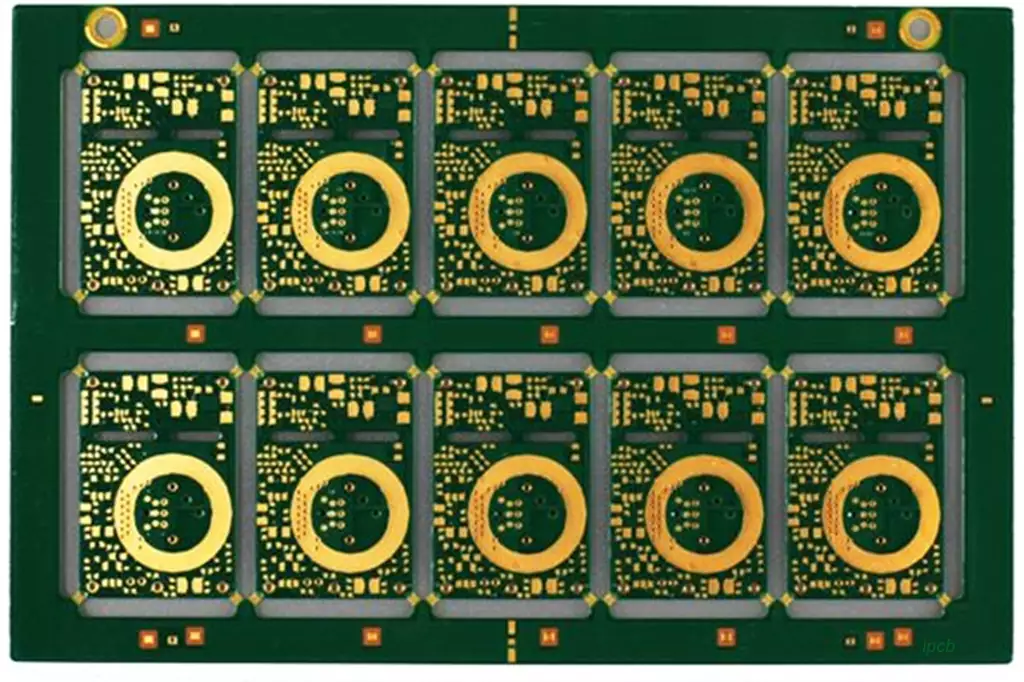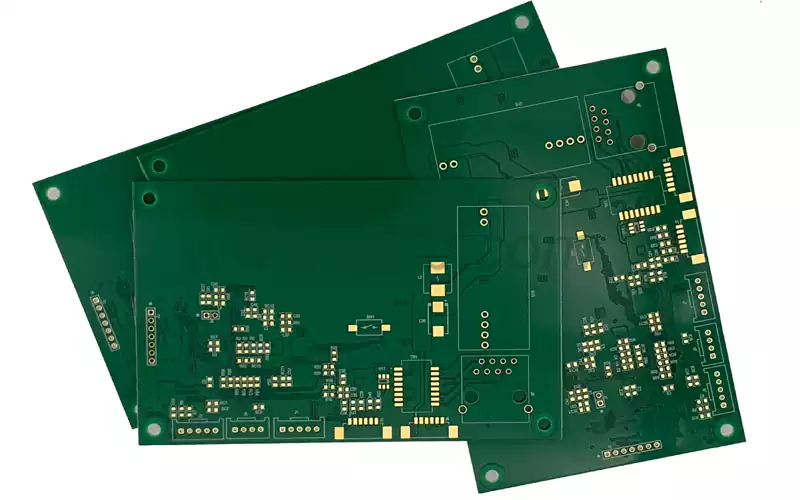
In today’s rapidly evolving technological landscape, drones have become deeply integrated into every aspect of daily life and industrial production, emerging as indispensable smart devices. At the heart of a drone’s stable operation lies drone PCB assembly (printed circuit board assembly) – this compact circuit board serves as the drone’s ‘brain’ for computation, its ‘nerves’ for signal transmission, and its ‘power’ source, acting as the key component enabling precise flight, environmental sensing and remote control.
Main Control Chip: The Drone’s ‘Central Brain’
The main control chip serves as the central hub of the drone PCB assembly and is effectively the drone’s ‘brain’; its performance directly determines the drone’s flight control precision and response speed. It is primarily responsible for real-time processing of data collected from various sensors, such as gyroscopes and accelerometers, precisely regulating core functions including flight attitude, route planning and hovering positioning. It rapidly performs complex calculations to ensure the drone flies stably and safely in all scenarios.
For procurement personnel at electronics manufacturers, three key metrics must be prioritised when selecting a main control chip: firstly, processing performance, which must meet the requirements for parallel processing of multi-sensor data to ensure timely command responses; secondly, power consumption control, as low-power chips can effectively extend the drone’s flight endurance; and thirdly, operational stability, to prevent loss of flight control due to chip failure. A high-quality main control chip not only enhances the drone’s overall performance but also delivers a smooth and reliable flight experience for users.
2.Sensor Modules: The ‘Precise Sensors’ for Perceiving the Environment
During flight, a drone must continuously monitor changes in its surroundings, as well as its own attitude and position. This functionality relies entirely on the coordinated operation of various sensor modules. Common core sensors include gyroscopes (which detect flight attitude angles), accelerometers (which measure movement acceleration) and geomagnetic sensors (which determine orientation). Some high-end drones are also equipped with barometric sensors (for altitude control) and GPS modules (for precise positioning). Together, these sensors form the drone’s ‘perception system’.
The quality and precision of sensor modules directly impact the drone’s flight stability, positioning accuracy and environmental adaptability. Consequently, during the procurement process, manufacturers must rigorously screen suppliers, focusing on verifying the sensors’ measurement accuracy, response speed, interference resistance and stability to avoid safety hazards such as flight deviations or loss of control caused by sensor errors.
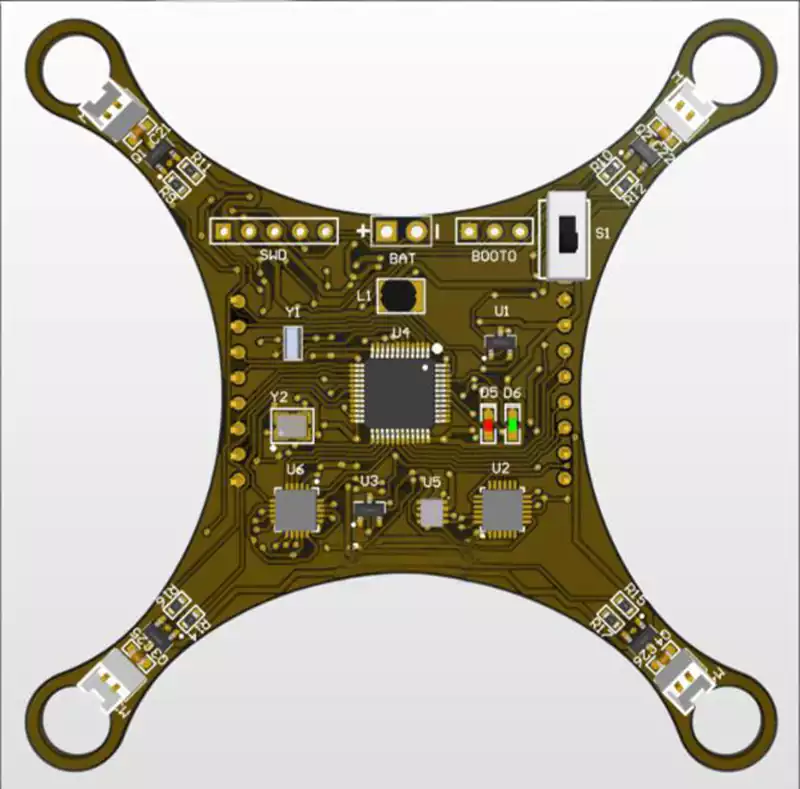
3.Power Management System: The Drone’s ‘Energy Hub’
The power management system serves as the drone’s ‘source of energy’, undertaking core tasks such as battery charging, discharge control, real-time power monitoring, and protection against overcharging and over-discharging. It is a critical component in ensuring the drone’s flight endurance and safety. The drone’s flight duration and the stability of its power supply are directly related to the performance of the power management system.
When procuring a UAV, manufacturers should focus on three core capabilities of the power management system: firstly, high energy conversion efficiency to maximise battery utilisation and extend flight duration; secondly, stable output voltage to ensure a steady power supply to core components such as the main control chip and sensors; and thirdly, comprehensive protection mechanisms, including safeguards against overcharging, over-discharging, short circuits and overheating, to prevent UAV damage or flight accidents caused by electrical faults.
4.Communication Modules: A ‘Two-Way Bridge’ Connecting Sky and Earth
Real-time communication between the drone, the ground control station and the remote controller relies entirely on the communication module—it acts as a ‘two-way bridge’, transmitting control commands from the ground operator whilst relaying the drone’s flight data (such as attitude, battery level and position), ensuring the operator can monitor the drone’s status in real time and achieve precise control.
The stability, transmission speed and range of the communication module are key factors in determining the drone’s control experience. When purchasing, priority should be given to communication modules with high sensitivity, low bit error rates and long-range transmission capabilities, whilst also ensuring strong anti-interference performance. This ensures the drone maintains a stable communication link even in complex environments (such as obstructions or electromagnetic interference), preventing issues such as signal interruptions or command delays.
5.Motor Drive Module: The ‘Core Heart’ that Provides Power
The motor drive module is the drone’s ‘power core’, equivalent to its ‘heart’. Its core function is to receive commands from the main control chip and precisely control the speed and direction of the drone’s motors, thereby providing sufficient lift and power to support various flight manoeuvres such as take-off, landing, hovering and turning.
When procuring motor drive modules, three key indicators require particular attention: firstly, drive capacity, which must match the power requirements of the drone’s motors to ensure adequate power output; secondly, heat dissipation performance, to prevent module damage caused by overheating during prolonged high-load operation; and thirdly, operational stability, to prevent motor stalling or uncontrolled speed due to module failure, thereby ensuring flight safety. A high-quality motor drive module enables the drone to maintain stable power output across all flight conditions, enhancing flight smoothness.
6.Auxiliary Circuits: The ‘Nervous System’ of Operation
In addition to the five core modules mentioned above, the drone PCB assembly also integrates various auxiliary circuits, such as LED indicators (displaying flight status, battery level and fault alerts), buzzers (for abnormal alerts) and interface circuits (for connecting external devices). Although these auxiliary circuits may appear small, they function as the UAV’s “nervous system”, performing vital roles such as status feedback, fault alerts and external connectivity, which directly impact the user experience and flight safety.
When procuring such auxiliary circuits, manufacturers must not overlook their quality and performance—high-quality auxiliary circuits can clearly and accurately reflect the drone’s operational status, enabling operators to detect anomalies promptly; at the same time, they offer excellent compatibility and stability, preventing auxiliary circuit failures from affecting the normal operation of the entire PCBA, thereby further enhancing the drone’s usability and safety.
Every component in a drone PCB assembly plays an irreplaceable, core role; only through the coordinated operation of all modules can the drone achieve stable and safe flight. For procurement personnel at electronics manufacturers, when selecting components for the PCBA, it is essential to base decisions on the drone’s actual flight requirements, strictly controlling the quality, performance and compatibility of every component. This ensures the drone’s product quality from the outset, providing users with a reliable and high-quality flight experience.