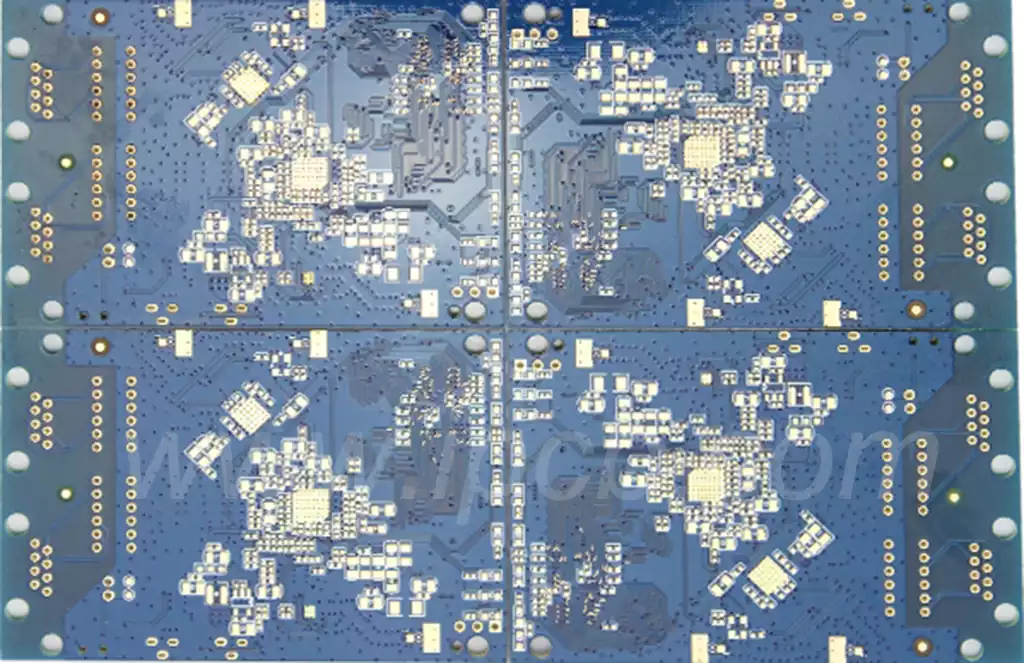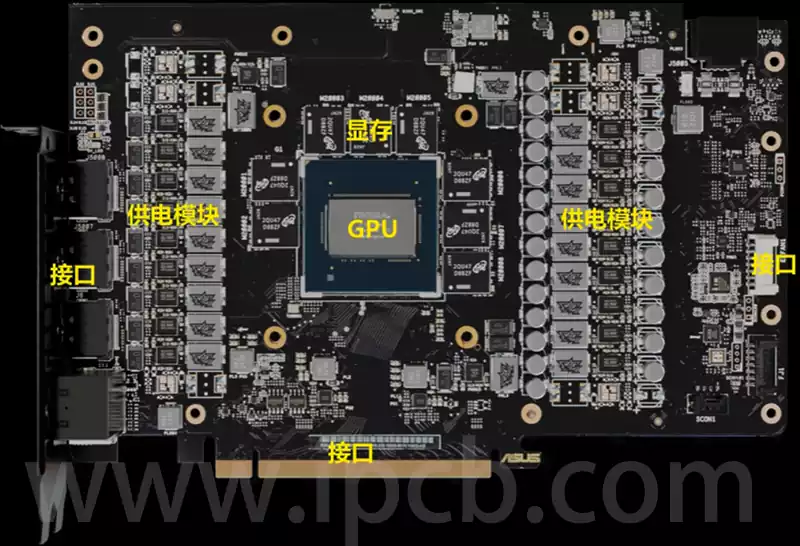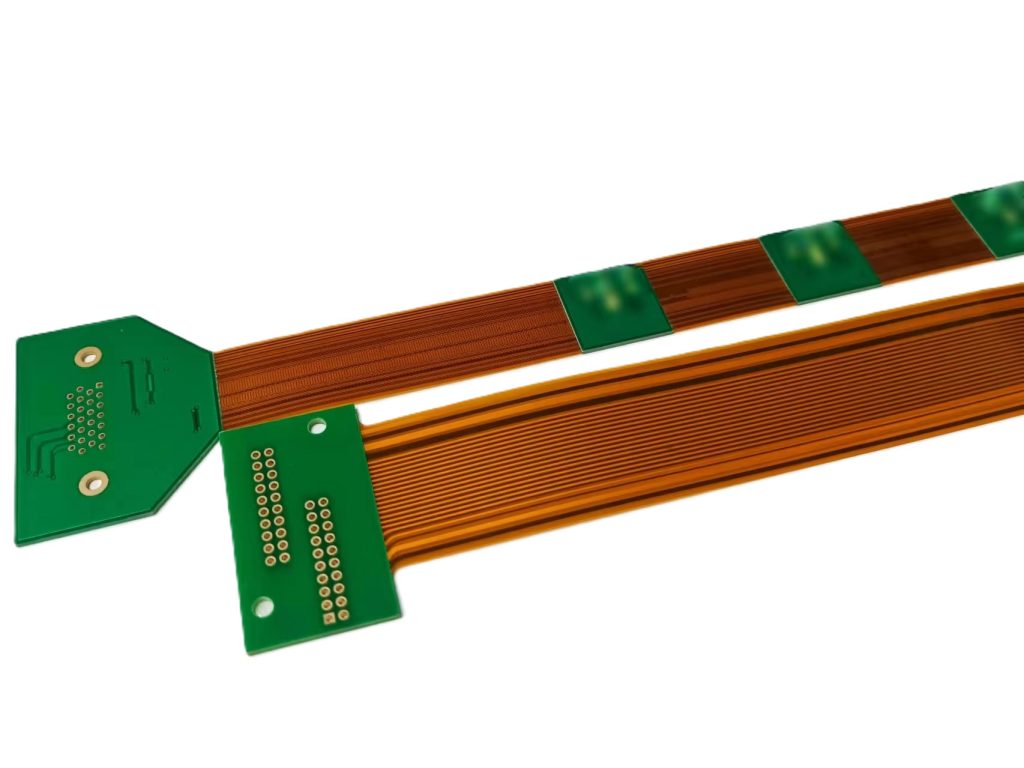
PCB radar, or printed circuit board radar, denotes a technology employing printed circuit boards to generate and process radar signals. This technology forms a core component of modern meteorological radar systems, enabling meteorologists to collect weather condition data with high precision. The application of PCB boards in radar technology significantly enhances the system’s detection capabilities for precipitation, wind fields, and other meteorological phenomena.
Operating Principle of PCB Radar Meteorological Technology
PCB radar meteorological technology functions by emitting radio waves and analysing the signals reflected back after interacting with various components of the atmosphere. This processed data provides detailed meteorological information. The radar can detect precipitation and its intensity, even tracking precipitation movement trajectories, which is crucial for accurate weather forecasting.
Advantages of PCB Radar in Weather Forecasting
The core strength of PCB radar meteorological technology lies in its precision. By employing printed circuit boards, the radar system achieves a more compact and efficient design, thereby enhancing signal processing capabilities and data accuracy. This precision enables meteorologists to deliver more reliable forecasts, holding significant importance for public safety assurance and emergency planning.
Applications of PCB Radar Meteorological Technology
Beyond weather forecasting, this technology finds extensive application across numerous sectors. It plays a vital role in aviation by providing real-time data on storm systems and turbulence, aiding pilots in navigating adverse weather conditions. Furthermore, this technology is indispensable for maritime navigation, ensuring vessel safety by predicting changes in sea weather.
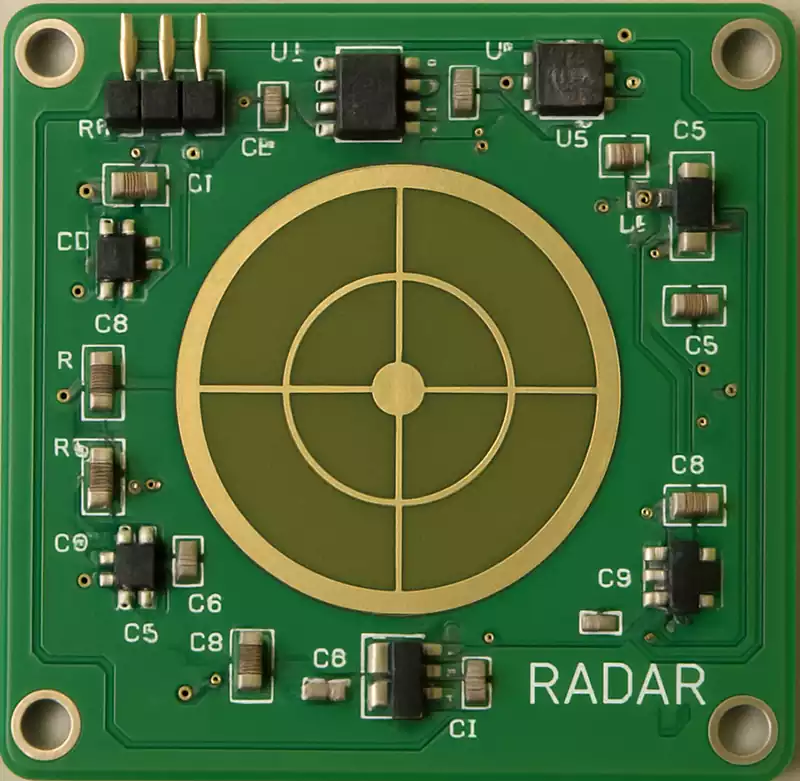
Advantages of PCB Radar Meteorology
All-weather operational capability:
Unlike optical sensors, the technology remains unaffected by rain, fog, or snow. It penetrates cloud cover and materials such as rubber, enabling continuous monitoring.
High precision and extensive coverage:
Millimetre-wave bands (e.g., 77GHz) support long-range detection with minimal signal attenuation (high-frequency board loss factor Df ≤ 0.004), achieving detection distances of hundreds of kilometres.
Multi-Target Tracking:
Achieves high-precision angular measurement through phase difference/beamforming techniques (e.g., calculating reflected wave phase differences using multiple receiving antennas).
Rapid Response & Low Power Consumption:
Enables real-time data processing for swift decision-making in autonomous driving and intelligent transport systems.
Ideal for battery-powered devices (e.g., IoT sensors) with lower power consumption than conventional radar systems.
Miniaturisation and Low Cost:
PCB antennas replace traditional metallic antennas, enabling dimensions smaller than a coin with low mass production costs.
The Future of PCB Radar Meteorology
With ongoing technological advancements, it holds promising prospects. Researchers continue developing novel methods to enhance radar accuracy and reliability. Future improvements may include: better integration with other meteorological monitoring systems and leveraging artificial intelligence for more efficient weather pattern prediction.
Understanding this technology provides insight into the operational mechanisms of modern meteorology. This technology is crucial for precise weather forecasting, thereby aiding disaster preparedness and resource management. As PCB radar continues to evolve, its application domains and benefits will expand, delivering more accurate meteorological data across various industries.
Mastering the fundamentals of PCB radar meteorological technology reveals the complexity and significance of weather forecasting in daily life. Whether you are a meteorology enthusiast or a technology explorer, PCB radar offers a fascinating glimpse into the world of meteorology.