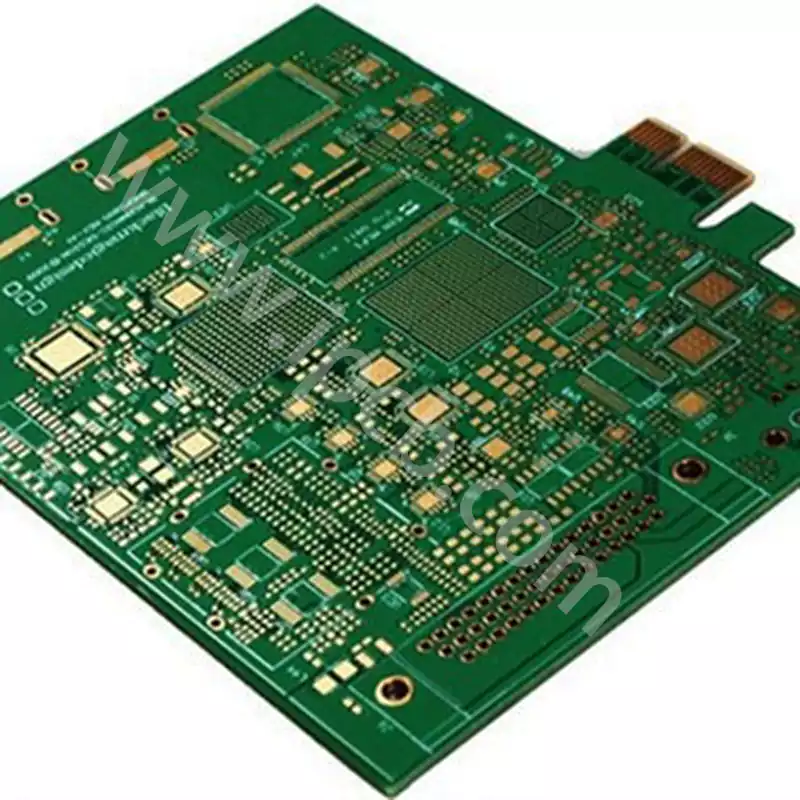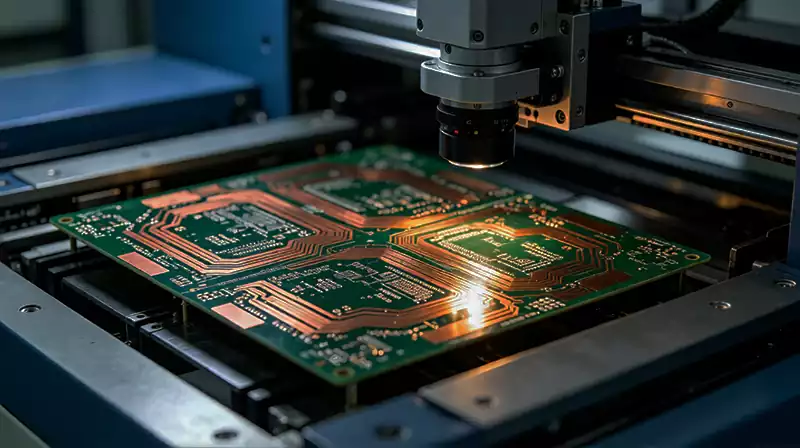
Rogers high frequency laminates are recognized as one of the industry benchmarks for high-performance materials used in RF, microwave, and millimeter-wave circuit design. Unlike conventional FR-4 laminates, Rogers materials deliver exceptionally low dielectric loss, highly stable dielectric properties, and outstanding thermal stability at elevated temperatures, making them ideal for demanding applications such as high-speed digital transmission, RF and microwave circuits, and millimeter-wave communications. They have become the preferred substrate for commercial wireless infrastructure, automotive radar systems, aerospace electronics, and other advanced RF applications.
Compared with traditional PCB materials, Rogers high frequency laminates exhibit significantly lower electrical loss at high frequencies while providing superior dimensional and structural stability. These characteristics help preserve signal integrity, minimize transmission loss, and ensure the long-term reliability of high-frequency electronic systems operating in demanding environments.
Dielectric Constant (Dk) and Dissipation Factor (Df): The Two Critical Electrical Parameters
In RF and microwave PCB design, dielectric constant (Dk) and dissipation factor (Df) are the two most critical electrical properties that determine a laminate’s suitability for specific applications. These parameters directly influence signal transmission efficiency, circuit dimensions, impedance control, insertion loss, and overall system stability, forming the foundation of the performance advantages offered by Rogers high-frequency materials.
The dielectric constant (Dk) describes a material’s ability to store electrical energy. Its value has a direct impact on RF circuit design and electromagnetic wave propagation. From a signal transmission perspective, a lower Dk reduces propagation delay and increases signal velocity, enabling faster data transmission and improving real-time communication performance.
From a PCB design standpoint, the wavelength of an electromagnetic signal inside the dielectric is inversely proportional to the square root of the dielectric constant. Consequently, materials with a higher Dk allow shorter signal wavelengths, enabling more compact RF circuit layouts and facilitating the miniaturization of high-frequency electronic devices.
However, a higher dielectric constant is not always advantageous. Excessively high Dk values generally require narrower transmission lines to maintain controlled impedance, which increases conductor loss and ultimately results in higher insertion loss, negatively affecting overall signal transmission performance. Therefore, selecting the appropriate dielectric constant is always a trade-off between electrical performance, circuit size, and manufacturing requirements.
The dissipation factor (Df), also known as the loss tangent (tan δ), measures the dielectric energy loss of a material under high-frequency operating conditions. It is one of the primary parameters distinguishing standard PCB materials from premium RF laminates. The lower the Df value, the lower the dielectric loss, resulting in reduced signal attenuation, lower waveform distortion, higher transmission efficiency, and better signal integrity.
The importance of a low Df becomes increasingly significant as operating frequency rises. In microwave and millimeter-wave applications, dielectric loss increases rapidly with frequency when conventional PCB materials are used. Consequently, the ultra-low Df characteristics of Rogers laminates play a critical role in maintaining communication quality, extending transmission distance, and ensuring the long-term reliability of RF and microwave systems.
Typical Dk and Df Performance of Rogers high frequency laminates
Rogers has developed multiple laminate families with carefully engineered dielectric constants and dissipation factors to address a wide range of high-frequency applications.
Among the most widely used products, RO3003 offers one of the industry’s lowest dielectric losses, featuring a stable dielectric constant of 3.00 and an exceptionally low dissipation factor of 0.0010 at 10 GHz. Its ultra-low-loss characteristics make it an excellent choice for extremely high-frequency applications, including 77 GHz automotive millimeter-wave radar, advanced driver assistance systems (ADAS), and other precision RF circuits.
RO4350B is another flagship high-frequency laminate, providing a dielectric constant of 3.48 and a dissipation factor of 0.0037 at 10 GHz. Combining excellent electrical stability with superior thermal performance, it has become one of the industry’s preferred substrate materials for RF power amplifiers, wireless base stations, microwave communication equipment, and high-power RF modules.
RO4835 shares the same electrical characteristics as RO4350B, with a dielectric constant of 3.48 and a dissipation factor of 0.0037 at 10 GHz, while offering oxidation resistance approximately ten times greater than conventional thermoset RF laminates. This enhanced environmental durability makes RO4835 particularly well suited for high-performance RF and microwave circuits operating continuously under harsh conditions or long-term high-power loads.
Characteristics of Rogers Mainstream High Frequency PCB Laminates
RO4000 Series – Ceramic-Filled Thermoset Laminates
The RO4000 Series is Rogers’ most widely used family of high frequency laminates. Engineered with a ceramic-filled thermoset resin system, these materials overcome many of the processing limitations associated with traditional PTFE-based laminates while offering low dielectric loss, excellent dimensional stability, and outstanding manufacturability. Supporting operating frequencies well into the millimeter-wave range, the RO4000 Series has become one of the industry’s standard substrate materials for RF, microwave, and millimeter-wave circuit applications.
The series includes multiple laminate grades optimized for different design priorities, including cost, thermal conductivity, fabrication compatibility, and electrical performance.
RO4003C is the general-purpose laminate within the RO4000 family. It provides an excellent balance of electrical performance, processing capability, and cost-effectiveness, making it widely used in commercial wireless communications, aerospace, defense electronics, precision instrumentation, and industrial RF systems.
At 10 GHz, RO4003C features a dielectric constant (Dk) of 3.38, a dissipation factor (Df) of 0.0027, and a Z-axis coefficient of thermal expansion (CTE) of 46 ppm/°C, ensuring reliable electrical and mechanical performance under normal operating conditions.
RO4350B is designed for applications requiring tighter electrical tolerances and superior thermal management. It offers excellent dielectric constant consistency, enhanced thermal stability, and better heat dissipation than general-purpose laminates within the same series. As a result, it is widely used in high-power RF modules, RF power amplifiers, and power conversion circuits. At 10 GHz, RO4350B provides a Dk of 3.48, a Df of 0.0037, and an exceptionally low Z-axis CTE of only 32 ppm/°C, significantly reducing the risk of PCB warpage and plated through-hole reliability issues under elevated operating temperatures.
RO4360G2 is optimized for applications requiring a relatively high dielectric constant. With a Dk of 6.15 at 10 GHz, it shortens the guided wavelength of RF signals, enabling more compact circuit layouts and higher integration density. Combined with excellent thermal conductivity, it is particularly suitable for compact, high-power RF and microwave designs.
The primary advantage of the RO4500 Series lies in its exceptional manufacturing compatibility. It can be processed using conventional FR-4 PCB fabrication techniques and standard lead-free soldering processes without requiring the specialized drilling, through-hole preparation, or plating procedures typically associated with PTFE-based laminates. Its thermoset resin system also provides excellent electrical characteristics for a wide variety of antenna designs while significantly reducing manufacturing complexity and production costs.
RO4835 is an enhanced, lightweight evolution of the RO4000 platform. While maintaining the outstanding electrical performance of the RO4000 family, it offers reduced laminate weight and oxidation resistance approximately ten times greater than conventional thermoset RF laminates. These improvements make it particularly suitable for lightweight, long-life RF and microwave systems operating in harsh environments.
RO3000 Series Cost Effective High Frequency Laminates
Compared with the RO4000 family, the RO3000 Series is designed to provide an excellent balance between electrical performance and cost. While maintaining the essential characteristics required for high-frequency circuit operation, these laminates offer a more economical solution for cost-sensitive commercial RF and microwave applications.
The series includes RO3003, RO3006, and RO3010, each optimized for different application requirements. RO3003 offers lower insertion loss than RO3010, making it the preferred choice for circuits requiring minimal high-frequency transmission loss. RO3006 features a higher dielectric constant together with excellent thermal conductivity, making it suitable for various RF power modules. RO3010 is a versatile microwave laminate with balanced electrical characteristics, providing a practical solution for general-purpose microwave circuit designs.
RT/duroid Series Premium Halogen Free High Frequency Laminates
The RT/duroid Series represents Rogers’ premium class of high frequency laminates for demanding RF and microwave applications. Manufactured using halogen-free material systems, these laminates provide exceptionally tight electrical property control, enabling designers to maximize RF circuit performance in environmentally friendly, high-reliability electronic systems.
Among the most popular products, RT/duroid 5880 is an ultra-low-loss laminate ideally suited for high-power-density millimeter-wave applications. RT/duroid 6002 offers an optimized balance of cost and thermal performance, delivering superior heat dissipation compared with the widely used RO4350B. RT/duroid 6035HTC combines extremely high thermal conductivity with very low dielectric loss, making it an excellent substrate for RF power amplifiers, high-frequency antennas, and other thermally demanding, high-precision microwave applications.
TMM Series – Ceramic Thermoset Microwave Laminates
The TMM Series utilizes a proprietary ceramic-filled thermoset composite technology. By varying the ceramic filler content, Rogers offers multiple dielectric constant options, including TMM3, TMM4, TMM6, and TMM10i, allowing engineers to select the most suitable material for different bandwidth, frequency, and circuit size requirements.
With a broad range of dielectric constants and excellent electrical stability, the TMM family is highly versatile and is widely used in broadband RF, microwave, and millimeter-wave applications requiring customized electrical performance.
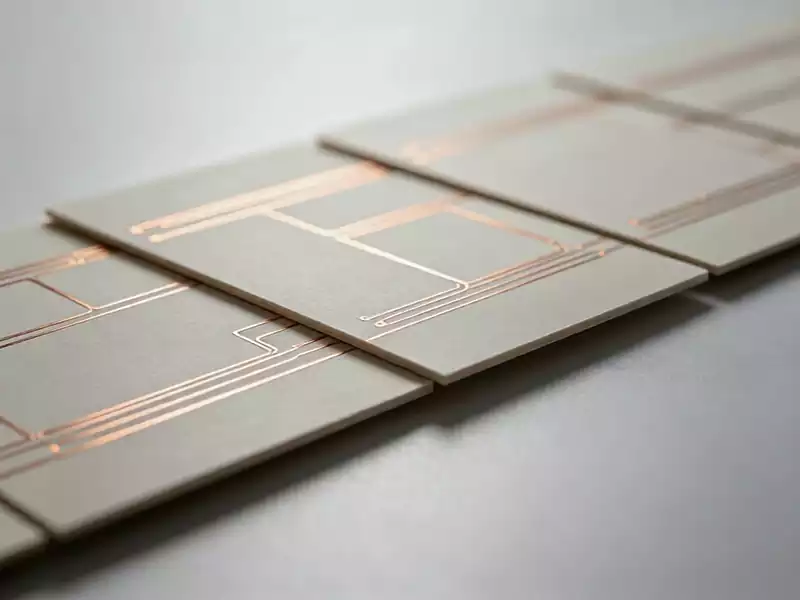
Key Advantages of Rogers high frequency laminates
Across its entire portfolio of high frequency PCB materials, Rogers laminates share two fundamental advantages.
First, they offer excellent electrical parameter stability. For example, RO4350B maintains a tightly controlled dielectric constant of 3.48, whereas many RF circuit designs traditionally use a nominal design value of 3.66. This outstanding consistency enables more accurate impedance control, predictable circuit performance, and improved manufacturing yield.
Second, Rogers laminates feature a coefficient of thermal expansion (CTE) that closely matches that of copper foil, significantly improving plated through-hole reliability and reducing the risk of delamination and dimensional instability commonly associated with conventional PTFE laminates. As a result, Rogers materials substantially enhance the long-term reliability, durability, and service life of high frequency PCB assemblies operating in demanding environments.
Rogers high frequency laminates have become one of the industry’s preferred substrate materials for advanced RF and microwave applications because of their stable high-frequency electrical performance, excellent thermal stability, and outstanding mechanical reliability. They are widely used in automotive electronics, 5G millimeter-wave communications, microwave and RF systems, satellite communications, automatic identification technologies, and numerous other high-end electronic applications where low signal loss, excellent signal integrity, and long-term reliability are critical.
One of the most important application areas is automotive millimeter-wave radar. For 77 GHz automotive long-range radar systems operating in the 76–81 GHz band, RO3003 and its upgraded version RO3003G2 have become the preferred antenna substrate materials. Their ultra-low insertion loss, low dielectric constant, and exceptional dielectric stability over temperature enable highly accurate radar signal transmission and reliable target detection, ensuring stable performance even under high-speed driving conditions.
For 24 GHz short-range radar sensors, RO4835 offers oxidation resistance approximately ten times greater than that of conventional thermoset laminates while maintaining consistently low dielectric loss, significantly extending the service life of automotive radar modules and improving their resistance to harsh operating environments.
In 5G millimeter-wave wireless infrastructure, Rogers laminates fully satisfy the demanding electrical requirements of both concealed and external vehicle-mounted antennas. They are widely used in GNSS satellite navigation systems, SDARS receivers, cellular communication modules, and V2X (Vehicle-to-Everything) communication platforms.
Their low-loss dielectric characteristics and excellent signal integrity allow them to support the high frequencies, wide bandwidths, and ultra-high data rates required by next-generation 5G communication systems, making them key substrate materials for both 5G base stations and connected vehicle communication equipment.
For general RF, microwave, and millimeter-wave circuit applications, the RO4000 Series has established itself as an industry-standard laminate family. Compared with conventional PTFE-based materials, it provides lower dielectric loss, simpler PCB fabrication, and a more balanced combination of electrical and mechanical performance, resulting in improved manufacturability for high-volume production.
These laminates are extensively used in microwave filters, RF transceiver circuits, power amplifier modules, and other high-frequency front-end designs. They are also widely employed as RF and power PCB substrates in Advanced Driver Assistance Systems (ADAS) and V2X communication systems, supporting the rapid development of intelligent transportation technologies.
Beyond automotive and wireless communications, Rogers high frequency laminates are also extensively used in cellular base station antennas, RF power amplifiers, high-speed digital backplanes, satellite television low-noise block (LNB) modules, RFID systems, aerospace electronics, defense equipment, industrial microwave systems, and intelligent IoT devices. Their combination of low dielectric loss, excellent thermal performance, dimensional stability, and long-term reliability enables them to meet the stringent performance requirements of both commercial and mission-critical RF applications.
For many years, Rogers has maintained a leading position in the global high frequency laminates market through decades of material development, mature product platforms, and extensive field validation. As a result, premium RF and millimeter-wave laminates have largely depended on imported products, while the localization rate of high-end RF substrate materials has remained relatively low. However, with the rapid growth of China’s 5G communications, automotive electronics, satellite communications, and aerospace industries, demand for high-frequency copper clad laminates has increased dramatically.
This growing market has encouraged leading domestic material manufacturers to accelerate research and development, resulting in significant technological advances and the commercialization of high-performance RF laminates. Today, an increasingly diverse portfolio of domestically produced materials is helping reduce dependence on imported products.
Among domestic manufacturers, Shengyi Technology has been one of the pioneers in developing locally produced high frequency laminates. Using SABIC PPO resin technology, the company has developed low-dielectric, low-loss RF laminate materials whose electrical performance is comparable to Rogers RO4535 and RO4730G3. Although a small performance gap still exists in certain demanding applications, these products offer an excellent balance between performance and cost, have already entered volume production for many mid- and high-end RF products, and have become one of the leading solutions for import substitution.
Wazam New Materials has focused on the high-frequency copper clad laminate market by introducing products such as HF175 and HF380. These materials provide tightly controlled dielectric constant and dielectric loss characteristics with stable electrical performance, making them well suited for conventional RF communication equipment while offering a highly competitive commercial alternative.
ZY Technology has launched several high-frequency laminate families, including ZY-7000 and ZY-5500, by optimizing resin formulations and ceramic filler systems. These materials achieve an effective balance between thermal resistance, electrical performance, and mechanical strength, making them suitable for complex electronic assemblies and mid- to high-end RF circuit applications across a broad range of industries.
Taizhou Wangling specializes in the development and mass production of high-speed, high frequency laminates. Its WI-280 and WI-400 materials feature low transmission loss, excellent electrical stability, and strong high-frequency performance, making them particularly suitable for satellite communication terminals and advanced RF communication equipment. In addition, manufacturers such as Taixing Microwave and Gongli Ceramic continue to introduce cost-effective high-frequency laminate products, further expanding the range of domestic alternatives available to the market.
Rogers high frequency laminates continue to set the industry benchmark for RF, microwave, and millimeter-wave PCB materials because of their excellent electrical stability, low dielectric loss, superior thermal performance, and proven long-term reliability. Meanwhile, domestically developed high-frequency laminates have made remarkable progress and have already achieved commercial adoption in many applications while offering significant advantages in cost and supply chain flexibility. Although imported materials still maintain a technological advantage in the most demanding high frequency and high-reliability applications, the performance gap is steadily narrowing. As manufacturing technologies and material systems continue to advance, the performance, reliability, and application scope of domestically produced high-frequency laminates are expected to continue expanding in the years ahead.