In printed circuit board (PCB) material selection, FR4 is one of the most widely used substrates. However, even within the FR4 category, single-sided, double-sided, and multilayer structures differ significantly in performance, cost, and application scenarios.
Single Sided FR4
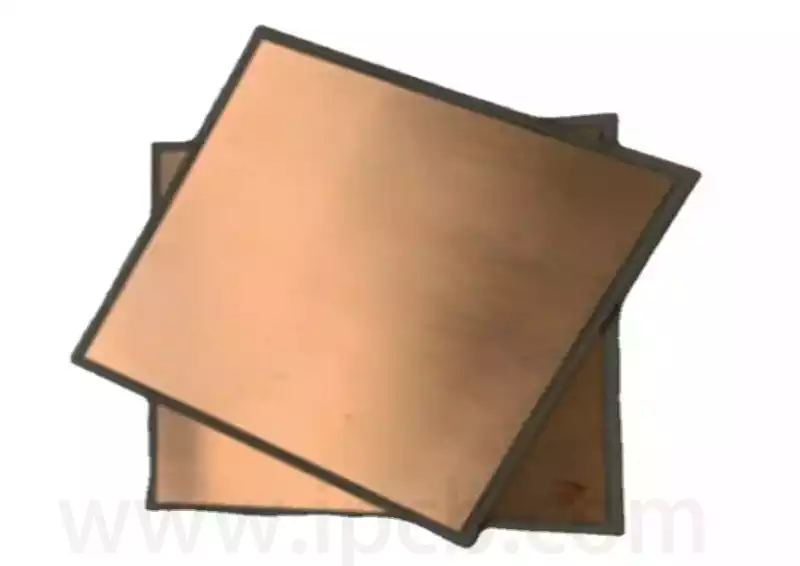
The core structure of a single-sided FR4 PCB can be summarized as “single copper layer + FR4 substrate.”
Only one side of the FR4 insulating base is laminated with copper foil, and all circuit patterns are fabricated on this copper layer. The opposite side remains insulating and does not require processes such as drilling or copper plating.
From a structural perspective, the copper foil thickness is typically 1 oz (approximately 35 μm), though 0.5 oz or 2 oz copper may also be used in special cases. Surface finishes such as OSP (Organic Solderability Preservative) or HASL (Hot Air Solder Leveling) are applied to prevent oxidation and ensure good solderability.
The thickness of the FR4 substrate usually ranges from 0.4 mm to 1.6 mm.
Thinner boards are commonly used in compact portable devices.
Thicker boards are more suitable for industrial control equipment that requires higher mechanical strength.
Because routing is limited to only one side, single-sided FR4 provides limited routing space and is unable to support complex circuit designs. It typically handles only simple signal transmission. During design, traces must be arranged carefully to avoid crossing, which could otherwise cause short circuits.
This simple structure provides two major advantages:
Clear cost advantage – It eliminates complex processes such as drilling, copper plating, and multilayer lamination, resulting in shorter production cycles and excellent cost-effectiveness for mass manufacturing.
Lower manufacturing difficulty – Issues such as delamination, cracking, and short circuits occur less frequently, leading to better production consistency.
In terms of applications, single-sided FR4 is commonly used in electronic products with simple functions and basic circuitry, such as:
Toys
Remote controls
Small sensors
Basic power adapters
These products generally have low requirements for circuit complexity and signal speed, and they prioritize cost efficiency and production speed—making single-sided FR4 an ideal choice.
However, its insulation performance and EMI resistance are relatively limited, so it is not recommended for high-voltage, high-frequency, or high-density circuit applications.
Double-Sided FR4
Compared with single-sided boards, double-sided FR4 PCBs feature a more complex structure and introduce a key design element—vias.
Vias are typically through-holes, with the inner walls plated with a copper layer no thinner than 20 μm to ensure electrical connectivity between the top and bottom copper layers.
Copper thickness can be adjusted between 1 oz and 3 oz, depending on current-carrying requirements. The substrate thickness generally ranges from 0.6 mm to 2.0 mm, balancing mechanical strength and space adaptability.
For surface finishes, in addition to OSP and HASL, ENIG (Electroless Nickel Immersion Gold) can also be used to improve soldering reliability and oxidation resistance, making it suitable for mid- to high-end devices.
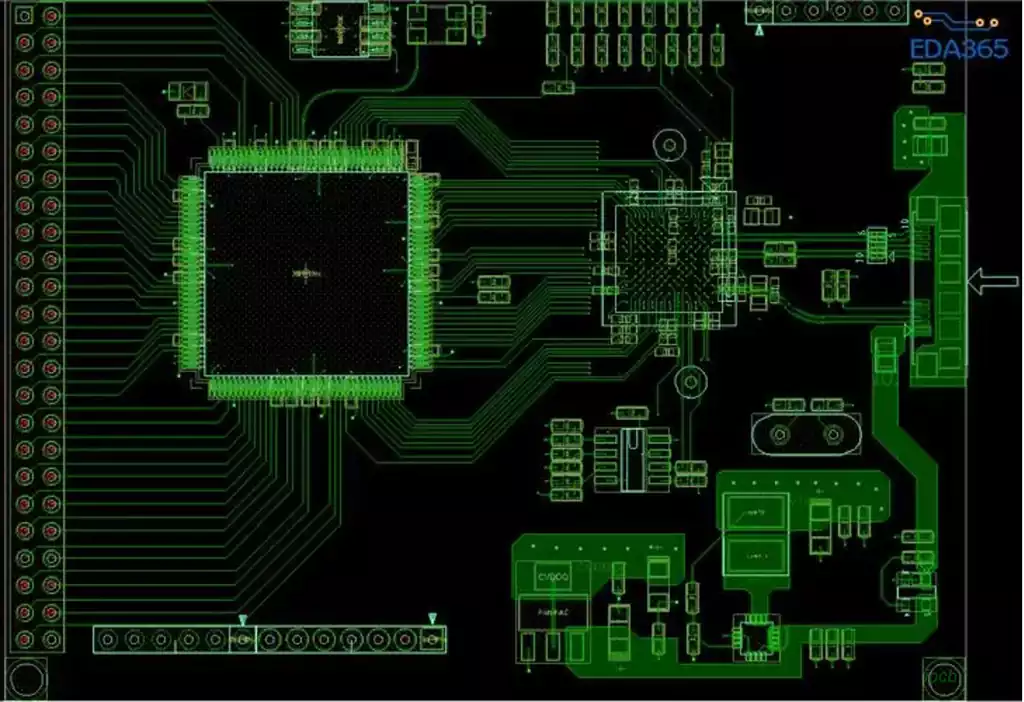
Since both sides of the board can be used for routing, vias allow traces to cross between layers, significantly increasing layout flexibility. This enables the board to support more complex signal routing, while also shortening trace lengths and reducing signal loss.
The structural upgrade brings several key advantages:
Twice the routing space, enabling more complex circuits and higher component density
Smaller PCB size—the same functionality can often be achieved with a board 30%–50% smaller
Reduced signal interference through optimized layout, improving system stability
Double-sided FR4 is widely used in industries such as:
Industrial control systems
Automotive electronics
Medical devices
Mid-to-high-end consumer electronics
Typical examples include:
Industrial frequency converters
Automotive infotainment control modules
Blood glucose meters
Tablet computers
These products require moderate circuit complexity and efficient space utilization while still controlling costs. As a result, double-sided FR4 strikes a balance between performance and cost, making it the most widely produced and commonly used type of PCB today.
Multilayer FR4
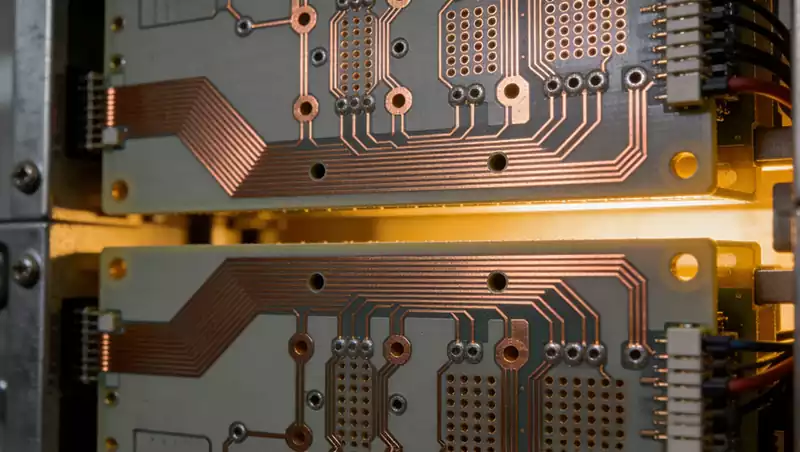
The core structure of multilayer FR4 PCBs consists of multiple copper layers, multiple FR4 core materials, and bonding prepreg layers, which are stacked through repeated lamination processes.
Each copper layer can carry circuits, and interconnections between layers are achieved through blind vias, buried vias, and through-holes.
Compared with single- and double-sided boards, multilayer FR4 has the most complex structure and the highest design and manufacturing difficulty, with structural details directly affecting product performance.
Its design typically has three major characteristics:
Clear layer separation
Layers are usually divided into signal layers, power planes, and ground planes, which helps reduce electromagnetic interference and improve signal integrity.
Diverse via types
Blind vias (connecting outer layers to inner layers) and buried vias (connecting inner layers) are widely used to save surface space and minimize signal loss.
Higher material requirements
Substrates typically use high-Tg FR4 (≥170 °C) with low dissipation factor (Df ≤ 0.02) to ensure strong interlayer bonding.
High-purity copper foil is also required to improve conductivity and signal transmission performance.
There is no fixed standard for layer count. Common configurations include:
4 layer circuit boards
6 layer pcb boards
8 layer pcb boards
High-end applications may exceed 12 layers.
Generally, the more layers a PCB board has, the more complex its structure becomes, resulting in higher manufacturing difficulty and cost.
4 layer circuit boards are the basic multilayer configuration and are widely used in mid-to-high-end industrial equipment and 5G devices.
6 layers pcb board and above are commonly used in high-voltage equipment, high-performance servers, and aerospace systems, where complex signal routing, stronger EMI resistance, and improved heat dissipation are required.
The main advantages of multilayer FR4 include:
High routing density capable of supporting complex system functions
Excellent signal integrity, with layer separation effectively shielding interference
High mechanical strength, providing strong resistance to impact and deformation
Improved heat dissipation, as multiple copper layers help conduct heat away
Structural Comparison of Different FR4 Layer Configurations
The differences between single-sided, double-sided, and multilayer FR4 boards fundamentally lie in three aspects:
routing space, functional capability, and performance characteristics.
There is no absolute superiority among them—the key lies in selecting the right structure for the specific application.
Core Structure
Single-sided: Single copper layer + single substrate, no vias
Double-sided: Two copper layers + single substrate, connected by through-holes
Multilayer: Multiple copper layers + multiple substrates, using various via structures and layered designs
Manufacturing Process
Single-sided: No drilling or copper plating required; shortest production cycle
Double-sided: Requires drilling and copper plating; moderate complexity
Multilayer: Requires multiple lamination cycles, drilling, and plating; most complex process and longest production time
Cost
Single-sided: Lowest cost
Double-sided: Moderate cost
Multilayer: Highest cost
Application Scenarios
Single-sided: Simple circuits and cost-sensitive products
Double-sided: Medium complexity designs requiring balance between space and cost
Multilayer: High-performance, high-complexity, and high-reliability applications
The purpose of designing different FR4 layer configurations is to meet diverse product requirements. The key to proper selection lies in precise matching—avoiding unnecessary multilayer complexity while also ensuring that essential performance is not sacrificed for cost savings.By comprehensively evaluating circuit complexity, space constraints, performance requirements, and budget, manufacturers can achieve an optimal balance between product quality and market competitiveness.