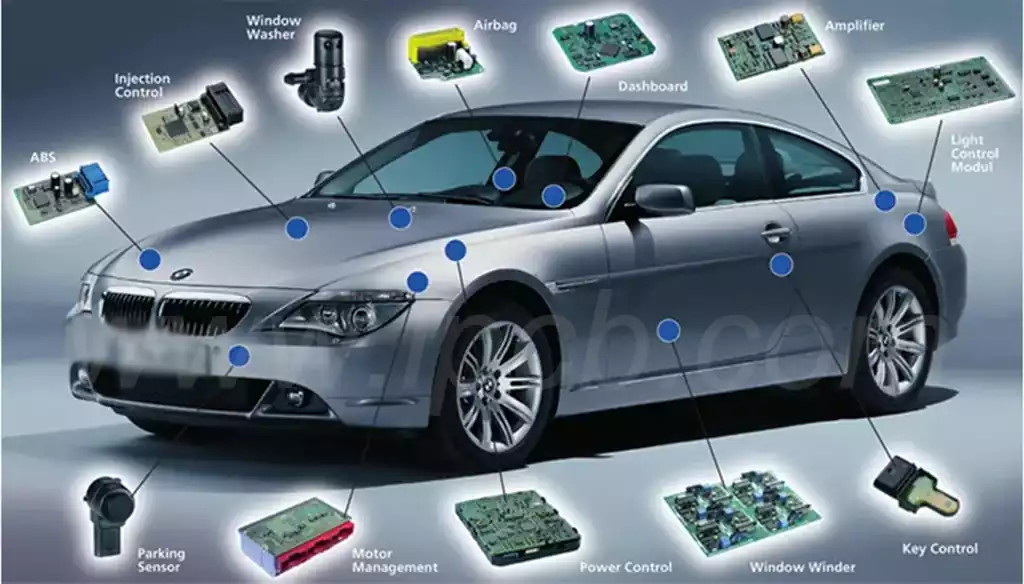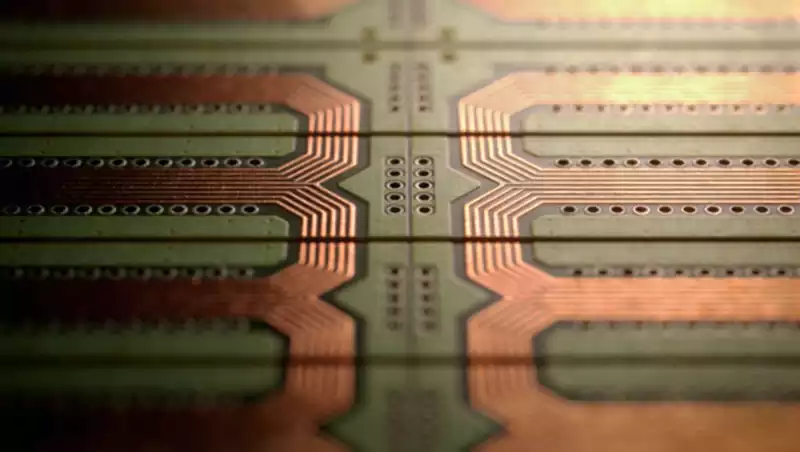
Aluminum PCBs (Aluminum substrates) are a core product within the category of high-performance metal-clad copper-clad laminates (MCPCBs). Their most notable advantage lies in their exceptional thermal conductivity, which is the key distinction from standard PCBs and makes them widely used in high-power applications.
Compared to copper-based PCBs, while the thermal conductivity of pure aluminum (approximately 237 W/(m·K)) is lower than that of pure copper (approximately 400 W/(m·K)), aluminum PCBs utilize a composite structure of “aluminum substrate—insulation layer—circuit layer.” Combined with aluminum’s inherent advantages—such as low density, low cost, and ease of machining—their heat conduction and dissipation efficiency in actual operating conditions often better meet the demands of electronic devices. Furthermore, aluminum substrates offer reliable electrical insulation and excellent machinability, enabling them to meet a wide range of installation and operational requirements.
It is precisely this combination of high-efficiency heat dissipation, electrical safety, and ease of processing that makes aluminum substrates an ideal solution for addressing the thermal management challenges of high-power, high-density electronic devices. As a result, they hold a significant market position and have gained widespread recognition.
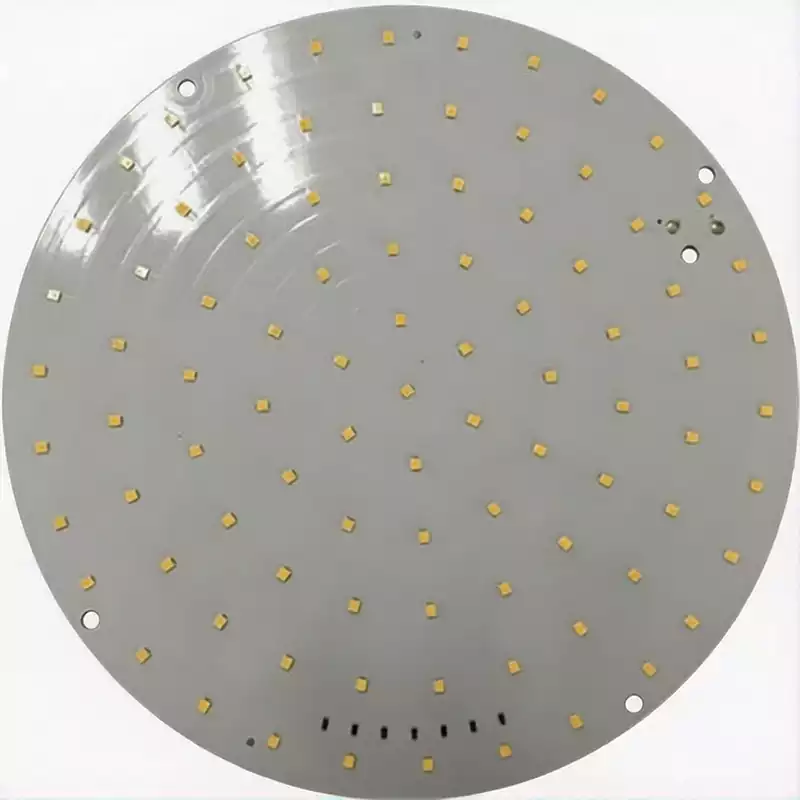
Main Types of Aluminum Substrates (Classified by Conductive Layer Configuration)
Based on the distribution of conductive layers, aluminum pcbs can be divided into two main categories: single-sided and double-sided boards. The two have different structures and are suited for distinct applications.
Single-sided boards: These feature a three-layer basic structure, consisting of, from top to bottom, the circuit layer (copper foil), an insulating layer, and a metal base layer (aluminum plate). With a simple structure and controllable costs, they are suitable for most low- to medium-power applications with relatively simple circuit designs and are currently the most widely used type of aluminum pcb board.
Double-Sided Boards: These feature a symmetrical five-layer stack-up, namely “circuit layer—insulation layer—metal base layer (aluminum plate)—insulation layer—circuit layer.” This structure supports double-sided routing, meeting the demands of higher-density and more complex circuit designs. It is commonly used in high-end electronic devices, precision power modules, and other applications with stringent performance requirements.
Configuration of Functional Layers and Core Characteristics of Single-Sided Aluminum Substrates
The three layers of a single-sided aluminum substrate each serve a specific function, and their performance is closely related to the material selection and parameter configuration of each layer.
1.Circuit Layer
The circuit layer is the conductive core of the aluminum substrate, supporting electronic components and enabling electrical interconnections.
Materials and Processing: Electrolytic copper foil (ED Copper Foil) is typically used, with the required circuit patterns etched through a chemical etching process.
Common Thicknesses: 1 oz (approx. 35 μm) to 10 oz (approx. 280 μm), which is the optimal range validated by long-term industry practice.
Key Relationship: Copper foil thickness directly determines current-carrying capacity—the thicker the foil, the higher the current it can withstand, effectively preventing overheating or burnout caused by excessive current.
Selection Considerations: The 1 oz to 10 oz range strikes a good balance between meeting current-carrying requirements, ensuring heat dissipation performance, maintaining etching precision, and controlling costs, making it suitable for the vast majority of standard applications.
2.Dielectric Layer — The Core Technical Layer of Aluminum Substrates
The dielectric layer is critical to the overall performance of aluminum substrates, serving three primary functions: electrical insulation, thermal conductivity, and mechanical bonding.
Core Functions:
Electrical Insulation: Forms a reliable barrier between the circuit layer and the metal substrate to prevent short circuits.
Efficient Thermal Conductivity: Acts as the primary heat transfer pathway, rapidly conducting heat generated by components to the metal substrate.
Mechanical Bonding: Firmly bonds the circuit layer to the metal substrate to ensure structural integrity.
Material Composition: Made from a matrix of high-performance polymers (such as modified epoxy resin or polyimide) filled with highly thermally conductive ceramic powders (such as aluminum oxide, boron nitride, or aluminum nitride), thereby achieving dual “insulation + thermal conductivity” performance.
Key Performance Requirements:
Low Thermal Resistance: The lower the thermal resistance, the higher the thermal conductivity.
High Thermal Conductivity: Directly determines overall heat dissipation efficiency.
High Dielectric Strength: Withstands high electric fields to ensure electrical safety.
Excellent Viscoelasticity: Buffers thermomechanical stress caused by differences in coefficient of thermal expansion (CTE) between copper and aluminum, preventing delamination or cracking.
Long-term thermal stability: Maintains performance without degradation in high-temperature operating environments, ensuring a long service life.
Impact on performance: The thermal conductivity of the insulating layer is a decisive factor in the heat dissipation effectiveness of the aluminum substrate. Higher thermal efficiency results in lower operating temperatures for components, which in turn enhances power density and reliability, facilitates device miniaturization, and extends the overall service life of the equipment.
3.Metal Substrate
The metal substrate serves as the mechanical support core of the aluminum substrate and acts as the final pathway for heat dissipation; it must possess excellent thermal conductivity to rapidly diffuse and dissipate heat.
Common Materials: Aluminum or copper sheets, selected based on specific requirements.
Selection Considerations:
Thermal Conductivity: Aluminum is approximately 237 W/(m·K), while copper is approximately 400 W/(m·K).
Coefficient of Thermal Expansion (CTE): Must be matched with the circuit layers and components to reduce thermal stress.
Mechanical Properties: Flexural strength, hardness, and other factors affect processability and durability.
Density/Weight: Aluminum is approximately 2.7 g/cm³, while copper is approximately 8.9 g/cm³, representing a significant difference.
Surface Condition: Flatness and surface treatments (such as anodizing) affect corrosion resistance, electrical insulation, and adhesion.
Cost: Material and processing costs are important considerations for commercial applications.
The Main Choice—Aluminum Alloy Sheets:
Advantages: Offers the optimal balance between thermal conductivity, mechanical strength, ease of processing, and cost.
Common Grades: 1060 (high-purity aluminum, excellent thermal conductivity), 5052 (good strength and corrosion resistance), 6061 (excellent overall performance).
High-Performance Option — Copper Sheets:
Advantages: Thermal conductivity is approximately 70% higher than aluminum, providing exceptional heat dissipation capabilities.
Disadvantages: High cost and heavy weight.
Suitable Applications: Limited to specialized applications with extremely stringent thermal requirements where cost and weight are not critical factors (e.g., high-end military equipment, precision high-power devices).
Machinability: Both aluminum alloy sheets and copper sheets possess excellent machining properties, allowing for easy completion of standard processes such as drilling, stamping, V-cut machining, and edge milling, making them suitable for industrial mass production.
Thanks to the three-in-one structural advantages of “thermal conductivity, electrical insulation, and machinability,” aluminum pcbs have become the ideal choice for thermal management solutions in high-power electronic devices. As application scenarios continue to expand, their core value in enhancing device performance and reliability will become increasingly prominent.