High Frequency, high speed copper clad laminates (referred to as High Frequency copper clad laminates) are core PCB substrate materials designed for High Frequency signal transmission applications. The core manufacturing principle involves bonding a copper foil layer to the surface of an insulating substrate, thereby enabling the smooth and efficient conduction of electromagnetic waves. The material’s most significant technical advantage lies in its low loss at high frequencies.
Compared to conventional laminates such as FR-4, it can significantly reduce issues such as reflection, distortion and loss during signal transmission. It is perfectly suited to High Frequency, high speed transmission scenarios such as 5G, 6G and millimetre-wave communications, and serves as a key foundational material for the next generation of electronic information equipment.
Dielectric constant (εr) and loss tangent (tanδ) are the two core parameters for evaluating the performance of High Frequency copper clad laminates, directly determining signal transmission quality. The dielectric constant of conventional High Frequency copper clad laminates is stably controlled within the range of 2.8–3.5, far lower than the 4.5 of traditional FR-4 materials; the tangent of the loss angle can be as low as 0.002. The optimisation of these two core parameters enables a 30% or greater improvement in equipment signal transmission efficiency, reducing High frequency signal transmission delay and energy attenuation at the source, and ensuring the stability of high speed data transmission.
Core Characteristics of High Frequency copper clad laminates
1.Excellent High Frequency Performance
This material possesses exceptional High Frequency adaptability. Even in the millimetre-wave High Frequency bands above 24 GHz, it maintains stable signal transmission performance without issues such as signal fluctuations or a sharp increase in loss due to rising frequencies. It is the core material for High Frequency communication equipment such as 5G macro base stations, millimetre-wave communications and satellite communications.
2.Reliable Wide-Temperature Thermal Stability
High Frequency copper clad laminates possess outstanding environmental tolerance, with a standard operating temperature range of -55°C to 125°C. Under harsh conditions such as alternating high and low temperatures or extreme temperature differentials, the material’s structure and electrical performance remain largely unchanged, fully meeting the long-term operational requirements of complex scenarios including outdoor communications, in-vehicle equipment and industrial control systems.
3.Superior comprehensive mechanical properties
The material possesses high bending toughness and excellent copper foil peel resistance, ensuring strong structural stability. It is suitable for the processing of intricate and complex RF modules, meeting the requirements for cutting, forming and laminating various types of precision High Frequency circuit boards, and accommodating the structural design of a wide range of electronic devices.
Core Application Areas of High Frequency copper clad laminates
1.Core Foundational Material for the Modern Communications Industry
High Frequency copper clad laminates serve as the core substrate for 5G base stations, satellite communications and millimetre-wave transmission equipment. Leveraging its ultra-low dielectric constant and low transmission loss, this material effectively mitigates interference and attenuation issues during High Frequency signal transmission, ensuring the stable transmission of high-capacity, high speed data. Particularly in millimetre-wave High Frequency communication scenarios, its unique electrical properties provide critical technical support for achieving low-latency, high-bandwidth transmission in equipment, making it an indispensable core material in modern high speed communication systems.
2.A vital component in smart automotive electronics
With the rapid evolution of advanced autonomous driving and vehicle-to-everything (V2X) technologies, the application of in-vehicle High Frequency sensing and transmission equipment continues to grow, significantly increasing demands for the precision and stability of High Frequency signal transmission. High Frequency copper clad laminates are widely used in core components such as in-vehicle 77GHz millimetre-wave radar, High Frequency communication modules and intelligent driving main control circuit boards. They maintain stable performance under complex in-vehicle conditions involving vibration, temperature fluctuations and electromagnetic interference, ensuring the reliable operation of functions such as autonomous driving perception and vehicle-to-device connectivity. As such, they form a vital hardware foundation for the safety systems of smart vehicles.
3.Precision Materials for High-End Medical Equipment
In the field of high-end medical imaging and monitoring equipment, High Frequency copper clad laminates have become the core precision substrate due to their excellent electromagnetic compatibility and signal stability. They are primarily used in large-scale medical imaging equipment such as MRI (Magnetic Resonance Imaging) and CT (Computed Tomography) scanners. These materials can withstand interference from complex electromagnetic environments within the equipment, ensuring the accuracy of signal acquisition and data transmission, and providing technical assurance for precise medical diagnosis. Furthermore, the material’s lightweight, stable and low-interference properties make it ideally suited to the lightweight and high-precision development requirements of various wearable medical monitoring devices.
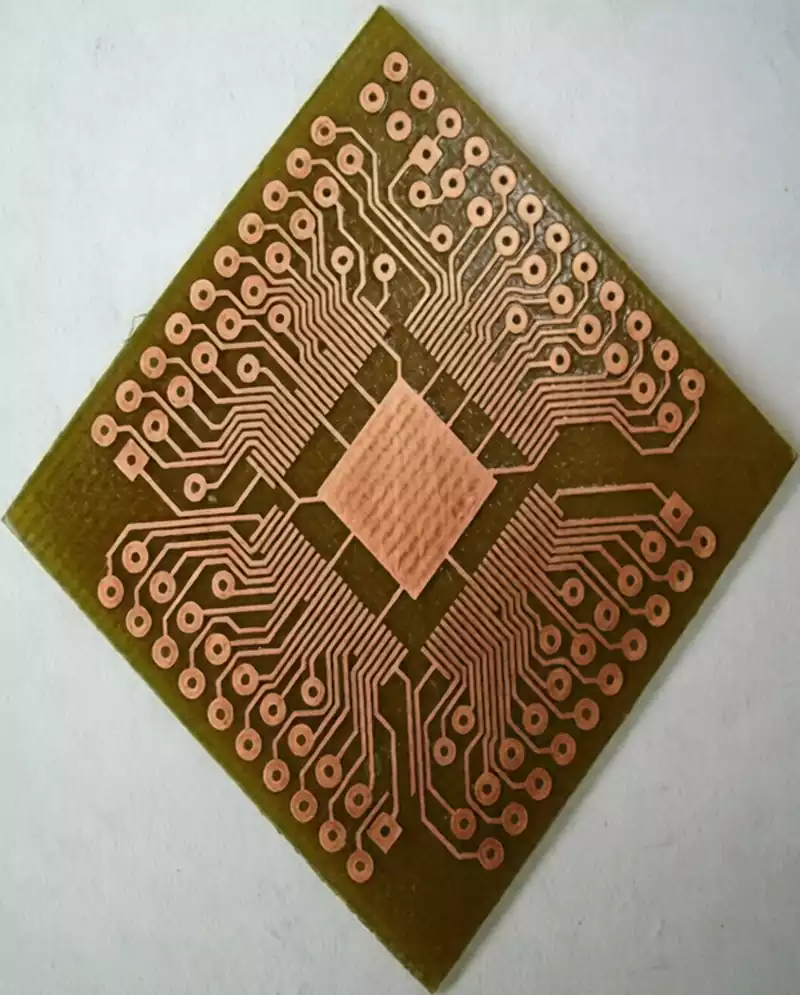
Key Application Areas of High Frequency copper clad laminates
1.A Core Basic Material for the Modern Telecommunications Industry
High Frequency copper clad laminates serve as the core substrate for 5G base stations, satellite communications and millimetre-wave transmission equipment. Thanks to their ultra-low dielectric constant and low transmission loss, these materials effectively mitigate interference and attenuation issues during High Frequency signal transmission, ensuring the stable transmission of high-capacity, high speed data. Particularly in millimetre-wave High Frequency communication scenarios, its unique electrical properties provide critical technical support for achieving low-latency, high-bandwidth transmission in equipment, making it an indispensable core material in modern high speed communication systems.
2.A vital component in smart automotive electronics
With the rapid evolution of advanced autonomous driving and vehicle-to-everything (V2X) technologies, the application of in-vehicle High Frequency sensing and transmission equipment continues to grow, significantly increasing demands for the precision and stability of High Frequency signal transmission. High Frequency copper clad laminates are widely used in core components such as in-vehicle 77GHz millimetre-wave radar, High Frequency communication modules and intelligent driving main control circuit boards. They maintain stable performance under complex in-vehicle conditions involving vibration, temperature fluctuations and electromagnetic interference, ensuring the reliable operation of functions such as autonomous driving perception and vehicle-to-device connectivity. As such, they form a vital hardware foundation for the safety systems of smart vehicles.
3.Precision Materials for High-End Medical Equipment
In the field of high-end medical imaging and monitoring equipment, High Frequency copper clad laminates have become the core precision substrate due to their excellent electromagnetic compatibility and signal stability. They are primarily used in large-scale medical imaging equipment such as MRI (Magnetic Resonance Imaging) and CT (Computed Tomography) scanners. These materials can withstand interference from complex electromagnetic environments within the equipment, ensuring the accuracy of signal acquisition and data transmission, and providing technical assurance for precise medical diagnosis. Furthermore, the material’s lightweight, stable and low-interference properties make it ideally suited to the lightweight and high-precision development requirements of various wearable medical monitoring devices.
Core Production Processes for High Frequency, high speed copper clad laminates
1.High-Precision Copper-Cladding Process
Copper-cladding is the fundamental core process in the production of High Frequency, high speed copper clad laminates, with the primary objective being to achieve a seamless and uniform bond between the copper foil and the insulating substrate. Compared to standard copper clad laminates, High Frequency products impose stricter standards on the cladding process. They require the copper foil to be of uniform thickness with a smooth, flat surface, eliminating defects such as gaps or uneven thickness between the substrate and the copper foil, thereby preventing any impact on the continuity and stability of High Frequency signal transmission.
Furthermore, copper foil specifically designed for High Frequency applications must possess excellent thermal stability, ensuring it does not warp, deform or delaminate during high-temperature heat treatment processes. Moreover, the precision of the surface finishing process directly determines the circuit board’s electrical conductivity and immunity to interference, making it the first critical step in ensuring the product’s High Frequency performance.
2.Micron-level Drilling and Precision Etching Processes
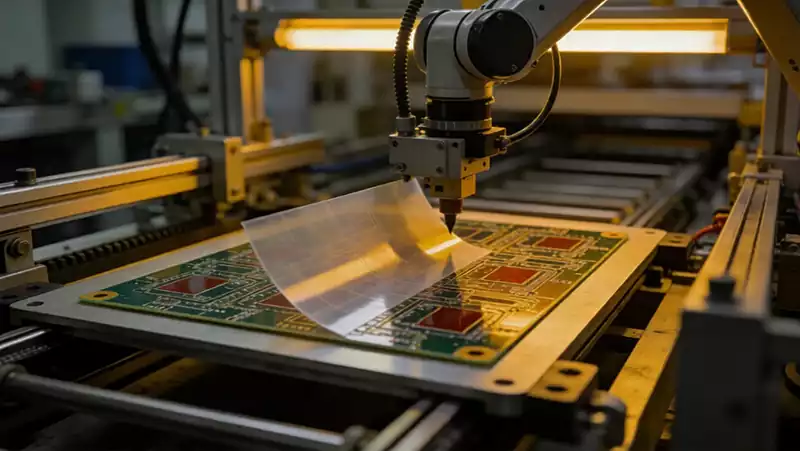
High Frequency signal transmission tolerates very little error in PCB hole diameter precision or circuit pattern layout; therefore, precision control during the drilling and etching processes is critical to product performance. Currently, the industry widely employs laser drilling technology, which enables the precise formation of micron-level holes, ensuring uniformity in hole size, position and depth. This eliminates signal transmission errors caused by hole diameter deviations and significantly enhances the operational reliability of High Frequency PCBs.
During the circuit pattern etching stage, it is essential to achieve precise, error-free etching whilst strictly controlling pattern deviations. Furthermore, the routing of High Frequency circuits must be optimised to balance electrical performance with signal transmission paths, thereby mitigating issues such as signal crosstalk and path loss, and fully meeting the specific technical requirements of High Frequency transmission.
3.Precision Surface Treatment and Soldering Processes
Surface treatment is a critical process for enhancing the durability and electrical performance of High Frequency copper clad laminates. Mainstream industry processes include gold plating, silver plating and the application of special protective coatings. High-quality surface treatment not only further improves the circuit board’s electrical conductivity and optimises High Frequency signal transmission quality, but also effectively isolates the board from air, moisture and corrosive agents, preventing copper foil oxidation and substrate ageing. This significantly extends the service life of the equipment and ensures the long-term stable operation of the product.
Whilst High Frequency, high speed copper clad laminates have now been adopted on a large scale across multiple sectors, the industry still faces challenges such as high-end technical barriers, relatively high production costs, and insufficient environmental compatibility. Future industry development will focus on three core areas—material innovation, process upgrades, and green production to continuously overcome technical bottlenecks.
1.Iterative Innovation in High End Materials
With the iterative upgrades of 6G communications, advanced intelligent driving and high-end precision electronic equipment, market demands for the High Frequency stability, ultra-low loss and environmental adaptability of copper clad laminates continue to rise. Future material R&D will prioritise novel substrates with lower dielectric constants and lower tangent of loss, whilst enhancing performance stability, high temperature resistance and mechanical toughness under high frequency operating conditions to meet the increasingly stringent requirements of High Frequency applications across various sectors.
2.Environmental Sustainability and Green Development
Under the guidance of stringent global environmental regulations and green manufacturing policies, environmental sustainability has become a core development trend within the copper-clad laminate industry. In the future, the industry will gradually phase out traditional, highly polluting and energy-intensive raw materials and production processes, whilst developing high-performance, eco friendly base materials and additives. This will ensure that, whilst maintaining the core product performance of high frequency, high speed and high precision, the production process achieves low energy consumption, low pollution and recyclability, thereby driving the industry’s green and sustainable development.
3.Process Optimisation and Cost Control
At present, the production processes for high end High Frequency copper clad laminates are complex and yield rates remain low, resulting in persistently high product costs. In the future, the industry will upgrade production equipment through automation and intelligent systems, optimise core processes such as drilling, etching and copper plating, and improve product yield rates and production efficiency. This will strike a balance between high performance and low cost, driving the further widespread adoption of High Frequency copper clad laminates.
As a key foundational material for the next generation of electronic information devices, High Frequency, high speed copper clad laminates are making continuous breakthroughs towards higher performance, greater environmental sustainability and lower costs. Their technological evolution and process upgrades will provide robust support for cutting-edge fields such as 6G communications, smart vehicles and high-end medical technology.