A motherboard is actually a specific type of circuit board designed to serve as the main electrical platform of a computer or other complex computing system, while circuit board is a much broader term that can refer to almost any printed circuit board used to connect electronic components. In simple terms, a motherboard is a circuit board, but not every circuit board is a motherboard.
The distinction is mainly based on the board’s function within a system rather than the basic materials used to manufacture it. A typical circuit board uses conductive copper traces, pads, vias, and other structures to create electrical connections between components, while the motherboard uses the same fundamental PCB technology to connect major computing components such as the processor, memory, storage, expansion interfaces, power circuits, and peripheral devices.
Understanding the Difference Between a Motherboard and a Circuit Board
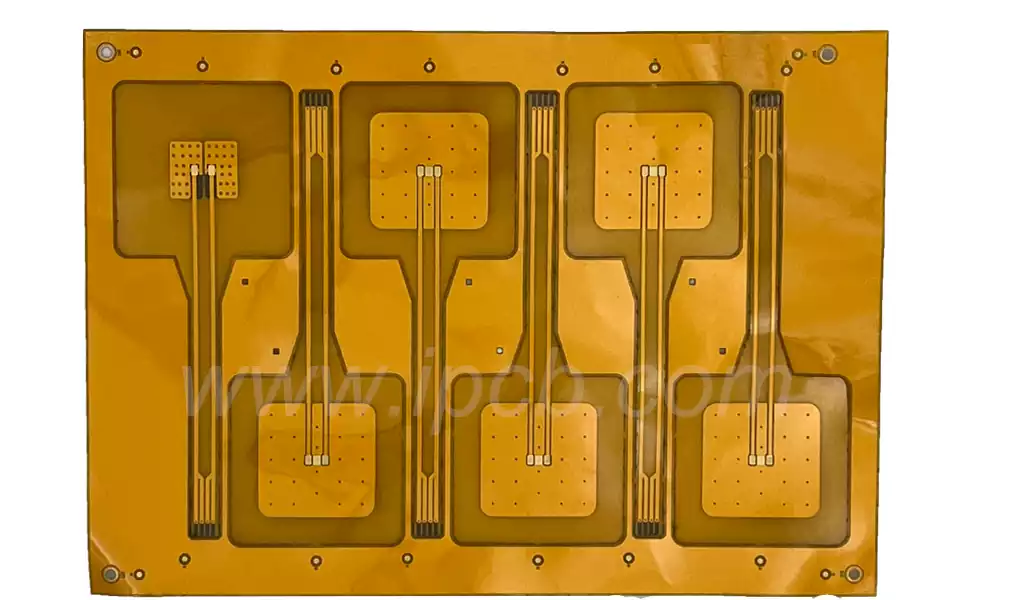
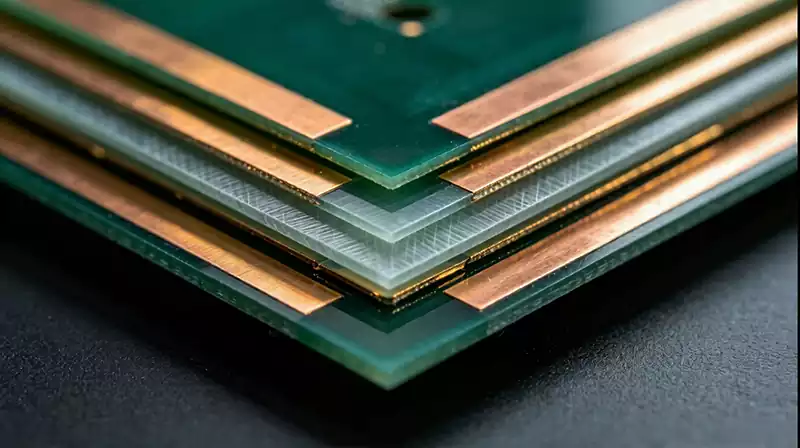
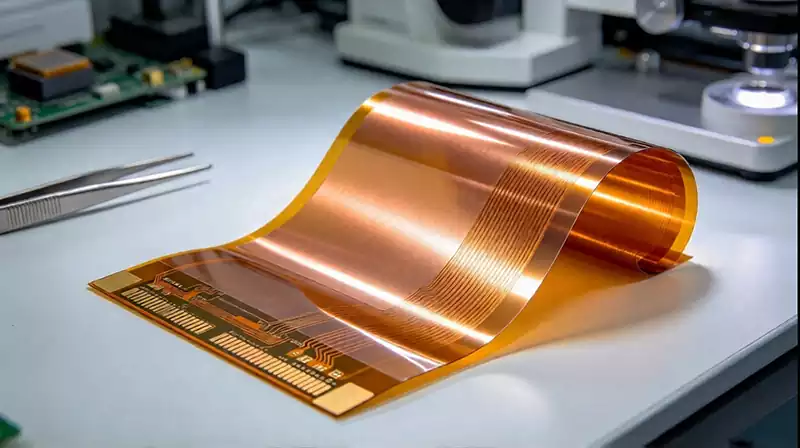
A circuit board, commonly called a printed circuit board or PCB, is a physical platform used to mount electronic components and establish electrical connections between them. The board can contain one or multiple copper layers separated by insulating materials, with traces providing conductive paths between components and vias allowing connections between different layers. Circuit boards are found in almost every category of electronic equipment, including consumer electronics, industrial controllers, automotive systems, communication equipment, medical devices, power supplies, and computers.
Their functions can vary considerably. One PCB may control a motor, another may convert electrical power, another may process signals, and another may connect sensors to a control system. Because of this wide range of applications, the term circuit board describes a general category rather than a particular type of product.
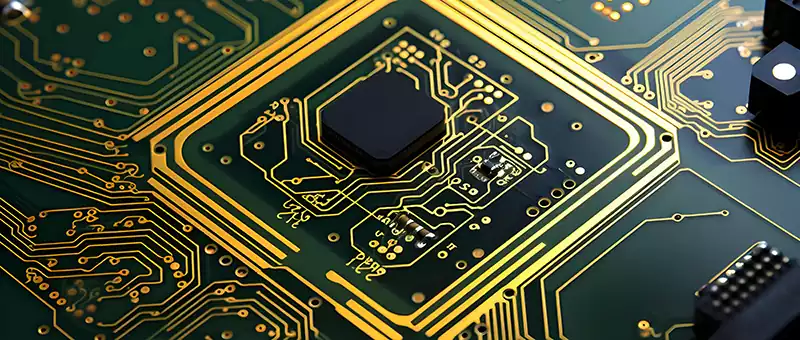
A motherboard has a much more specific role. It is the primary circuit board in a computer system and provides the central electrical and mechanical connections needed for major hardware components to communicate with one another. A desktop motherboard, for example, may provide connections for a processor, memory modules, storage devices, graphics hardware, networking interfaces, USB devices, expansion cards, and other peripherals. It may also contain voltage regulation circuits, clock circuits, firmware-related components, connectors, and other supporting electronics.
This central role is what makes a motherboard different from a general circuit board. A graphics card contains a PCB, but its primary function is graphics processing, so it is normally considered an expansion board rather than the motherboard. A power supply board is also a circuit board, but it is designed primarily to convert and regulate electrical power. An SSD contains a PCB that connects its controller, memory devices, power circuitry, and interface, but it is not the computer’s motherboard. The difference therefore comes from how the board functions within the overall system.
How Their PCB Structures Compare
From a manufacturing perspective, a motherboard and other circuit boards are based on the same fundamental PCB principles. Both can use copper foil, dielectric materials, solder mask, surface finishes, plated holes, vias, and electronic components. The difference is that a motherboard generally has to accommodate a much larger number of electrical connections and support several different functions on the same board. Modern motherboards commonly use multilayer PCB construction because a single or double-sided board would not provide enough routing space for the required connections. Internal layers can carry signals, power, and ground, while the outer layers provide space for components and additional routing.
The exact number of layers depends on the design, and there is no universal layer count that defines a motherboard. Intel notes that modern motherboards can use around ten PCB layers, while other technical references describe motherboard designs with different layer counts depending on system requirements. The layer count itself should therefore not be used as the definition of a motherboard; it is simply one result of the electrical and mechanical requirements of the design.
A general circuit board can also be multilayer and can sometimes be more complicated than a motherboard. A high-frequency communication PCB, medical electronics PCB, industrial control board, or high-power circuit board may require sophisticated materials, controlled impedance, complex thermal structures, or advanced via technologies. Therefore, it would be incorrect to assume that every motherboard is more technologically advanced than every other circuit board. The better distinction is that a motherboard is designed to act as the central board of a computing system, whereas other circuit boards may be designed for a specific function within an electronic product. The complexity of the PCB depends on its actual electrical requirements, component density, operating environment, manufacturing technology, and performance targets.
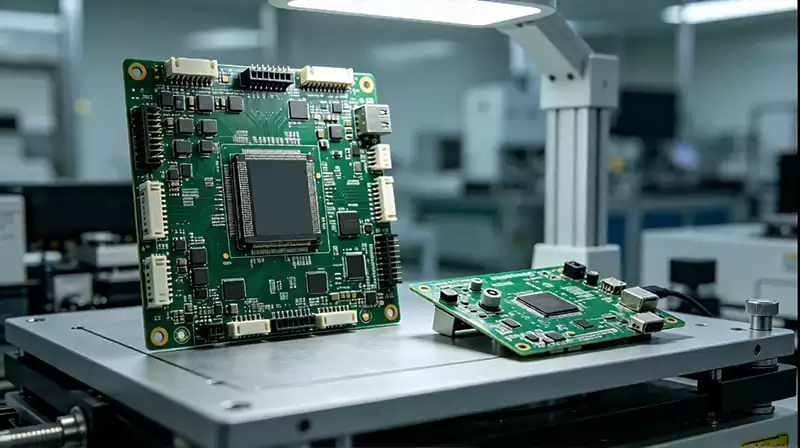
Why Motherboard Design Can Be More Demanding
Although motherboard and circuit board design follow the same basic PCB design principles, motherboard development often involves a particularly demanding combination of electrical requirements. The board must provide reliable power to processors and other high-performance devices while also maintaining the signal quality required by high-speed interfaces. Connections between processors, memory, storage devices, expansion interfaces, and other controllers may operate at high data rates, making PCB trace geometry, impedance, reference planes, return paths, via structures, and routing length important design considerations.
Power delivery is equally important because processors and other high-performance components can experience rapidly changing current demands. The PCB must distribute these power rails efficiently while limiting voltage drop, unwanted noise, and excessive heating. As a result, motherboard design typically involves signal integrity, power integrity, thermal management, component placement, mechanical constraints, and manufacturing considerations at the same time.
A simpler circuit board may not face the same combination of requirements. For example, a basic sensor PCB may contain a microcontroller, several passive components, sensors, and connectors, with relatively modest routing requirements. A power-control PCB may place greater emphasis on current capacity, isolation, thermal performance, and component spacing. A communication PCB may instead prioritize controlled impedance and electromagnetic compatibility. Each board is therefore optimized for its intended function. This is also why PCB manufacturers do not determine the manufacturing process simply by asking whether a board is a motherboard or another type of circuit board. The actual design requirements are much more important than the name of the board.
Motherboard vs Circuit Board in Manufacturing
The basic PCB manufacturing processes used for a motherboard are similar to those used for other multilayer circuit boards. Depending on the design, manufacturing can include inner-layer circuit formation, lamination, drilling, via formation, copper plating, outer-layer pattern formation, solder mask application, surface finishing, electrical testing, and final inspection. After the bare PCB has been fabricated, components are mounted through surface-mount technology, through-hole technology, or a combination of both. The finished assembly then becomes a PCBA rather than simply a bare PCB. What changes with a motherboard is generally the degree of process control required rather than the fundamental concept of PCB manufacturing.
Motherboards can contain fine-pitch components, BGA packages, high-density routing, large numbers of connections, multiple power domains, and high-speed interfaces. These characteristics can increase the importance of layer registration, via quality, impedance control, soldering accuracy, component placement, inspection, and electrical testing. A simple circuit board may have relatively relaxed manufacturing requirements, while a high-density motherboard may require much tighter process windows. However, the same principle applies in reverse: a specialized non-computer PCB can also require very demanding manufacturing if it carries high-frequency signals, high currents, fine-pitch components, or other challenging structures.
Motherboard and Circuit Board Applications
The difference becomes particularly easy to understand when looking at real electronic products. A desktop computer can contain a motherboard, graphics card PCB, storage PCB, power supply PCB, and other smaller circuit boards. The motherboard serves as the primary platform that connects major system components, while the other boards perform more specialized functions. A laptop may use a highly integrated motherboard that combines functions that would be separated across several boards in a larger desktop system. Embedded computing equipment can also use a main board that performs a similar role even though its physical size and architecture are very different from those of a desktop motherboard.
Outside computing systems, circuit boards can perform an even wider range of functions. Automotive electronic control units use PCBs to process signals and control vehicle systems. Industrial equipment can use circuit boards for motion control, power management, monitoring, and communication. Consumer products can contain separate PCBs for displays, power conversion, wireless communication, audio processing, or control functions. None of these boards needs to be a motherboard because their role within the system is different. They are circuit boards because they provide the physical electrical structure for their respective electronic circuits.
The Relationship Between Motherboard, PCB and PCBA
Another source of confusion is the difference between motherboard, PCB, and PCBA. PCB refers to the fabricated circuit board itself, before electronic components are mounted. PCBA refers to the assembled board after components have been placed and soldered. Motherboard describes the role of a particular board within a computer system. These terms therefore describe different aspects of the same hardware. A motherboard can be manufactured as a PCB and then populated with electronic components to become a motherboard assembly. In everyday usage, people normally refer to the complete assembled product as the motherboard, even though its physical foundation is a PCB and its assembled form is technically a PCBA.
This distinction is particularly useful when discussing manufacturing. A PCB manufacturer may produce the bare board according to Gerber and other design data, while an assembly process adds components according to the bill of materials and placement files. If the finished board is intended to serve as the main board of a computer, the resulting assembly is a motherboard. The PCB technology itself does not change simply because the board is called a motherboard; rather, the board’s design and component configuration determine its electrical and mechanical capabilities.
Which Is Better a Motherboard or a Circuit Board?
There is no meaningful answer to which one is better because motherboard and circuit board are not competing alternatives. A motherboard is one category of circuit board defined by its role in a computing system. Asking whether a motherboard is better than a circuit board is similar to asking whether a main engine component is better than a mechanical component in general. The two terms describe different levels of classification. What matters when evaluating a PCB is whether its design is appropriate for the intended application, including its electrical performance, thermal characteristics, mechanical dimensions, reliability, manufacturing requirements, and cost.
A motherboard normally requires extensive integration because it must connect many parts of a computer, but a specialized circuit board may have equally demanding or even more specialized requirements. For example, a high-frequency RF board may require extremely controlled electrical characteristics, while a high-current power board may require heavy copper and sophisticated thermal management. Neither is a motherboard, but both can require advanced PCB engineering and manufacturing.
The difference between motherboard vs circuit board is mainly a difference in function and scope. A circuit board is a broad term for a PCB used to provide electrical connections and mechanical support for electronic components, while a motherboard is a specific circuit board that serves as the main electrical platform of a computer or other complex computing system. The motherboard connects major components such as processors, memory, storage, expansion devices, and power systems, while other circuit boards are usually designed to perform more specialized functions.
The simplest way to remember the relationship is that a motherboard is a type of circuit board, but not every circuit board is a motherboard. Both use the same fundamental PCB technologies, including copper traces, insulating layers, vias, pads, and soldered components, but their designs can differ significantly depending on their intended applications. Motherboards often require dense multilayer structures, high-speed signal routing, controlled impedance, complex power delivery, and careful thermal management, while other circuit boards can be optimized for completely different requirements. Understanding this distinction makes it easier to discuss PCB design, manufacturing, assembly, and electronic system architecture accurately.