With 5G moving towards millimetre-wave frequencies and 6G targeting the terahertz range, high-frequency signals place unprecedented demands on PCB substrates to achieve low loss. Low dielectric polymer materials, with their extremely low dielectric constant (Dk) and dielectric loss factor (Df), have become the key to overcoming signal attenuation and ensuring stable, high-speed transmission.
The core performance indicators of low-dielectric polymer materials lie in the dielectric constant (Dk) and the dielectric loss tangent (Df): the lower the Dk, the weaker the material’s ability to store electric field energy, and the faster the signal transmission; the lower the Df, the less electric field energy is lost as heat, and the higher the stability of signal transmission.
With regard to 5G/6G communications, the shift towards higher frequencies is an inevitable trend. As high-frequency signals are extremely sensitive to their transmission environment, low-dielectric polymer materials have become indispensable, a fact that is particularly evident in PCB design and manufacturing.
The mainstream frequency band for 5G communications has already risen to the 28 GHz millimetre-wave range, whilst 6G is set to move into the terahertz band spanning 100 GHz to 1 THz. This sharp rise in frequency poses severe challenges to PCB signal transmission, and low-dielectric-constant polymer materials are the key solution to these challenges. Traditional FR-4 substrates can still cope with low-frequency scenarios below 1 GHz (Dk ≈ 4.4, Df ≈ 0.02), but their shortcomings become fully apparent at the high frequencies of 5G.
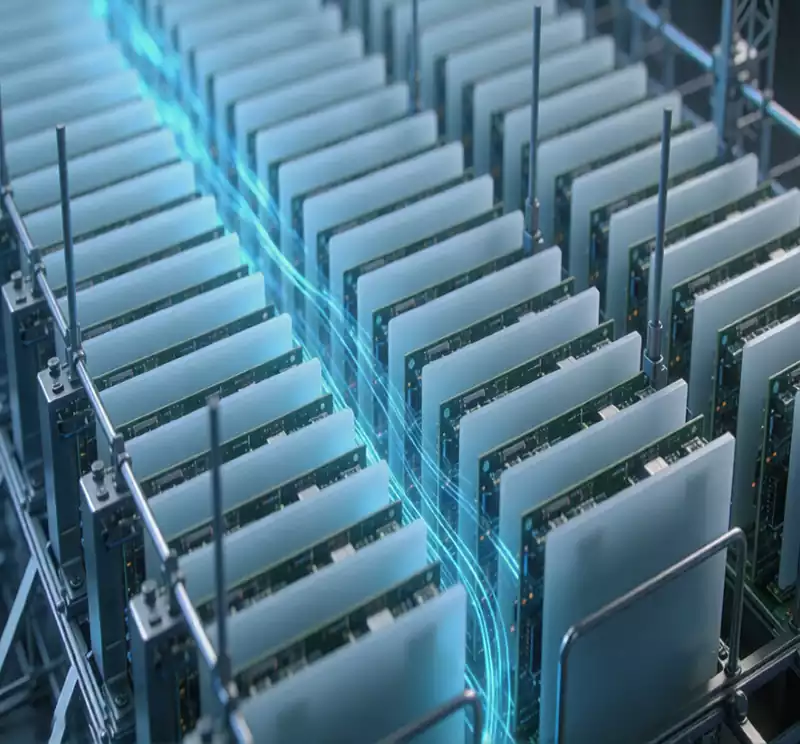
One of the primary sources of high frequency signal transmission loss is dielectric loss, which is directly proportional to the material’s Df value. In the PCB boards of 5G base stations and terminal devices, the use of traditional high Df substrates results in a significant conversion of signal energy into heat. This not only causes signal attenuation and reduced data rates, but also shortens the PCB’s lifespan and may even lead to failures due to overheating.
In contrast, low-dielectric polymer materials, such as polytetrafluoroethylene (PTFE) and liquid crystal polymers (LCP), maintain a stable Dk between 2.0 and 3.0, with a Df below 0.005. These materials can reduce high frequency dielectric loss by over 80%, enabling transmission with near-zero attenuation—a core requirement for 5G’s gigabit speeds and low latency.
Entering the 6G terahertz era brings even more demanding requirements. With terahertz signals having wavelengths of just a few hundred micrometres, the precision required for PCB impedance control is ‘extreme’: whilst 5G requires impedance tolerances to be controlled within ±5Ω, 6G compresses this to within ±2Ω, with some scenarios even demanding ±1Ω.
Impedance stability is highly dependent on the stability of the substrate’s Dk value. Low-dielectric polymer materials exhibit a Dk fluctuation of no more than 0.03 across the ultra-wide 10GHz–500GHz frequency band, effectively preventing abrupt impedance changes, reducing signal reflection and return loss, and ensuring the stable transmission of terahertz signals—a feat beyond the reach of traditional materials.
For the PCB manufacturing industry, the application of low-dielectric polymer materials is not only an inevitable choice to meet 5G/6G requirements, but also a crucial opportunity to propel the sector from traditional manufacturing towards high-end, cutting-edge technology. With the large-scale deployment of 5G base stations and the accelerated R&D of 6G technology, demand in the high frequency PCB market continues to rise; the quality and performance of low-dielectric materials directly determine the core competitiveness of PCB manufacturers.
PCBs for 5G/6G communication equipment must not only offer high-frequency, low-loss performance but also meet requirements for miniaturisation, lightweight construction and high reliability. Thanks to their diverse properties, low-dielectric polymer materials are perfectly suited to these demands, serving as the ‘core support’ for PCBs. Different materials play irreplaceable roles in different parts of the PCB board.
Polytetrafluoroethylene (PTFE) is currently one of the most widely used materials in high frequency PCBs. With a Dk as low as 2.0–2.1 and a Df of just 0.0009–0.0013, it also offers high-temperature resistance (>260°C), chemical resistance and low moisture absorption, making it suitable for extreme environments such as 5G base stations and satellite communications. In 5G millimetre wave antenna PCBs, PTFE effectively reduces signal attenuation and enhances antenna radiation efficiency; its excellent heat resistance enables it to withstand the high temperatures of long term base station operation, thereby extending the PCB’s service life.
Liquid crystal polymers (LCP) are the core materials for PCB boards in 5G terminals and 6G terahertz equipment. With a dielectric constant (Dk) ranging from 2.5 to 3.0 and a dissipation factor (Df) below 0.002, it features extremely low moisture absorption (<0.02%), high mechanical strength and good formability. As terminals such as 5G mobile phones evolve towards thinner, lighter and more integrated designs, LCP enables finer circuit etching, making it suitable for micro-scale PCB manufacturing; its low moisture absorption prevents moisture-induced increases in Dk, ensuring signal stability.
In 6G terahertz phased array antenna PCBs, LCP further reduces dielectric loss through the oriented arrangement of molecular chains. It has been applied in high-end equipment such as Starlink V3 satellites, enabling 100 Gbps high-speed interconnections between satellites.
Furthermore, fluorinated polyimide (F-PI) reduces the Dk of traditional polyimide from 3.5 to 2.4–2.6 through the introduction of fluorine groups, whilst retaining high-temperature resistance (>300°C), making it suitable for high frequency PCBs in high-temperature environments; Polyphenylene oxide (PPO) has a Dk ranging from 2.6 to 2.8 and is often blended with other materials for use in 5G device housings and PCB substrates, offering a balance of low loss and cost-effectiveness.
The application of these materials not only resolves transmission challenges in 5G/6G PCB boards but also drives the upgrading of manufacturing processes. To fully leverage the advantages of low-dielectric materials, companies must adopt precision processes such as laser direct imaging (LDI) and plasma etching to control the alignment accuracy between circuits and layers. This, in turn, compels the PCB manufacturing industry to transition towards greater precision and high end production,thereby enhancing overall technical standards.
From base stations to end devices, low dielectric polymer materials are driving the refinement of high frequency PCB manufacturing. Embracing this materials revolution means securing a technological foothold in the communications hardware sector of the 6G era.