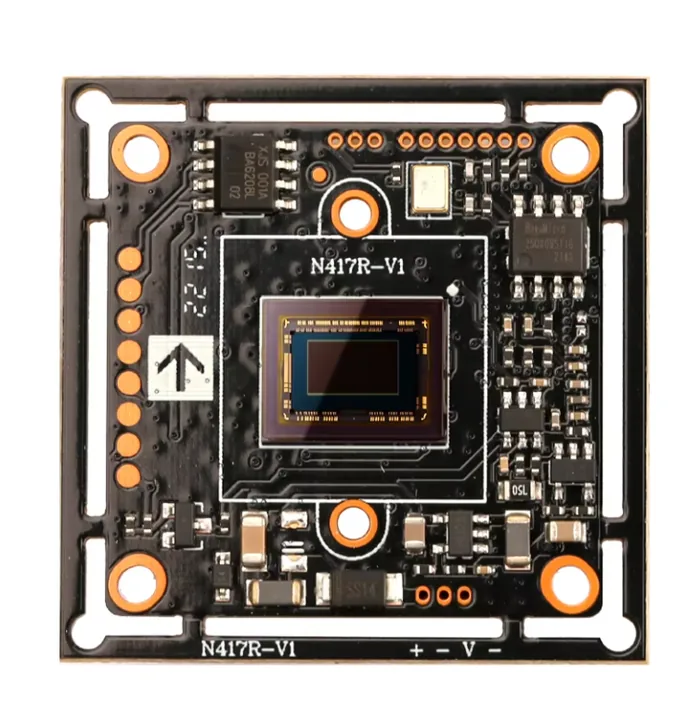
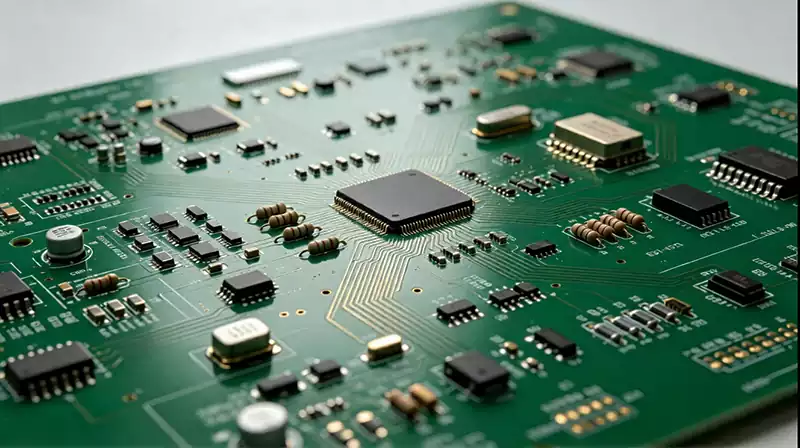
An electronics board is a fundamental component used in electronic devices to support, connect, and control electronic circuits. In most modern products, an electronics board refers to a printed circuit board (PCB), which uses conductive copper traces formed on an insulating substrate to create electrical connections between components such as integrated circuits, resistors, capacitors, connectors, and sensors. The board provides both mechanical support and electrical pathways, replacing traditional point-to-point wiring methods and enabling compact, reliable, and mass-producible electronic systems.
Electronics boards are found in almost every electronic product, including computers, smartphones, automotive systems, industrial equipment, medical devices, communication systems, and consumer electronics. Different applications require different board structures, materials, layer counts, and manufacturing technologies depending on electrical performance, size limitations, thermal requirements, and reliability standards.
How Does an Electronics Board Work?
An electronics board works by controlling the flow of electrical signals and power between different components. Each component performs a specific function, while the copper traces provide the connection path required for communication and operation.
For example, a microcontroller on an electronics board may receive input signals from sensors, process the data according to programmed instructions, and send output signals to control motors, displays, or communication modules. The PCB itself does not perform the processing; instead, it provides the electrical infrastructure that allows individual components to operate together as a complete system.
The design of the copper routing directly affects board performance. Simple low-speed circuits may only require basic trace connections, while high-speed electronics require careful control of impedance, signal integrity, power distribution, and electromagnetic interference (EMI). Advanced electronics boards used in servers, communication equipment, and automotive systems often require multilayer structures and controlled impedance routing to maintain stable performance.
Main Components of an Electronics Board
An electronics board contains several key elements that work together to create a functional electronic system.
The substrate is the foundation of the board. It provides mechanical support and separates conductive layers electrically. FR-4 remains one of the most common materials for rigid electronics boards, while specialized applications may use other materials depending on thermal and frequency requirements.
The copper traces are the electrical pathways that connect components. Their width, spacing, thickness, and routing pattern influence current capacity, voltage performance, signal transmission quality, and heat generation.
The solder mask is a protective insulating coating applied over copper traces. It helps prevent oxidation, protects the circuit surface, and reduces the risk of solder bridges during assembly.
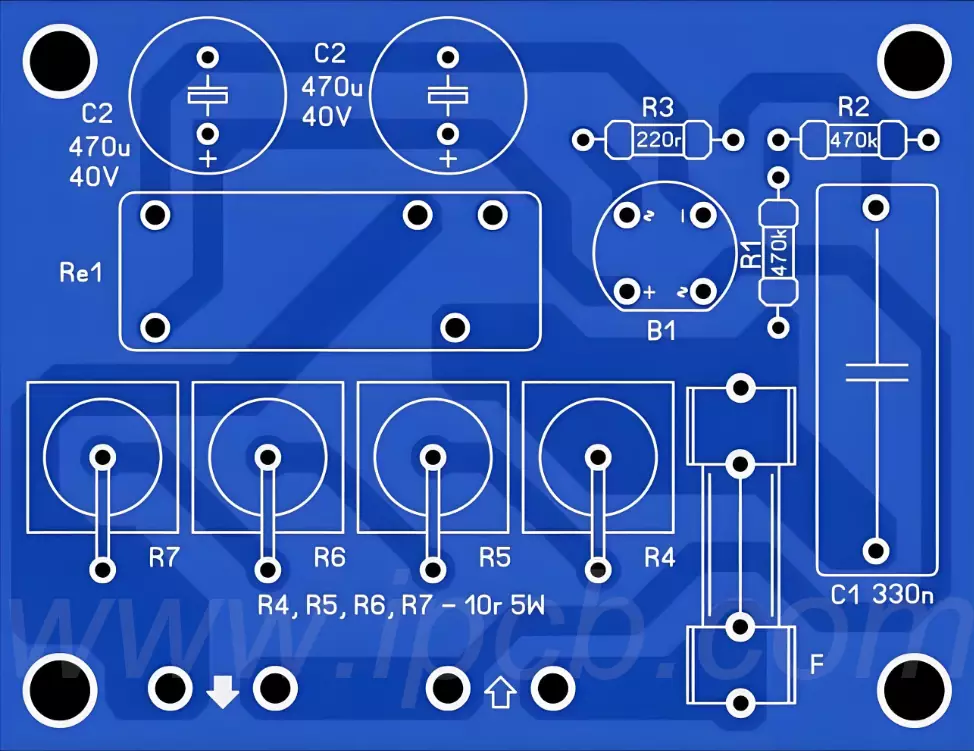
The silkscreen layer provides identification information such as component reference numbers, polarity markings, and assembly instructions. This information helps engineers during manufacturing, inspection, and maintenance.
The electronic components mounted on the board include microprocessors, memory devices, sensors, power management ICs, resistors, capacitors, connectors, and other devices required by the application.
Types of Electronics Boards
Electronics boards can be classified according to structure, application, and manufacturing technology.
A single-sided electronics board contains copper traces on only one side of the substrate. It is mainly used for simple electronic products where circuit complexity is limited.
A double-sided electronics board contains copper layers on both sides of the substrate. Through-hole vias allow connections between the two sides, providing more routing space compared with single-sided designs.
A multilayer electronics board contains multiple copper layers separated by insulating materials. These boards support higher circuit density and are widely used in computers, industrial equipment, automotive electronics, and communication systems.
A flexible electronics board uses flexible materials that allow bending or folding. These boards are commonly used where installation space is limited or where mechanical movement exists.
A rigid-flex electronics board combines rigid and flexible sections, allowing designers to integrate mechanical stability with flexible connections in compact electronic assemblies.
Electronics Board Manufacturing Process
The manufacturing process of an electronics board involves multiple precision steps to create the electrical structure and prepare the board for component assembly.
The process begins with PCB material preparation. Copper-clad laminates are selected according to the required electrical, mechanical, and thermal specifications. The circuit pattern is then transferred onto the copper surface through imaging and etching processes, removing unwanted copper while preserving the designed traces.
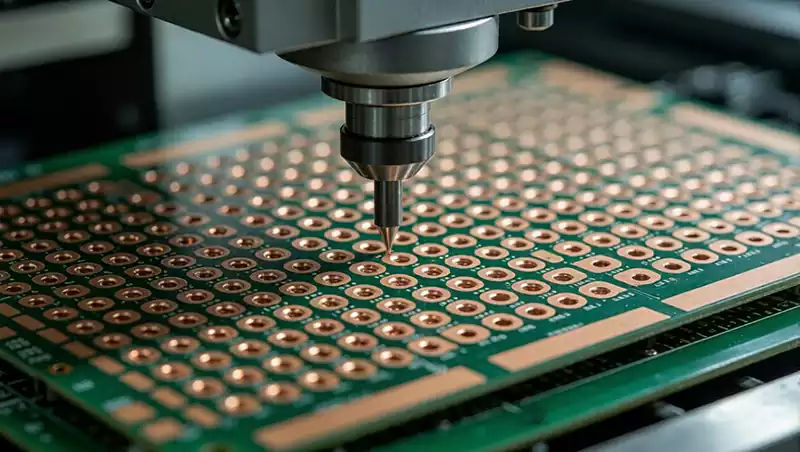
For multilayer electronics boards, multiple inner layers are fabricated separately and then combined through lamination. Drilling processes create holes for vias and component mounting, while plating adds conductive copper inside the holes to establish electrical connections between layers.
After the circuit structure is completed, the board receives solder mask and surface finishing treatments. Common surface finishes protect exposed copper pads and improve solderability during assembly.
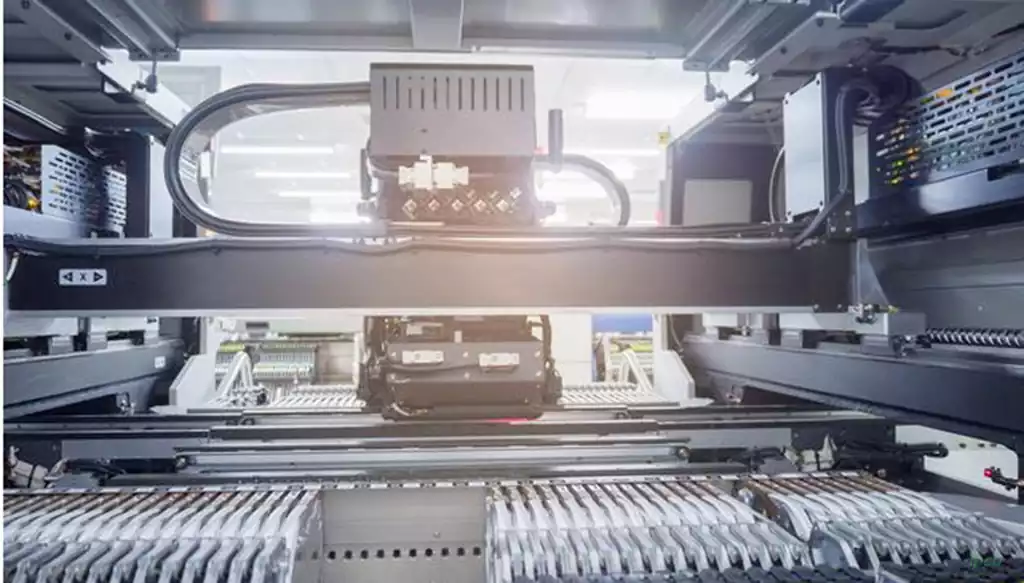
The finished bare board then moves to component assembly, where electronic components are mounted using SMT or through-hole processes. The completed assembly is usually called a PCBA (Printed Circuit Board Assembly), which represents the electronics board with components installed.
Electronics Board Applications
Electronics boards are used across almost every modern technology sector.
In consumer electronics, electronics boards control functions in smartphones, laptops, tablets, televisions, cameras, and smart home devices. These products typically require compact designs, high component density, and reliable signal transmission.
In automotive electronics, boards are used in engine control systems, advanced driver assistance systems (ADAS), battery management systems, infotainment units, and sensor modules. Automotive applications often require high reliability because boards must operate under vibration, temperature changes, and long service periods.
In industrial equipment, electronics boards manage automation systems, machine controllers, power supplies, and monitoring equipment. Industrial boards often prioritize durability, long-term stability, and resistance to harsh environments.
In medical electronics, circuit boards support diagnostic equipment, monitoring devices, imaging systems, and portable medical instruments. These applications require strict quality control and reliability because electronic failures can directly affect equipment performance.
In communication systems, electronics boards enable signal processing, data transmission, and network connectivity. High-frequency designs often require advanced materials, precise impedance control, and optimized signal routing.
Electronics Board Design Considerations
Designing an electronics board requires balancing electrical performance, mechanical requirements, manufacturing capability, and product reliability.
Component placement is one of the first considerations. Engineers must arrange components according to signal paths, thermal requirements, assembly processes, and mechanical constraints. High-speed components should be positioned carefully to reduce signal delays and electromagnetic interference.
Power distribution is another important factor. Modern electronics boards often include multiple voltage rails, high-current paths, and power management circuits. Proper copper thickness, trace width, grounding strategy, and thermal design are necessary to maintain stable operation.
Signal integrity becomes increasingly important as operating frequencies increase. High-speed signals require controlled impedance routing, appropriate layer stack-up design, and careful management of return current paths. Poor PCB layout can lead to signal loss, noise problems, and communication failures.
Manufacturing considerations should also be included during the design stage. Design for Manufacturing (DFM) principles help ensure that the board can be produced consistently with acceptable yield and reliability.
Electronics Board vs PCB
The terms electronics board and PCB are often used interchangeably, but there is a slight difference in meaning.
A PCB specifically refers to a printed circuit board manufactured with copper conductive patterns on an insulating substrate. An electronics board is a broader term that may refer to any board used in an electronic system, including PCBs and other circuit platforms.
In practical engineering and manufacturing environments, most electronics boards today are PCB-based because PCBs provide better reliability, repeatability, and scalability compared with traditional wiring methods.
Electronics Board vs PCBA
An electronics board and a PCBA represent different stages of electronic product manufacturing.
A PCB or electronics board before assembly is a bare board containing the circuit structure but no electronic components.
A PCBA is the completed assembly after components have been mounted and soldered onto the PCB. It includes the programmed chips, connectors, sensors, and other electronic parts required for operation.
For example, a bare PCB cannot perform a control function by itself. After a microcontroller, memory, power circuits, and other components are installed and programmed, it becomes a functional electronic assembly.
Future Development of Electronics Boards
Electronics boards continue to evolve as electronic products become smaller, faster, and more intelligent. Higher-density designs, advanced packaging technologies, flexible structures, and improved thermal management are driving new PCB development.
Applications such as artificial intelligence hardware, autonomous vehicles, 5G communication equipment, wearable devices, and industrial automation require electronics boards with higher signal speeds, greater integration, and improved reliability.
Future electronics boards will increasingly focus on low-loss materials, advanced interconnection technologies, miniaturization, and intelligent manufacturing processes to support increasingly complex electronic systems.
An electronics board is the foundation that connects electronic components and enables modern devices to function. By combining insulating materials, copper circuits, mounting structures, and electronic components, electronics boards provide both electrical connectivity and mechanical support.
Although simple boards may only contain basic circuits, advanced electronics boards can include multiple layers, high-speed signal routing, thermal management structures, and complex embedded systems. Their design and manufacturing quality directly influence the performance, reliability, and lifespan of electronic products.
From consumer devices to industrial systems and advanced communication equipment, electronics boards remain a critical technology behind modern electronics.