Low Volume Circuit Board Assembly provides a practical solution for companies that need to build, test, and improve electronic products before moving into large-scale manufacturing. During product development, engineers often need real circuit boards to verify designs, evaluate performance, and identify manufacturing challenges that cannot always be discovered through simulations or design reviews alone.
Unlike high-volume production, which focuses on efficiency and cost optimization, low volume PCB assembly offers greater flexibility during the early stages of product development. It allows companies to manufacture a limited number of assembled boards, collect valuable testing data, and make necessary improvements before committing to larger production quantities.
For many electronic products, this manufacturing stage creates a connection between prototype development and mass production. It helps transform an initial PCB design into a more reliable and manufacturable product while reducing the risks associated with large-scale production.
What Is Low Volume Circuit Board Assembly?
Low volume circuit board assembly refers to the process of manufacturing a limited quantity of assembled printed circuit boards for product testing, design verification, pilot production, or specialized applications.
The purpose of this process is not simply to produce fewer circuit boards. Instead, it provides a flexible manufacturing approach for products that are still being developed, optimized, or introduced into the market.
In traditional product development, engineers may create a prototype PCB to test basic functions. However, prototype boards alone may not fully represent the challenges of actual manufacturing. A low volume production run allows the design to be assembled using real manufacturing processes, components, and inspection methods.
This makes it easier to evaluate product reliability, assembly quality, and production readiness before increasing manufacturing volume.
Low volume PCB assembly is commonly used for electronic products such as engineering prototypes, industrial control systems, medical devices, testing equipment, communication products, and customized electronic solutions. These applications often require smaller production quantities because the products may involve specialized designs, frequent updates, or limited market demand.
Why Companies Choose Low Volume PCB Assembly
Developing an electronic product involves many uncertainties. A PCB design that appears correct during the design phase may still experience unexpected problems after physical assembly and testing.
Low volume circuit board assembly allows engineers to identify these issues earlier while keeping production risks under control.
One of the main advantages is design validation. A physical circuit board provides information that cannot always be obtained from computer simulations or schematic reviews. During testing, engineers can evaluate whether the selected components perform correctly, whether the PCB layout supports stable operation, and whether the power distribution and signal performance meet the expected requirements.
Thermal performance and mechanical integration can also be evaluated during this stage. For example, a component may generate more heat than expected, or the assembled PCB may not fit correctly within the final product enclosure. Discovering these problems during a smaller production run makes design improvements easier and less expensive.
Reducing Manufacturing Risks Before Mass Production
Moving directly from PCB design to large-scale manufacturing can create significant risks. If a design problem is discovered after thousands of boards have already been produced, the cost of correction can become much higher.
Low volume PCB assembly provides an opportunity to verify the complete manufacturing process before production volume increases.
During this stage, companies can confirm whether the bill of materials is accurate, whether components can be assembled correctly, whether inspection procedures are effective, and whether the PCB design is suitable for reliable manufacturing.
This approach helps reduce unexpected issues during later production stages because potential problems have already been identified and addressed.
The Low Volume PCB Assembly Process
Although the production quantity is smaller, the basic PCB assembly process follows many of the same principles used in larger manufacturing environments. The difference is that low volume production usually requires more flexibility because product designs may still be refined based on testing results.
PCB Design Review and DFM Analysis
Before assembly begins, engineers typically perform a detailed design review and Design for Manufacturing (DFM) analysis. This step evaluates whether the PCB design can be assembled efficiently and reliably.
The review process usually focuses on important manufacturing factors, including component spacing, PCB layer structure, component footprints, soldering requirements, and assembly accessibility.
Proper spacing between components helps prevent assembly difficulties, while suitable footprints ensure that components can be placed and soldered correctly. The PCB layer structure must also support reliable signal transmission, power distribution, and manufacturing requirements.
By identifying potential issues before production begins, DFM analysis helps improve assembly efficiency and reduces the possibility of redesign work later.
Component Preparation and BOM Management
A complete and accurate bill of materials is essential for successful PCB assembly. The BOM provides detailed information about every component required for manufacturing, including part numbers, manufacturer information, package types, required quantities, and approved alternatives.
For low volume production, component management can be particularly important because some electronic parts may have limited availability or longer lead times.
Accurate BOM preparation helps ensure that the correct components are available before assembly starts. It also reduces the risk of production delays caused by incorrect parts, missing information, or unsuitable replacements.
SMT and Through Hole Assembly
Modern electronic products typically rely on Surface Mount Technology (SMT) because it supports compact designs and high component density.
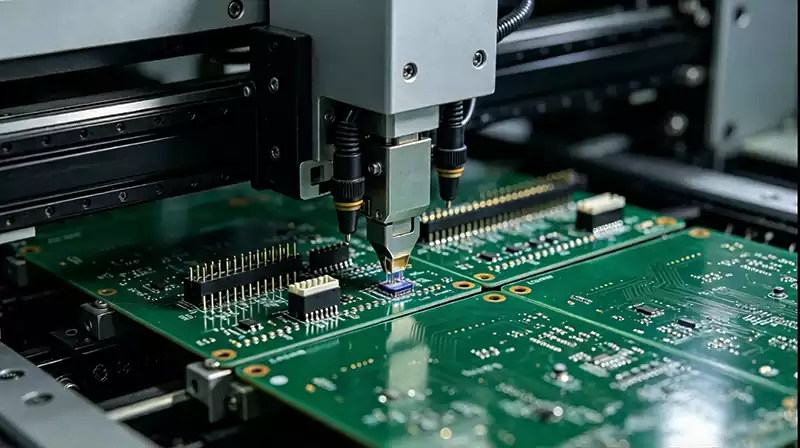
During SMT assembly, automated placement equipment installs components directly onto the PCB surface before soldering. This method allows manufacturers to assemble complex circuit boards efficiently while maintaining consistent quality.
Through Hole Technology (THT) remains important for applications that require stronger mechanical connections or specific component characteristics. Some circuit boards combine SMT and through hole assembly to achieve the required balance between electrical performance, mechanical strength, and manufacturing requirements.
The choice between different assembly technologies depends on the product design, component selection, and intended application.
PCB Inspection and Testing
Inspection and testing are important parts of the low volume circuit board assembly process because early production units are often used to evaluate product readiness.
Different testing methods may be applied depending on the complexity of the PCB design.
Automated Optical Inspection (AOI) uses imaging technology to detect visible assembly issues, including incorrect component placement, missing components, and soldering defects.
For components with hidden solder connections, such as certain advanced packages, X-ray inspection can provide additional visibility into internal solder joints that cannot be checked through traditional visual inspection.
Electrical testing helps verify circuit connections and identify issues such as open circuits or unexpected shorts. Functional testing goes further by checking whether the completed PCB performs according to its intended purpose.
Combining these testing methods provides a more complete understanding of product quality and manufacturing performance.
Low Volume PCB Assembly Compared With Mass Production
Low volume PCB assembly and mass production serve different purposes during the product development cycle.
Low volume production focuses on flexibility, testing, and design improvement. It is commonly used when a product is still being evaluated or when production demand is uncertain.
Mass production focuses on efficiency, consistency, and cost optimization after the product design and manufacturing process have become stable.
| Feature | Low Volume PCB Assembly | Mass Production |
|---|---|---|
| Production Purpose | Design validation and early production | Large-scale manufacturing |
| Production Quantity | Smaller batches | Large quantities |
| Design Changes | Easier to implement | More complex and costly |
| Manufacturing Flexibility | Higher | Lower |
| Typical Usage Stage | Prototype and product introduction | Mature product manufacturing |
Selecting the right production method depends on product requirements, market demand, design maturity, and manufacturing goals.
Applications of Low Volume Circuit Board Assembly
Low volume circuit board assembly is widely used in industries where product flexibility and design verification are important.
In electronics development, companies often use small batch production to create functional prototypes and evaluate product performance before commercial release. This allows engineering teams to improve hardware designs based on real testing results.
Industrial equipment manufacturers frequently require customized circuit boards with specific functions and limited production quantities. In these situations, low volume assembly provides a practical manufacturing approach without requiring large production commitments.
Medical equipment, testing instruments, and specialized electronic systems also benefit from low volume production because these products often require careful validation, design adjustments, and reliability testing before wider deployment.
Preparing for a Low Volume PCB Assembly Project
Successful PCB assembly depends on providing complete and accurate manufacturing information.
The required documentation usually includes Gerber files, bill of materials, pick-and-place files, and assembly drawings. These files provide the information needed for PCB fabrication, component placement, and assembly verification.
Clear documentation helps manufacturers understand the design requirements and reduces the possibility of production errors caused by missing or inaccurate information.
A well-prepared project also allows engineers to identify potential manufacturing challenges earlier and improve communication throughout the assembly process.
Common Challenges in Low Volume PCB Assembly
Although low volume production offers many advantages, it also presents several challenges.
One common challenge is balancing flexibility and cost. Smaller production quantities generally have higher per-unit costs because engineering preparation, setup time, and testing resources are distributed across fewer boards.
Component availability is another important consideration. Some electronic components may experience supply limitations, making early planning and alternative component evaluation necessary.
Maintaining quality is equally important. Even small production runs require proper inspection and testing because these boards often provide the foundation for future manufacturing decisions.
How Low Volume Assembly Helps Prepare for Future Production
Low volume PCB assembly is more than a method for producing a small quantity of circuit boards. It is also a valuable learning stage that helps companies improve their future manufacturing process.
Through small production runs, engineers can collect practical information about PCB performance, assembly requirements, testing procedures, and product reliability.
This experience helps companies refine designs, improve documentation, and create more predictable manufacturing processes before increasing production volume.
A carefully managed low volume production stage can make the transition from prototype development to full manufacturing smoother and more efficient.
Low Volume Circuit Board Assembly plays an important role in modern electronic product development by providing a flexible way to validate designs, improve manufacturing processes, and reduce production risks before large-scale manufacturing begins. It allows companies to evaluate real hardware performance, identify potential issues, and optimize products through practical testing.