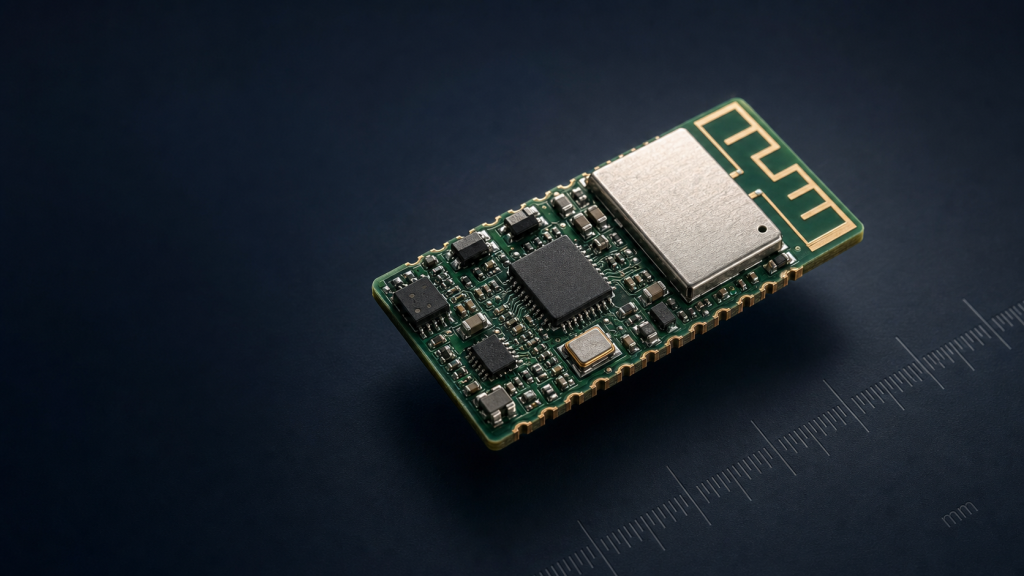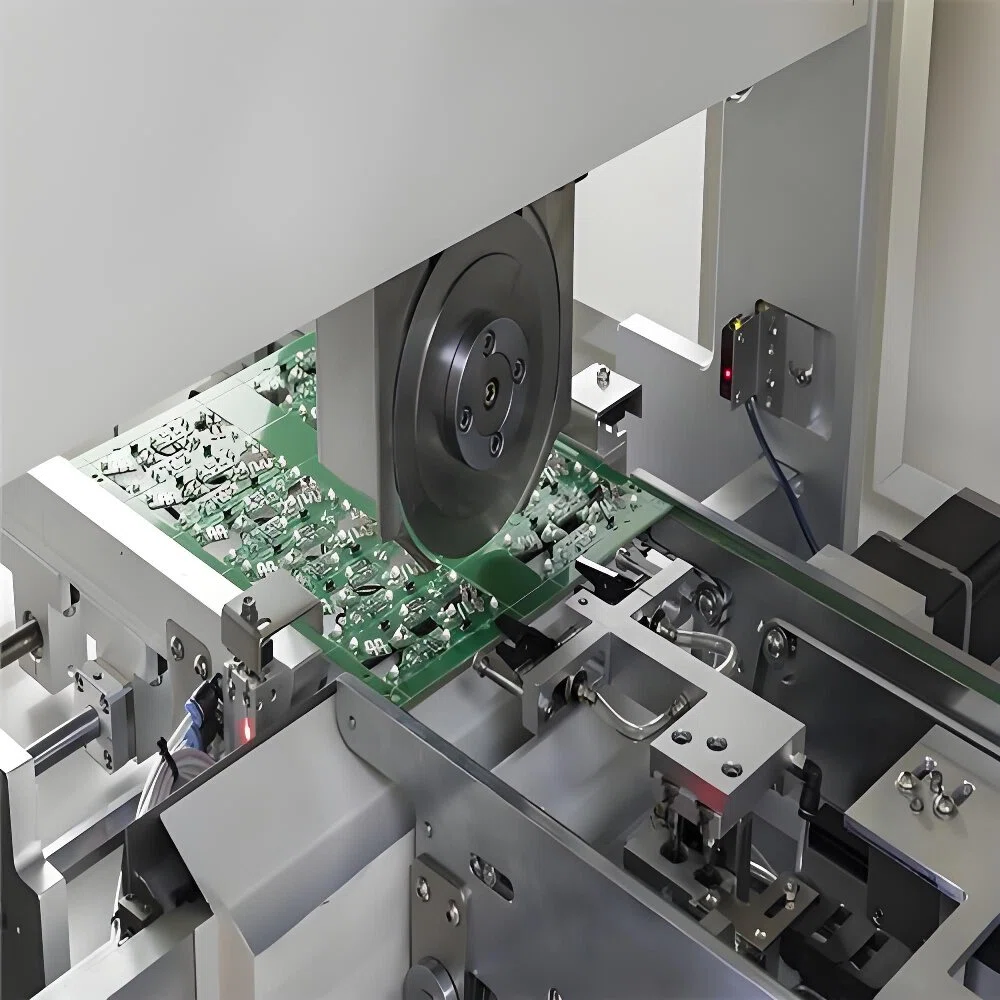
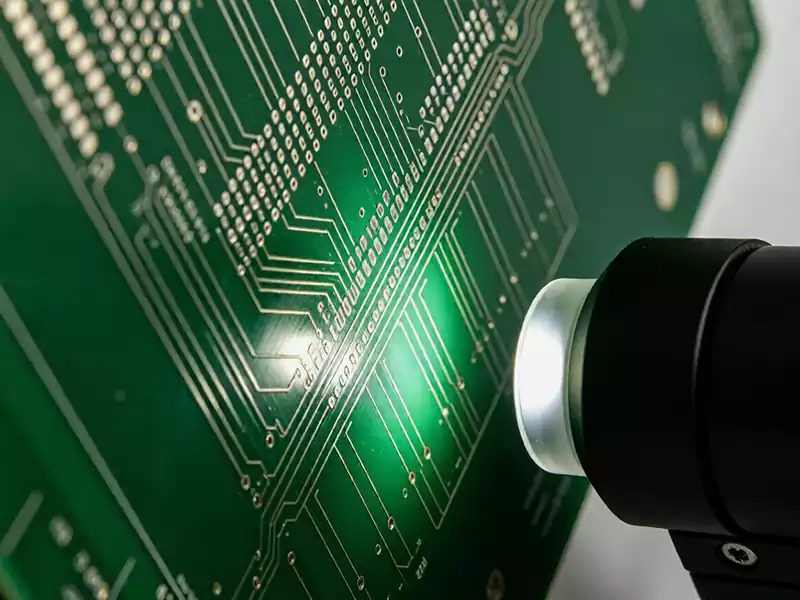
Automated Optical Inspection (AOI) is a core quality inspection technology in the PCB manufacturing sector. It relies on machine vision and image recognition technologies, combining lighting systems, high-definition camera systems and image processing and recognition systems. By capturing images of the PCB’s surface and internal layers via high-definition cameras, and then analysing and comparing them using algorithms, it automatically identifies and marks various defects, enabling batch inspection to be completed without manual intervention.
Compared to traditional inspection methods, the core advantage of AOI lies in its balance of efficiency and precision: inspection speeds can reach several thousand boards per hour, with defect identification accuracy at the micrometre level. It also supports the real-time storage and traceability of inspection data, providing data support for process optimisation and driving the transformation of PCB manufacturing towards ‘end-to-end intelligent inspection’.
Typical Applications of AOI in PCB Manufacturing
1.Inspection of Internal Circuit Patterns
Internal circuit patterns serve as the core conductive pathways of a PCB, and the precision of their line widths and spacing directly affects electrical conductivity. As these patterns are concealed within the substrate, traditional inspection methods struggle to detect defects. AOI equipment utilises multi-spectral penetrating imaging technology to penetrate the substrate and clearly capture minute defects in internal circuits, such as breaks, short circuits and line width deviations. It also identifies hidden issues within the substrate, such as bubbles and delamination, thereby preventing internal defects from causing greater losses during subsequent lamination processes and reducing production costs.
2.Inspection of Outer Layer Circuits and Solder Mask
Outer layer circuits are exposed to the air and are prone to defects such as circuit gaps, pad detachment and misalignment; the solder mask is susceptible to issues such as printing omissions, ink bleed and scratches. These defects can compromise the PCB’s insulation performance and aesthetic quality. Through high-definition imaging and intelligent algorithms, AOI can rapidly identify the aforementioned defects and distinguish between ‘genuine defects’ and interfering factors such as ‘surface stains or reflections’, thereby reducing false positive rates and ensuring that the PCB surface quality meets industry standards. This is particularly suitable for sectors with high aesthetic requirements, such as consumer electronics and automotive electronics.
3.Blind and Buried Via Inspection
As PCBs evolve towards higher density and miniaturisation, the application of blind and buried via technology is becoming increasingly widespread. Due to their small diameter and dense distribution, traditional inspection methods struggle to accurately identify defects such as via diameter deviations, rough via walls and blockages. When combined with a 3D structured light module, AOI can capture the three-dimensional contours of blind and buried vias, accurately measuring key parameters such as diameter and depth, whilst simultaneously identifying defects in the soldering process, including cold solder joints, solder bridges and insufficient solder. This meets the inspection requirements for complex multi-layer PCBs, HDI PCBs and other high-end products, helping enterprises overcome bottlenecks in high-end manufacturing inspection.
The Value of AOI Technology for PCB Manufacturers
Cost Control: AOI technology can significantly reduce labour requirements, cutting the number of inspection staff on a single PCB production line by over 80%, whilst also reducing rework and scrap losses caused by defects. Actual test data shows that following the introduction of an optimised AOI inspection system, the PCB rework rate fell from 12% to below 1.5%, whilst the scrap rate dropped to below 0.3%. This results in annual cost savings of hundreds of thousands of yuan per production line, significantly enhancing profitability.
Quality Improvement: AOI enables precise defect identification and end-to-end process control, with core defect detection accuracy reaching over 99.95%. This effectively prevents non-conforming products from entering the market, thereby enhancing the company’s brand reputation. For high-end PCB manufacturers, the optimised application of AOI can meet the stringent quality requirements of sectors such as consumer electronics, automotive electronics and aerospace, helping enterprises break through barriers in high-end markets and increase product value.
Optimisation Directions and Practices for AOI Technology
Although AOI offers significant advantages in PCB inspection, its practical application still faces challenges such as insufficient adaptability to specific scenarios, room for improvement in algorithm recognition accuracy, and a lack of close coordination with production processes. To address these industry pain points, optimisation can be pursued across three dimensions: hardware upgrades, algorithm iteration, and process coordination.
1.Hardware Upgrades
For fine-line PCBs, the system is equipped with high-NA objectives and a 12K-pixel high-speed line-scan camera, raising the inspection resolution to 1μm per pixel, enabling precise identification of line width deviations as small as 0.01mm.
For multi-layer PCBs, a dual-band composite illumination design is employed to enhance the contrast of inner-layer circuits, thereby resolving the challenge of identifying latent defects.
The integration of a vacuum-suction platform minimises vibration interference during inspection, ensuring clear imaging.
The equipment’s anti-interference design has been optimised to adapt to the environmental conditions of PCB production workshops, such as electromagnetic interference and temperature fluctuations, thereby ensuring the stability of inspection data.
2.Algorithm Iteration
Traditional AOI algorithms rely on fixed template matching, making it difficult to cover various complex defects and leaving them susceptible to process fluctuations. The optimised solution, based on deep learning, is trained using millions of PCB defect samples to automatically extract multi-dimensional features of different defects. It can accurately identify defects in traces, pads and vias without the need for manually pre-set rules, and can dynamically adjust recognition thresholds to adapt to products of different models and processes.
By incorporating an attention mechanism, higher recognition weights are assigned to critical inspection areas, whilst minor process fluctuations in non-critical areas are downplayed. This reduces the false positive rate from the industry average of 3%–5% to below 0.05%, significantly reducing the workload associated with manual re-inspection.
3.Process Coordination
AOI inspection is integrated into key stages of PCB manufacturing—including inner layer processing, lamination, solder mask application and soldering—with tailored inspection standards established to ensure end-to-end quality control: inner layer inspection focuses on identifying latent defects; post-lamination inspection verifies interlayer alignment accuracy; post-solder mask inspection assesses surface quality; and post-soldering inspection detects soldering defects. This ensures that defects at every stage are promptly identified and addressed, preventing them from propagating to subsequent stages.
Simultaneously, real-time data exchange between AOI inspection data and production process data is achieved. By analysing defect root causes through data review, process parameters such as etching, drilling and soldering can be dynamically adjusted, thereby reducing defect rates at source and improving product yield.
AOI technology is evolving from a mere inspection tool into a core data node for PCB smart manufacturing. Through the continuous collaborative optimisation of hardware, algorithms and processes, enterprises can not only achieve precise defect detection but also feed back into process improvements, thereby truly driving a dual leap in both quality and efficiency.