In the PCB manufacturing process, although pcb inks are classified as auxiliary materials, they play an indispensable role in PCB circuit boards. Different types of ink not only determine the feasibility and yield of the production process, but also directly affect the electrical performance of the PCB.
Main Types of PCB Inks
1.Conductive Ink
Conductive ink is a special functional ink that becomes electrically conductive after curing or drying; it is one of the core materials in modern printed electronics technology. Put simply, much like ordinary ink is used to print text and patterns, this pcb ink is used in the printing process to ‘draw’ circuits onto the substrate.
2.Solder Mask Ink
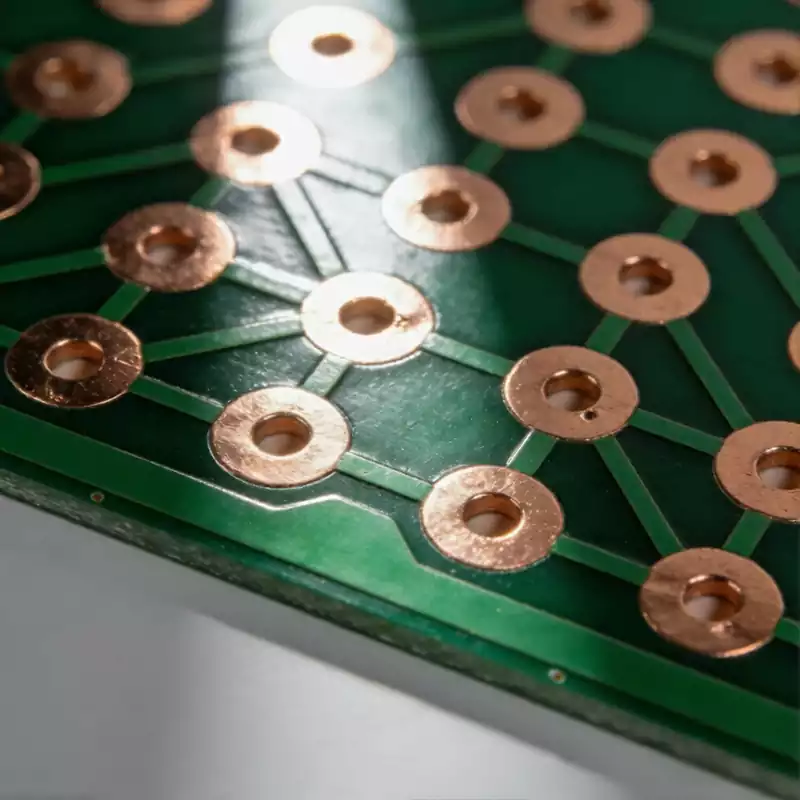
Applied to the board surface after the circuit has been fabricated, this pcb ink serves to protect the circuit whilst leaving the pad areas exposed for component soldering. Its primary functions are insulation, oxidation prevention and protection against solder bridging. Common types include liquid photosensitive, thermosetting and UV-curable varieties.
Marking Ink
Used to print identification information on the PCB surface, such as component part numbers, polarity markings and model numbers. The most common colour is white.
Other Functional Inks
Strippable ink:Used to temporarily protect areas that do not require treatment during processes such as copper plating or surface treatment; it can be manually peeled off once the process is complete.
Silver paste: Commonly used for special applications such as creating conductive circuits or key contacts.
The Impact of Different Inks on PCB Performance
The Impact of Solder Mask Inks on PCB Performance
1.Impact on Impedance
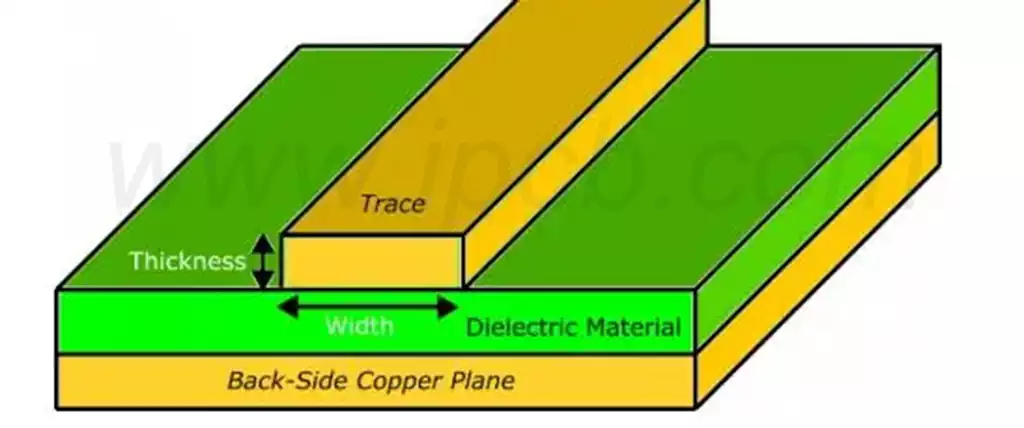
When a solder mask ink is applied to the surface of a PCB circuit, it alters the dielectric environment surrounding the circuit. Conventional solder mask inks have a high dielectric constant (approximately 3.9), which increases the capacitance of the traces and consequently reduces the characteristic impedance. In contrast, the use of low-dielectric-constant solder mask inks (with a dielectric constant of approximately 3.1–3.6) has a minimal impact on impedance, resulting in impedance values closer to those of an uncovered PCB.
2.Impact on Losses
The higher the loss factor (tanδ) of the solder mask, the greater the loss incurred during signal transmission through the dielectric. Conventional solder masks have a loss factor of approximately 0.02–0.04, leading to a significant increase in high-frequency signal loss; low-loss solder masks (with a loss factor of approximately 0.01–0.014) can effectively reduce dielectric loss, with the effect being particularly pronounced in high-frequency bands above 20 GHz.
3.Effect of Transmission Speed
As the dielectric constant of solder mask ink is greater than that of air, applying the ink reduces signal transmission speed. The higher the dielectric constant, the more pronounced the reduction in signal transmission speed.
The Impact of Conductive Ink on PCB Performance
1.Conductive Properties
Conductive ink is used to create conductive traces or electrodes; its conductivity depends on the content and distribution of conductive materials (such as silver, copper, graphene, etc.). Highly conductive inks can reduce circuit resistance and improve signal transmission efficiency; conversely, poor conductivity or uneven distribution will lead to increased resistance and signal attenuation.
2.Impedance Matching
In RF or high-frequency circuits, the impedance characteristics of the conductive ink must match those of the circuit. If there is an impedance mismatch, it will cause signal reflection and affect signal integrity.
3.Stability
The conductive properties of conductive inks may be affected by environmental factors such as temperature, humidity and mechanical stress. For example, the conductivity of silver powder conductive inks may increase at high temperatures, but prolonged exposure to humid environments can lead to oxidation, resulting in increased resistance.
The Impact of Character Inks on PCB Performance
1.Insulation Properties
Character inks are primarily used for identification and labelling, and are typically required to possess good insulation properties to prevent short circuits between the character areas and the circuit traces. If the insulation performance of the character ink is poor, it may reduce the overall insulation resistance of the circuit, thereby affecting electrical performance.
2.Surface Properties
The thickness, uniformity and surface roughness of character inks may affect signal transmission. Excessively thick or uneven character inks may interfere with signal propagation and increase signal loss.
Principles for Selecting PCB Inks
1.Clarify the Application Scenario and Electrical Requirements
Consumer electronics PCBs (e.g. mobile phone motherboards, Bluetooth headset circuit boards): These require high precision in circuit lines and signal transmission efficiency. UV-curable or photoresist-type solder mask inks may be selected, whilst high-precision photoresist etching inks should be chosen for etching applications; there is no need to select high-end conductive inks.
PCBs for industrial control and automotive electronics: These applications impose stringent requirements on temperature resistance, insulation and voltage withstand capabilities. Thermosetting solder mask inks should be prioritised to ensure a glass transition temperature (Tg) of ≥170°C and an insulation resistance of ≥10¹² Ω·cm.
High-frequency, high-speed PCBs (e.g. 5G communications, high-end servers): Specialised solder mask inks with low dielectric constants and low loss should be selected to minimise signal loss.
2.Compatibility between production processes and pcb inks
Screen printing process: Inks with good thixotropy and low screen-clogging potential must be selected to avoid defects such as pinholes and bubbles.
Inkjet printing process: Specialised UV-curable inkjet inks must be used to ensure fine ink particles and achieve micron-level line formation.
Curing process: Must be compatible with the pcb ink type. UV-curable inks must be used with corresponding UV equipment, whilst thermal-curable inks require careful control of baking temperature and time to ensure thorough curing and prevent electrical performance issues caused by incomplete curing.
3.Balancing Cost Control and Quality
High-quality inks ensure stable electrical performance of PCBs and reduce subsequent rework and scrap costs, but are relatively expensive; inferior inks may lower procurement costs but are prone to causing electrical performance defects and increasing production risks.
When selecting pcb inks, one must avoid both ‘over-engineering’ and a ‘cost-first’ approach. For standard PCBs with low added value, cost-effective, general-purpose inks may be selected; for high-end PCBs with stringent reliability requirements, ink quality must be prioritised, with the cost budget appropriately adjusted.
As a critical material in PCB manufacturing,ink directly determines the quality and suitability of the PCB. With the trend towards high-end and precision electronic devices, the electrical performance requirements for PCBs are constantly rising; consequently, the selection and application of pcb ink have become a crucial aspect for PCB manufacturers seeking to enhance their core competitiveness. Through scientific selection, signal integrity, reliability and production yield can be significantly improved, thereby meeting increasingly stringent market demands.