Modern wireless communication technology is advancing rapidly, driving continuous improvements in the performance requirements for substrates used in high-frequency communication equipment. Microwave PCBs are specialized, precision-engineered circuit boards designed for high-frequency applications and serve as essential core components in microwave wireless communication systems. Unlike conventional low-frequency PCBs, microwave circuit boards are specifically designed for signal transmission in the microwave frequency range, enabling efficient bidirectional conversion between high-frequency electrical signals and microwave signals while supporting the complete process of signal transmission, propagation, and reception.
Microwave PCBs offer excellent high-frequency performance, low transmission loss, and environmental stability, ensuring accurate and continuous signal transmission across a wide microwave frequency range. Thanks to these unique advantages, microwave PCBs are widely used in critical modules of communication equipment, including antenna feed networks, filtering and noise suppression circuits, and power amplifiers, providing a reliable hardware foundation for the stable operation of microwave communication systems.
Signal power amplification is one of the core functions of microwave circuit boards and directly affects the transmission distance and coverage of microwave wireless communication. During long-distance microwave transmission, electromagnetic waves are highly susceptible to energy attenuation as they propagate through space. Complex electromagnetic environments can also cause signal distortion and transmission interruptions, significantly reducing communication quality.
Microwave PCBs serve as the core substrate for communication power amplifiers. Through optimized circuit routing and precise component placement, they enable accurate gain amplification of weak microwave signals affected by transmission loss. During signal amplification, microwave circuit boards help minimize signal distortion and phase shift while preserving the integrity of key signal parameters and increasing transmission power. This capability effectively addresses signal attenuation in long-distance communication, significantly extending microwave communication coverage and supporting various applications such as base station networks and microwave relay transmission.
Stable filtering and EMI suppression performance is essential for maintaining high-quality microwave wireless communication, and microwave PCBs play a key role in achieving this capability. Outdoor microwave communication environments are often exposed to electromagnetic interference, frequency-band interference, and environmental noise, which can easily couple into useful signals and cause communication interruptions, data distortion, or even link failures.
Microwave PCBs integrate high-precision filter circuits based on established high-frequency circuit principles, enabling accurate discrimination between useful communication signals and unwanted interference. They can effectively suppress noise across different frequency bands and perform precise signal filtering, significantly improving signal purity. By optimizing overall EMI immunity, microwave circuit boards enhance the environmental adaptability of communication systems and support the stable transmission of voice, data, high-definition images, and other communication services.
In addition to core amplification and filtering functions, microwave PCBs also provide signal feeding, power transmission, impedance matching, and other functions throughout the operation of microwave communication equipment. In antenna feed systems, the microwave PCB serves as a critical interface for electrical power and RF signal transmission, connecting the internal circuitry of the equipment to the antenna terminal. With extremely low insertion loss, it enables efficient power delivery and signal transmission, ensuring stable long-distance antenna communication.
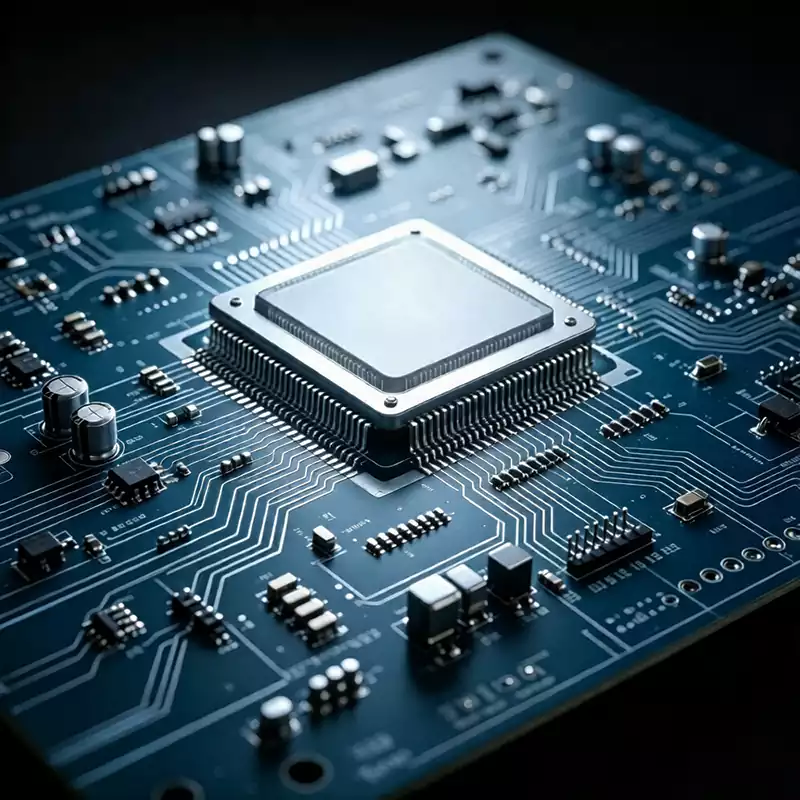
In power amplifier systems, microwave PCBs optimize impedance-matching structures to precisely control signal output power and dynamically balance the transmission load, preventing excessive power loading and excessive signal loss. At the same time, microwave PCBs can accommodate various critical communication components, including resonators, couplers, and mixers, enabling specialized functions such as signal coupling and frequency conversion to meet the requirements of diverse microwave communication equipment.
Compared with conventional PCBs, microwave PCBs use materials and construction technologies that are better suited to demanding industrial and communication environments. Mainstream microwave PCBs are commonly manufactured using specialized substrates such as PTFE, ceramic materials, and Rogers high-frequency laminates, which offer highly stable dielectric constants and extremely low dielectric loss.
Microwave PCBs also provide excellent resistance to high temperatures, moisture, and electromagnetic radiation. Even under demanding conditions involving high-frequency operation, elevated temperatures, and high humidity, their electrical performance remains highly stable. These material characteristics significantly reduce equipment failure rates, extend the service life of communication equipment, and lower maintenance costs, enabling microwave PCBs to support advanced applications such as base station communications, satellite communications, and radar systems.
With the rapid development of 5G communications, satellite navigation, IoT connectivity, low-altitude communications, and military radar, microwave wireless communication has become a fundamental part of modern communication infrastructure and is increasingly integrated into a wide range of industries. As a core component of microwave communication equipment, the microwave PCB provides the essential hardware foundation for efficient and reliable communication system operation.
By optimizing key performance characteristics such as signal amplification, precision filtering, low-loss transmission, and impedance matching, microwave PCBs effectively address major challenges in high-frequency communications, including high signal loss, interference-induced distortion, and limited transmission distance. As communication technologies continue to evolve, microwave circuit boards will continue to drive wireless communications toward higher speeds, greater stability, and longer transmission distances, making them a critical component in the performance breakthroughs and next-generation development of advanced communication equipment.